
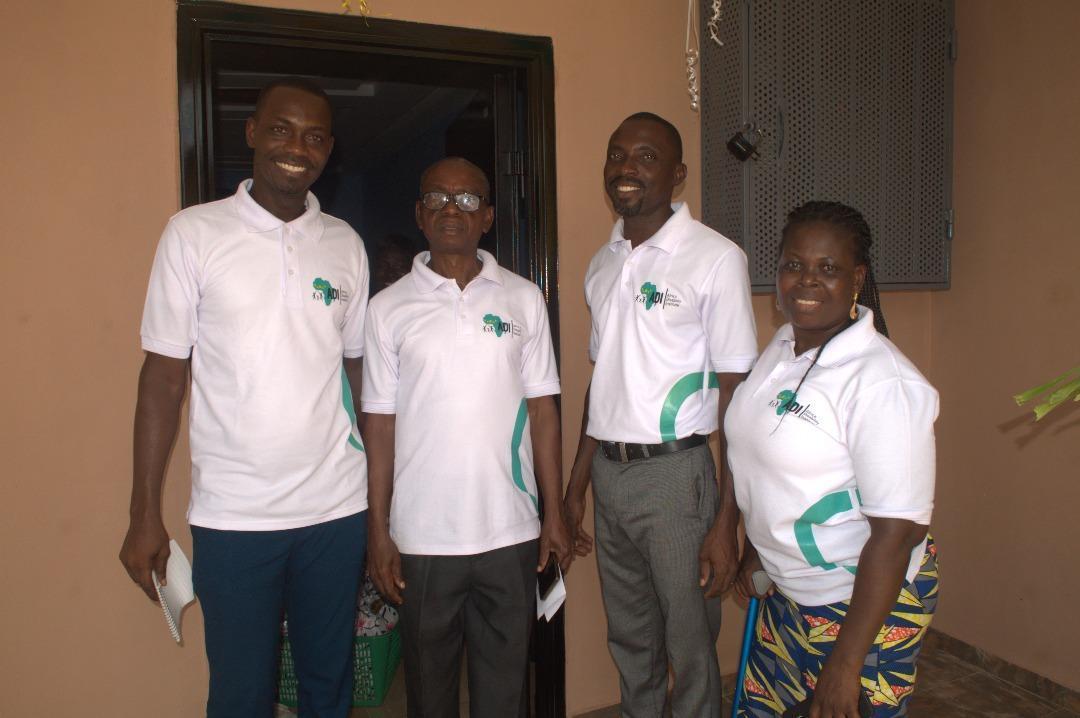
Africa-Press – Ghana. Mr. Francis Asong, Executive Director of the Africa Disability Institute (ADI), has urged the Government and its partners to turn global disability-inclusion commitments into concrete, funded actions at the local government level.
Speaking in an interview with the Ghana News Agency (GNA) in Ho as the world commemorates the 2025 International Day of Persons with Disabilities (IDPD), Mr. Asong said the global theme, “Fostering disability-inclusive societies for advancing social progress,” presents a timely reminder that inclusion must be intentionally built across all sectors of national development.
He noted that this year’s national observance, which focused on advancing inclusion through education, highlighted the critical role of education in empowering persons with disabilities (PWDs) and closing long-standing opportunity gaps.
In 2025, Ghana introduced major reforms to expand inclusion for persons with disabilities, notably, the new Free Tertiary Education for Persons with Disabilities initiative under the “No-Fee Stress” policy now guarantees full state-funded tuition for all PWDs admitted into accredited tertiary institutions.
These interventions represent an important step toward educational equity and disability inclusion, and the Africa Disability Institute warmly welcomes them.
However, he said meaningful inclusion cannot be achieved without accessible infrastructure, particularly in schools and health facilities adding “accessibility determines whether persons with disabilities can fully participate in education, healthcare, and broader social life.”
He indicated that even with free tertiary education, students with disabilities will continue to face significant barriers if learning environments, lecture halls, hostels, and campus facilities remain inaccessible.
“The same applies to health facilities, where inaccessible buildings and services limit the ability of PWDs to receive essential care.”
He reiterated that for these reasons, accessible infrastructure must be placed at the centre of all discussions on disability inclusion. It forms the foundation upon which equal participation, effective service delivery, and true inclusion are built.
Touching on the Global Disability Summit (GDS) Commitments, Mr. Asong emphasised that while Ghana and many other countries have signed on to the Global Disability Summit Commitments, these pledges will remain symbolic unless they are implemented, monitored and funded.
“We are calling on the government to localise GDS commitments at the District Assembly level,” he stated.
“This means integrating disability-inclusive targets, indicators and dedicated budget lines into district development plans so that Ministries, Departments and Agencies can deliver measurable results for PWDs.”
He called on the Government to prioritise passing the revised Persons with Disabilities Act and to strengthen the National Council on Persons with Disabilities and District Assemblies for effective implementation.
He said the global disability-inclusion commitments must be embedded into district plans with dedicated resources and measurable indicators to ensure the scale-up of inclusive services in education, health, social protection, transport, and ICT, with clear timelines and accountability.
“On this International Day of Persons with Disabilities, our message is simple: commitments must become budgets, plans and tangible actions. Only then will the promise of inclusion be realised for all Ghanaians with disabilities,” he said.
The Africa Disability Institute exists to promote disability-inclusive governance, policy, and development across Africa, ensuring the rights, leadership, and meaningful participation of persons with disabilities are advanced at all levels.
For More News And Analysis About Ghana Follow Africa-Press