
Africa-Press – Ghana. Ghana has taken a historic step toward shaping its global engagement as the Ministry of Foreign Affairs convened a high-level national stakeholders’ workshop in Accra to begin drafting the country’s first-ever Comprehensive Foreign Policy Framework.
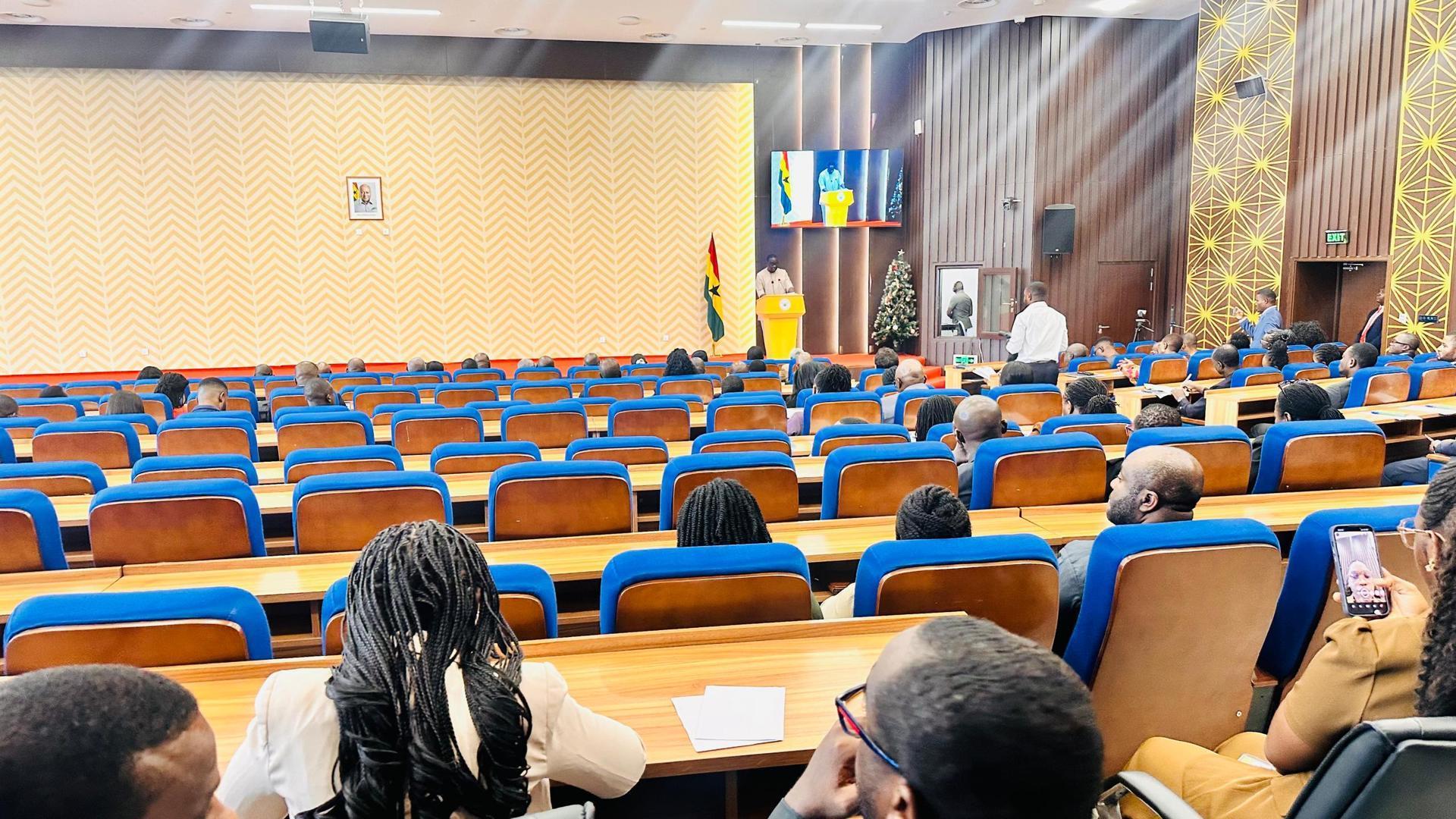
The workshop, held at the Ministry on Monday, brought together government officials, diplomats, academics, civil society actors, private sector representatives, and security experts for what the stakeholders described as a defining moment in the evolution of Ghana’s foreign policy architecture.
The workshop is expected to feed into a final draft of Ghana’s Comprehensive Foreign Policy, which will be submitted to the appropriate authorities.
Mr James Gyakye Quayson, Deputy Minister for Foreign Affairs, who opened the forum, said the gathering was taking place at a time when the world was experiencing profound geopolitical shifts, making it imperative for Ghana to adopt a unified, coherent and forward-looking foreign policy.
He said the exercise was not a routine policy engagement but “a responsibility to help reset and shape the next chapter of Ghana’s global engagement.”
He noted that everywhere in the world, nations were reorganising priorities, recalibrating alliances and adjusting to new global pressures.
In such a rapidly evolving international environment, he warned that Ghana “cannot afford silence, complacency, or ambiguity,” stressing that the country must step forward “with clarity, with a cohesive strategy, and with confidence befitting a nation that has, time and again, proven itself a leader in Africa and a respected voice in the international community.”
Mr Quayson recalled that earlier in the year, retired ambassadors and seasoned policy thinkers had cautioned that Ghana could no longer rely on fragmented or reactive approaches to international relations.
While the 1992 Constitution remained a strong moral compass anchored in justice, peace, respect for international law and African unity, he said the complexities of the 21st century, from technology disruptions and climate pressures to geopolitical tensions, required a more structured framework.
“For the first time in our Fourth Republic, we begin the process of consolidating our principles, experiences, and aspirations into one comprehensive foreign policy framework, modern in character, strategic in orientation, and future-focused in ambition,” he said.
He stressed that Ghana’s foreign policy must reflect the collective aspirations of the nation, not the agenda of a single institution.
Its foundation, he said, must be the unquestionable protection of Ghana’s sovereignty, especially at a time when economic dependency and diplomatic pressure could be used as tools of influence.
Mr Gyakye Quayson emphasised economic diplomacy as central to national development, insisting that every Ghanaian mission abroad must function as an engine of trade, investment and innovation that yields tangible benefits for citizens.
He also reaffirmed Ghana’s responsibility to uphold its longstanding international reputation for peace, stability, human rights and democratic values.
Ambassador Khadija Iddrisu, Acting Chief Director of the Ministry, said the Ministry had, over several months, undertaken a careful review of Ghana’s diplomatic practice, drawing on the wisdom of retired ambassadors, the experience of practitioners, and insights from across Ghana’s institutional landscape.
The findings reaffirmed strong foundations built on Pan-Africanism, non-alignment, peaceful coexistence, and constructive multilateralism.
But she noted that there had been periods when coordination weakened and decisions lacked consistency.
This, she explained, prompted government to direct the development of a comprehensive foreign policy “as a living framework that guides choices, sets priorities, and ensures that our diplomacy delivers real value to the Ghanaian people.”
She outlined six emerging pillars of the framework: economic diplomacy; strategic partnerships; security and defence cooperation; climate and environmental diplomacy; diaspora and cultural engagement; and a renewed commitment to multilateralism and South–South cooperation.
The workshop, she emphasised, was a working session to refine practical recommendations, strengthen coordination across government, and sharpen strategic communication.
Dr Vladimir Antwi-Danso, Dean and Director of Academic Affairs at the Ghana Armed Forces Command and Staff College, spoke on globalisation, multilateralism and the geopolitical challenges facing developing nations.
In an interview with the Ghana News Agency, he described globalisation as “a strange phenomenon… good, but bad at points,” he said its forces tended to favour countries with strong scientific, technological and economic capacity, leaving developing nations struggling to keep pace.
“Those who have the resources to really be part of the globalizing world… win all the time,” he said.
He pointed to internal constraints within developing states, including debt and instability, that made global competition difficult.
Dr Antwi-Danso warned that powerful nations increasingly influence or pressure smaller countries to adopt positions or cultural standards that may conflict with their own national identities.
This, he said, highlighted the urgent need for Ghana to adopt a clearly defined, comprehensive foreign policy that articulated national interest and guides responses to global issues.
Dr Antwi-Danso urged Ghana to remain firmly committed to multilateralism, describing it as the only pathway to preventing global conflict.
He called for reforms of the United Nations and a stronger rule-based global order “in which everybody behaves, not when the bullies bully.”
For More News And Analysis About Ghana Follow Africa-Press