

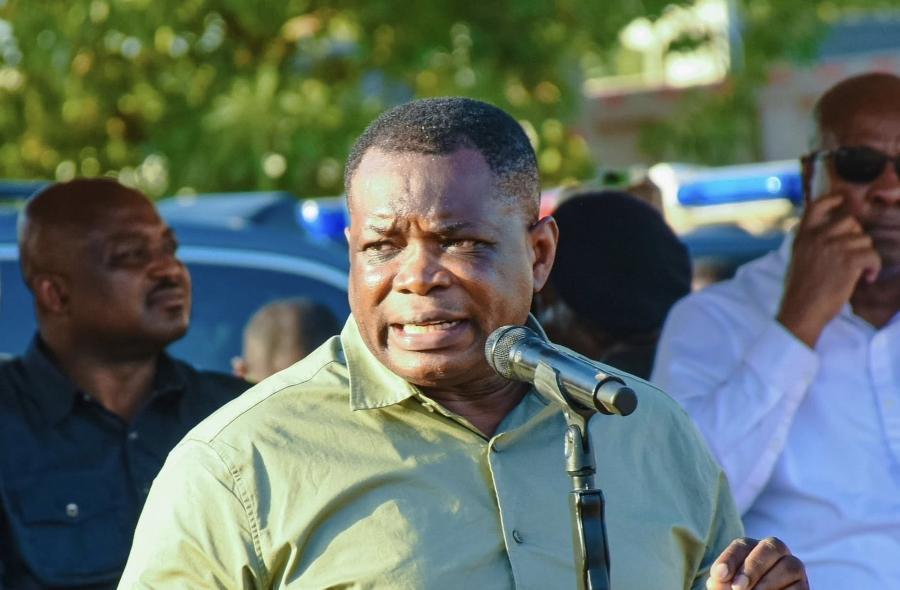
Africa-Press – Ghana. The government has begun reactivating major road projects that were stalled by Ghana’s recent debt restructuring, Mr. Governs Kwame Agbodza, the Minister for Roads and Highways, has announced.
This, he said, formed part of renewed efforts to improve road infrastructure across the country.
The debt restructuring, introduced in 2022, as part of efforts to restore macroeconomic stability, significantly disrupted funding for infrastructure projects, leading to widespread suspension of road works.
Speaking in an interview with Accra-based Citi FM, Mr. Agbodza disclosed that almost all projects affected by the debt restructuring had now been cleared for continuation, paving the way for intensified construction activity this year.
“We are almost 100 per cent through the DDEP restructuring,” the Minister said.
“Almost all those projects that were stalled because of the debt restructuring are now being reactivated. If contractors want to go back to site today, they can do that.”
Among the projects being revived are several Sinohydro-funded roads, including the Takoradi interchange, sections of the Ashaiman–Atimpoku corridor, and the Dome–Kwabenya–Kitase road.
The Minister noted that issues relating to scope and financing on these projects had been resolved, with the government committing additional resources where necessary.
“For some projects like Dome–Kitase, the scope has been increased and government has committed to pay for the extra works through Government of Ghana sources,” he explained, adding that contractors were already back on site, though some were currently in preparatory phases such as hauling and material treatment.
Giving an update on some ongoing projects within the Greater Accra Region, Mr. Agbodza said work was continuing on major arteries such as the Tema Motorway expansion and the Independence Square–Teshie–Nungua corridor.
He said the ministry was also working incrementally to improve sections of the Beach Road, which was intended to serve as an alternative route to Tema but was also affected by debt restructuring delays.
Portions near Teshie, Nungua and the Junction Mall interchange were being prioritised, he added.
In the Tema industrial enclave, particularly the seven-kilometre stretch from the Valco Roundabout through the TOR area, he said, the government was exploring a cost-sharing arrangement with major industries to rehabilitate badly deteriorated roads.
“Given the calibre of industries there, we believe if we share the cost, we can deliver first-class roads quickly,” the minister said, adding that companies could pay contractors directly with government providing technical supervision.
He, however, acknowledged the inconvenience to motorists due to construction-related traffic.
“I sympathise with all road users. It is not forever. We are determined to expedite the work so the frustration does not last longer than necessary,” he said.
The Minister reiterated President Mahama’s strong commitment to road infrastructure, describing roads as one of the administration’s top priorities.
“The president has made a huge commitment to the people of Ghana to improve the road network across the country,” he said.
“My job is to make sure that that vision comes to pass.”
As part of efforts to ensure value for money and durability, Mr. Agbodza said the ministry planned to intensify monitoring of contractors and launch a nationwide stakeholder campaign to curb overloading on roads.
“If we spend all this money to build and rehabilitate roads and allow overloading, the roads will not last,” the minister warned.
“This will not be punitive; it will be stakeholder-driven.”
For More News And Analysis About Ghana Follow Africa-Press