
Africa-Press – Ghana. For the first time in the history of the New Patriotic Party (NPP), it has elected its presidential flagbearer nearly three years ahead of a general election.
This has prompted debate over whether the early decision could become a game changer in the party’s quest to reclaim power from the National Democratic Congress (NDC) in the 2028 polls.
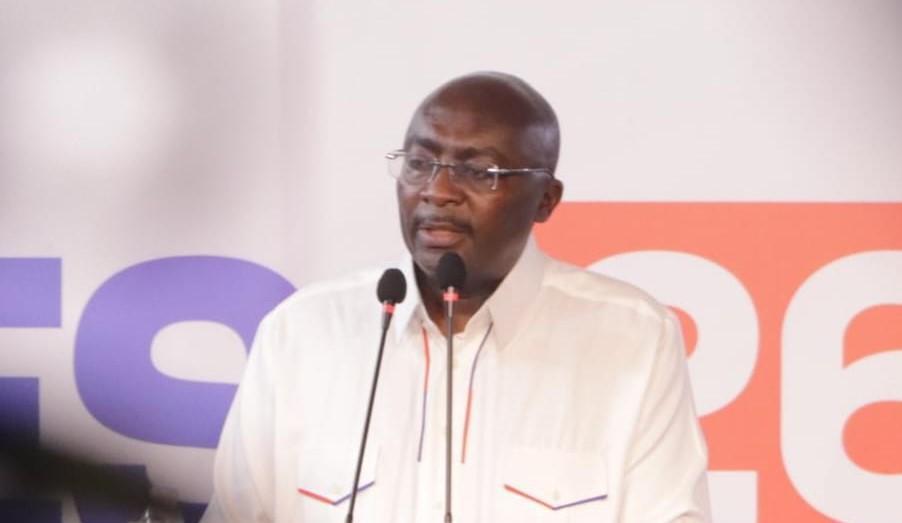
The election of former Vice President Dr Mahamudu Bawumia as flagbearer at the party’s presidential primary, held on January 31, 2026, represents a significant shift from the NPP’s traditional electoral calendar, where flagbearers are usually chosen much closer to national elections.
The decision gives the party an extended period to reorganise, rebuild internal cohesion and refine its campaign message following its defeat in the 2024 general election.
The primary, conducted across designated polling centres nationwide, was reported to have been peaceful, with no major incidents recorded.
Party officials and security agencies described the process as orderly, reflecting efforts by the party to strengthen internal democratic processes and credibility in the aftermath of the 2024 polls.
Dr Bawumia won the contest with a commanding margin, securing 110,643 votes, representing 56.48 per cent.
He was followed by Kennedy Ohene Agyapong with 46,554 votes (23.76 per cent), Dr Bryan Acheampong with 36,303 votes (18.53 per cent), Dr Yaw Osei Adutwum with 1,999 votes (1.02 per cent), and Kwabena Agyei Agyepong, who polled 531 votes (0.21 per cent).
In all 196,462 votes were cast, with 561 ballots rejected, according to figures released by the Electoral Commission.
The wide margin between Dr Bawumia and the other contenders highlighted his strong footprint within the party’s delegate base and reaffirmed his influence on the Party.
The decisive nature of the victory gives Dr Bawumia a strong mandate as he begins the task of repositioning the NPP for the 2028 elections.
It also suggests that, despite internal debate following the party’s loss of power, many delegates preferred continuity in leadership rather than a sharp departure from recent party direction.
Dr Bawumia, in his victory speech, pledged to restore confidence in the NPP, emphasising discipline, unity and respect for party values as key pillars for renewal.
He acknowledged the dissatisfaction expressed by voters in the 2024 elections and said rebuilding trust with party supporters and the wider electorate would be central to the NPP’s return to power.
All four aspirants conceded defeat shortly after the declaration of results and publicly pledged their support for Dr Bawumia, a move party leaders described as a positive signal for unity going forward.
The early show of solidarity is expected to ease post-primary tensions and provide a foundation for collective effort.
Nonetheless, translating post-election goodwill into sustained party cohesion remains a key challenge.
As an opposition party heading into 2028, the New Patriotic Party would be expected to manage internal expectations, integrate supporters of defeated aspirants and maintain organisational momentum over a prolonged campaign period.
Dr Bawumia would also be expected to broaden the party’s appeal beyond its traditional base.
While the primary outcome confirms strong internal backing, the party faces the task of responding to issues that influenced the 2024 electoral outcome, including economic management, cost of living pressures and governance concerns.
The extent to which those matters are addressed during the extended pre-election period may shape the party’s electoral fortunes.
The early election of a flagbearer presents both opportunities and risks.
It allows the party to avoid prolonged internal competition and begin early policy development, grassroots mobilisation and national outreach.
However, sustaining focus, discipline and public interest over nearly three years outside government may test party structures and leadership.
As the NPP settles after the primary, attention turns to whether the early flagbearer strategy would deliver electoral advantage.
With time on its side but limited room for missteps, the party faces a key question: will this early decision provide the momentum needed to regain power in 2028? or will the long road to the next general election test the effectiveness of the approach.
Ultimately, the NPP’s decision to elect its flagbearer far ahead of the 2028 elections marks a bold recalibration of its political strategy. The extended runway offers space for reflection, renewal and reform, but it also places sustained pressure on leadership to convert time into tangible political advantage.
For Dr Bawumia and the party hierarchy, the challenge is not merely early preparation, but disciplined execution, maintaining unity, sharpening policy alternatives and reconnecting with a sceptical electorate.
Whether this unprecedented early choice becomes a masterstroke or a prolonged test of endurance will depend on how effectively the party uses the time it has deliberately given itself.
For More News And Analysis About Ghana Follow Africa-Press