

By Divine Mawuli Akwensivie, Ph.D., MCIM
Africa-Press – Ghana. Marketing Professionals are trained to look beyond figures on spreadsheets to interrogate how economic decisions shape consumer perceptions, brand equity, and long-term market sustainability.
From this standpoint, the persistent disconnect between improving macroeconomic indicators and sustained high consumer prices in Ghana is not merely an economic issue; it represents a significant marketing and strategic risk for businesses.
In recent months, Ghana’s macroeconomic indicators have exhibited cautious yet meaningful improvement. Inflation has been on a downward trajectory, interest rates have stabilized relative to earlier periods of volatility, and fuel prices – an important cost driver across the economy – have recorded notable reductions.
These developments are not coincidental. Rather, they reflect deliberate fiscal consolidation, monetary tightening, and difficult policy decisions implemented by government and economic managers in an effort to restore macroeconomic stability.
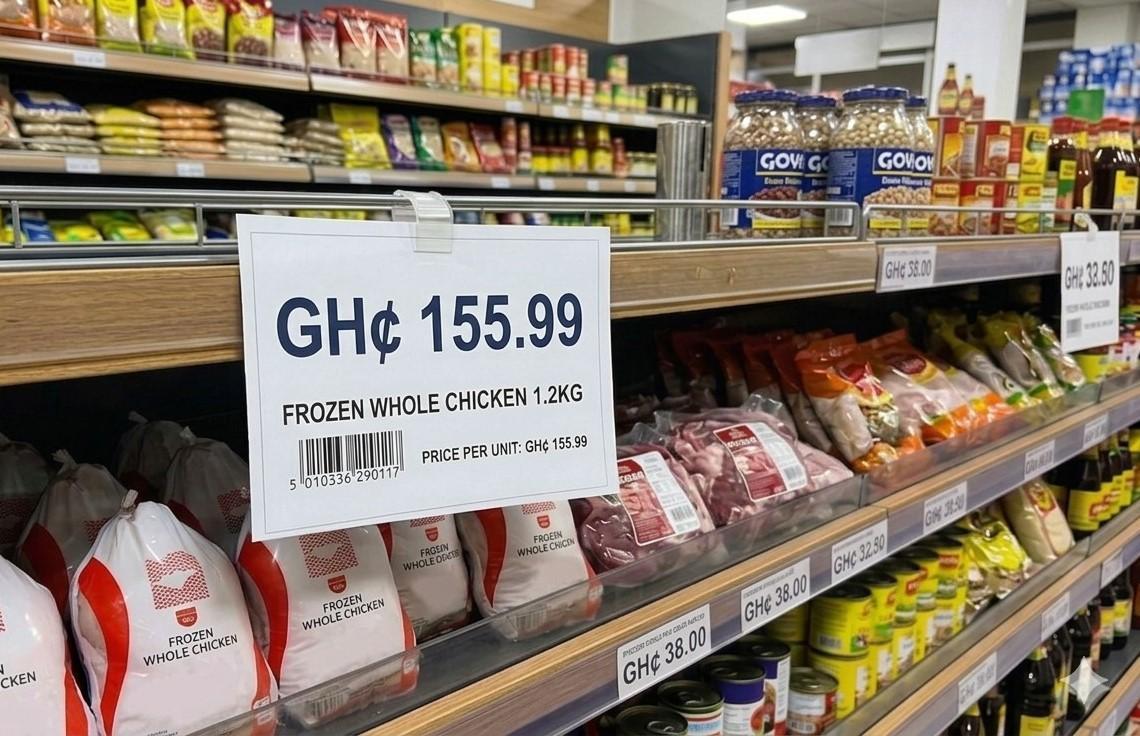
Yet a survey report by the Institute of Economic Affairs (IEA) as reported by MyJoyOnline on 12 February 2026 indicates that 71% of Ghanaians worried about rising food prices. The report further indicates that seven out of ten Ghanaians are deeply concerned about rising food prices and the escalating cost of living.
The Consumer Reality and the Trust DeficitMarketing fundamentally begins and ends with the consumer. When consumers continue to face sustained high prices despite widely publicized improvements in economic conditions, a perceptible trust gap emerges between firms and the market. While consumers may not closely track monetary policy deliberations or fiscal adjustments, they remain highly attuned to prices at the market, fuel station, pharmacy, and educational institutions.
In the absence of observable price adjustments, consumers reasonably or otherwise, infer that firms are indifferent to their economic constraints.
Evidence suggests that some businesses have effectively normalized crisis-era pricing, treating temporary shocks as permanent justification for high margins. Others adopt a “wait and see” approach, exhibiting rapid increases in response to cost escalations, but demonstrating notable inertia when macroeconomic conditions improve.
This asymmetric pricing behavior erodes public trust and fuels the perceptions of opportunistic exploitation. From a marketing standpoint, this erosion of trust constitutes a significant risk.
Trust is a core intangible asset that underpins brand loyalty, positive word-of-mouth advocacy, and willingness to pay.
Businesses that are perceived as exploiting economic hardship for profit risk long-term brand damage that cannot be easily mitigated through increased promotional or no advertising expenditure.
Price Is Not Just Revenue—It Is a Brand SignalIn marketing theory, price functions as one of the salient signals of a brand’s underlying values, conveying notions of fairness, market positioning, and social orientation.
During periods of economic stress, pricing decisions take on heightened symbolic meaning. When input costs such as fuel decline, but final prices do not adjust, consumers interpret this not as caution, but as opportunism.
While businesses are justified in recovering past losses and managing uncertainty, marketing strategy warns against “price stickiness” that ignores changing market sentiment.
Consumers remember who responded quickly to their pain and who did not. In highly competitive markets, this memory shapes switching behavior, brand avoidance, and reputational narratives that persist long after economic conditions normalize.
From a market dynamics perspective, prolonged high prices suppress demand. Consumers downtrade, reduce consumption, or exit categories altogether. This behavior may temporarily protect margins, but it shrinks the market in the medium to long term.
Marketing professionals understand that healthy businesses depend not only on margins, but on volume, frequency, and customer lifetime value.
Strategic price moderation, even when incremental can stimulate demand, increase turnover, and improve cash flow. More importantly, it reinforces emotional connections with consumers, positioning brands as partners rather than predators during difficult times.
Businesses as Co-Creators of Economic RecoveryMarketing does not view businesses as isolated profit-maximizing entities; rather, it situates them as actors embedded within a broader social and economic ecosystem.
Government policies can stabilize the macro environment, but it is businesses that translate stability into consumer experience. If prices remain high, the perceived failure of economic reform is attributed not only to policymakers, but also to brands and firms.
Businesses therefore have a marketing-driven incentive to align with national recovery efforts. By adjusting prices in response to easing costs, businesses amplify government interventions, reinforce positive economic narratives, and help reset consumer confidence, an essential ingredient for sustainable growth.
Economic recovery is therefore not the sole responsibility of the state. Government policies can create enabling conditions, but the translation of macroeconomic stability into improved living standards depends heavily on private sector behavior.
Businesses are not passive observers of economic reform; they are active participants.
Strategic price moderating prices in line with improving macroeconomic indicators enable firms to:
Support government efforts to tame inflation sustainably.
Stimulate consumer demand and market turnover.
Strengthen brand loyalty and public goodwill.
Contribute to social stability and national cohesion.
In contrast, persistently high prices risk undermining policy gains, entrenching inflation expectations, and fostering cynicism about reform itself.
A Marketing-Led Social Appeal to Ghanaian BusinessesThe discussion advances the argument that pricing should be understood as relational and strategic choice, rather than merely a financial or transactional ones. Ethically grounded and socially responsive pricing practices are not anti-business; it is smart marketing. It builds goodwill, strengthens brand differentiation, and deepens loyalty in a market where consumers are increasingly value-conscious and vocal.
The strategic transmission of cost efficiencies to consumers serve as a credible signal of empathy, transparency, and shared economic burden. These are powerful brand attributes, especially in an era where consumers reward companies that demonstrate social responsibility with repeat patronage and advocacy.
Ethical Pricing as a Social ObligationPricing decisions extend beyond technical optimization or short-term profit-maximizing decision; it is also a moral and social one. Businesses operate within society, draw their customers from society, and ultimately depend on the purchasing power and wellbeing of society to survive.
When consumers are overburdened, demand weakens, social tensions rise, and the long-term sustainability of businesses themselves is threatened.
Ethical pricing does not simply imply operating at a loss or ignoring legitimate risks. Rather, it means aligning prices more closely with prevailing economic realities, transparently reflecting cost reductions, and resisting the temptation to maximize short-term profits at the expense of social welfare.
In an economy where a significant proportion of households live close to the poverty line, even modest price reductions can have meaningful impacts on nutrition, education, health, and dignity.
A Social Appeal to Ghanaian Business OwnersThe current economic context underscores the need for leadership not only at the level of public policy, but also within private sector: among senior executives, traders, and service providers across Ghana.
Pricing decisions in this regard warrant consideration beyond short-term financial performance and balance sheet metrics, encompassing broader ethical judgment and societal impact.
Ghanaian businesses have historically played critical roles in times of national difficulty: supporting communities, extending credit informally, and absorbing shocks alongside consumers. That same spirit is needed now.
Passing on cost reductions, even incrementally, is not an act of weakness; it is an investment in shared prosperity.
An economic system in which firms prosper while consumers struggle is neither stable nor just. Conversely, an economy where businesses act with social responsibility strengthens the foundations for long-term growth.
ConclusionFrom a marketing perspective, the high cost of living in Ghana is not only a policy challenge – it is a brand and market challenge for firms.
Businesses that fail to respond to improving economic indicators risk losing consumer trust and long-term relevance. Those that act responsibly, however, position themselves as credible, caring, and sustainable brands.
Economic recovery must be felt, not just announced. When businesses allow improved macroeconomic conditions to reflect in their pricing decisions, they do more than support government policy – they strengthen their brands, expand their markets, and contribute meaningfully to improving the standard of living for the ordinary Ghanaian.
The fight against the high cost of living in Ghana is a collective one. When businesses prioritize pricing fairness over opportunism, and partnership over indifference, macroeconomic recovery is more likely to translate into tangible benefits within everyday consumption contexts – market stalls, shops, and homes of ordinary Ghanaians
Source: Ghana News Agency
For More News And Analysis About Ghana Follow Africa-Press