
Africa-Press – Ghana. Ms Daniella Korletey started work as a community psychiatric nurse in the Shai Osudoku District, enjoyed working in the community and visiting homes to check on her clients, but after seven years she wanted a bigger challenge.
When the University of Ghana advertised for a degree programme in Occupational therapy she hopped on quickly.
Daniella said she enjoyed every bit of her new area of study and was eager to put her work into practice.
She also chose to have her national service in the district.
Her graduation as a professional occupational therapist felt like a dream come true.
Even though Occupational therapy was new to the community at the time, she was poised to introduce it.
She will go out with the Community Health Nurses to do home visitations; she will also go to the Child Welfare Clinics and talk to mothers.
She started to educate new mothers on the developmental milestones of their children and also taught them how they could identify any delays in their children.
Daniella went a step further; she will even do home visitations and also used one day to work with the physiotherapists who were working at the Shai Osudoku clinic
She said she identified as a community person and could not function well in the hospital setting, her director at the time agreed and gave her a space to advance her practice.
With time she gained the trust of the mothers, as they allowed her into their homes, where she met children who have not seen sunlight for years.
“Some had been chained, some had been locked up in rooms and many of them were seen as a burden,” she said, however, she worked into the heart of the mothers of children with disabilities to let them know that “their children could be helped”
Her visit to South Africa.
Daniella got an opportunity to attend a conference in South Africa, it was at this conference that she met Fatima Robin, a Liberian Occupational Therapist who was trained in the United States of America.
She said she discussed her ideas and plans with Fatima and she jumped on board the dream and made arrangement to come to Ghana.
At the time Fatima came to Ghana, Daniella had been given a space, an empty room on the hospital premises to start her occupational therapy practice.
“I used my savings to buy a table, a chair and a few equipment I will need.
I started with stroke survivors; I started with 20 stroke survivors who had consistent therapy from me and there was a lot of improvement.
A spark within the community
The stroke survivors sent words of mouth to others and within a few years people came to know and believe in the services of the occupational therapist.
With time, I shifted to see children with developmental delays especially children with cerebral palsy.
Daniella worked to create a cultural shift within the community and gradually helped to set up an association of mothers of children with special needs within the Shai Osudoku District.
She said the Ghana Health Service tried to pilot her programme in other districts, ‘but it’s been difficult, however, within the Shai OsuDoku District we organise satellite clinics in the various communities and attend to patients who need our services.’
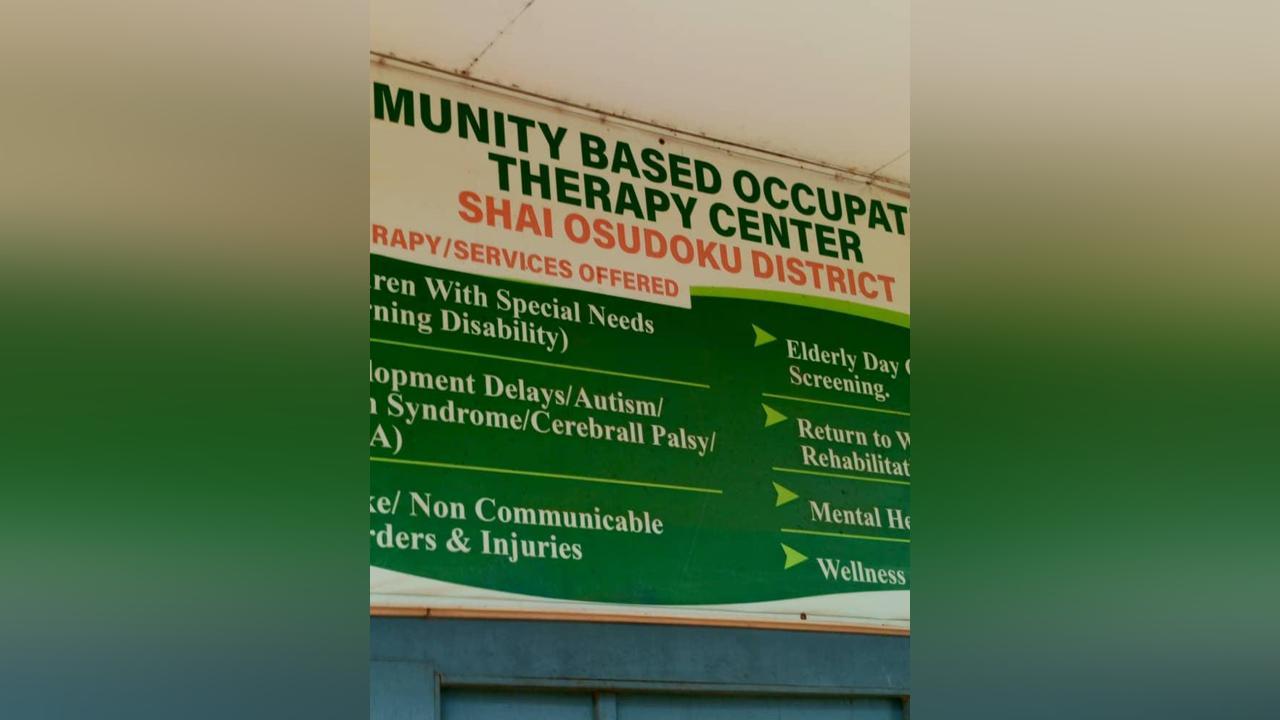
The Community based occupational therapy centre in the Shai OsuDoku District is the only one in Ghana and also in West Africa, Daniella said.
The association of Mothers.
The Dodowa community now has an association for mothers and fathers of children with all kinds of developmental delays who have come together to help themselves.
The association currently have about 50 regular and committed members.
To become a member of the association, interested parents fill a form and commit to pay membership dues.
Members of the association come together to learn various craft like soap making, powdered soap, juice making, dressing making, bread making and other skills to help them have sustainable livelihoods.
Children who could be placed in schools were supported to do so, however, some of the children with cerebral palsy and other complex conditions could not easily get into schools which required the birth of another plan to support parents in that category.
Daniella said she also linked up with a school very close to the Occupational therapy centre to accept the children with disabilities.
Blosson Bud at Dodowa is an inclusive school that teaches the children based on their needs, the children with special educational needs that are in the school also get access to therapy within the school premises.’
“Therapists working with the Occupational Therapy centre offer their services to the children in the school who needs it at a fee,’ she added
Daniella has also established a mentorship programme for the members where the mothers learn about their children’s disability. They also have a welfare fund that is used to support the children or a mother who loses a child.
The birth of Adom Fie
To cater for parents whose children were not fitting into the regular educational system, a day centre where parents could leave their children and go to earn their livelihood was created.
Adom Fie is a day centre within the Dodowa community, where parents are able to send their children with all kinds of developmental delays during the day time.
The staff of Adom Fie are mostly mothers of children with disabilities within the community or any person who have had an experience with a child or person with disabilities.
The children at Adom Fie have access to therapy, one nutritional meal and care throughout the day.
For example, the caterer at Adom Fie is a mother of a child with disability and the president of the parents’ association within the community.
Adom Fie grow their own crops and also have a fish pond. The fish from the pond is sold to raise funds to support the centre
Ms Sandra Elom Anku, a social worker at Adom Fie, said at first it was difficult getting the mothers to accept formal employment.
“Most of the mothers have been used to just being around their children and accepting pity so it was difficult getting them to work as formal workers, but now it has changed greatly, the mothers are doing very well,” she said.
The parents have a roaster that guide them and also go on formal leaves and off days.
Ms Anku said they also have regular meetings to discuss their high moments and challenges and come up with practical solutions to ensure smooth operations.
Parents who bring their children to Adom Fie pay a token of a GHS 100 but it’s been very challenging sustaining it.
Most of the parents are unable to pay any reasonable amount and also do not add the necessary toiletries like diapers, wipes, tissue papers and others to their children’s pack when they are coming to the day centre.
Adom Fie currently have 12 children with various disabilities patronising it.
Ms Anku appealed to philanthropists to come to their aid to help sustain the programme.
Source: Ghana News Agency
For More News And Analysis About Ghana Follow Africa-Press