
Africa-Press – Ghana. The Ghana Anti-Corruption Coalition (GACC) has urged young people to take a front-line role in combating corruption, describing them as key to shaping Ghana’s future.
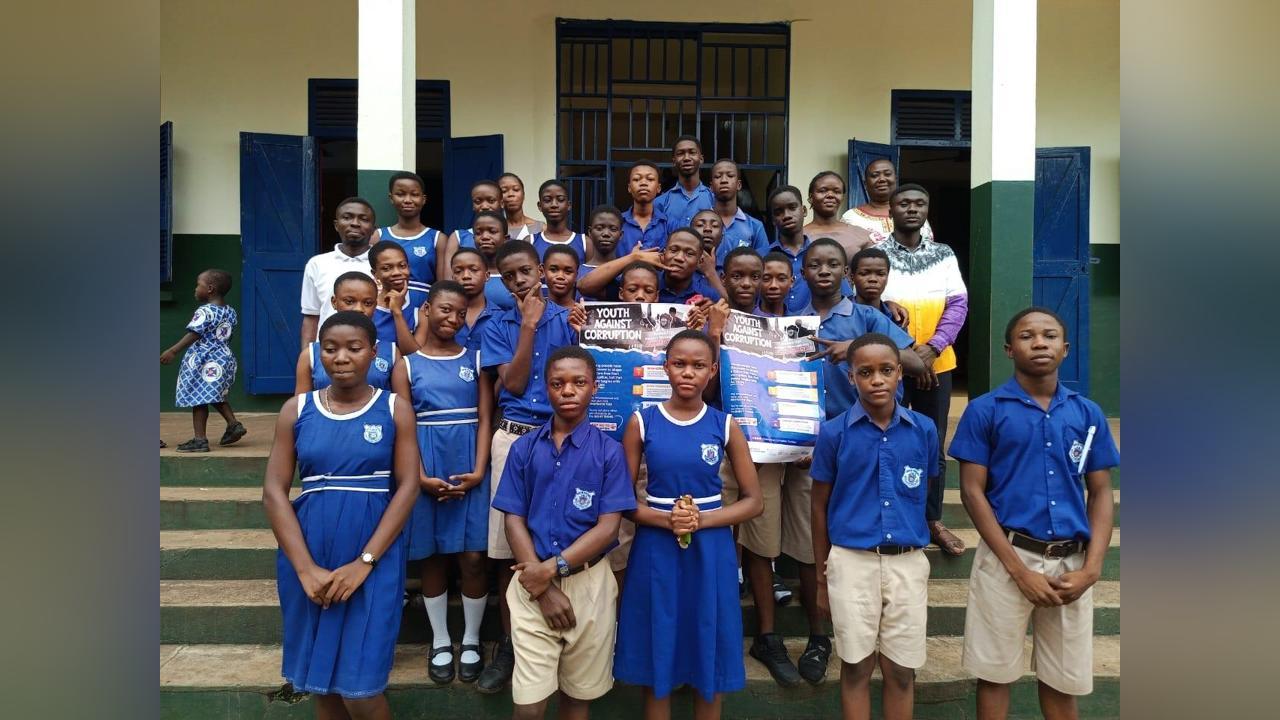
This was during a series of sensitisation engagements held at Adum Presby JHS and Buokrom M/A JHS in the Kumasi Metropolis, as part of activities to mark the 2025 International Anti-Corruption Day (IACD).
A total of 544 students, along with teachers, LANet members and observers, participated in the event, which was on the theme: “Uniting with Youth Against Corruption, Shaping Tomorrow’s Integrity.”
Madam Aba Oppong, the Chairperson of the KMA Local Accountability Network (LANet), in a speech read on behalf of the Executive Secretary of GACC, reminded the pupils of the heavy toll corruption imposes on national development.
“Every loss is a missed opportunity for better schools, improved healthcare, stronger infrastructure, and decent jobs,” she said.
She said its impact was felt most by the youth, whose dreams became limited when systems meant to serve them were compromised.
She urged students to commit to resisting, rejecting and reporting corruption while positioning themselves as defenders of Ghana’s future.
Facilitators from LANet educated students on the Whistleblower Act, 2006 (Act 720), encouraging them to report wrongdoing to trusted authorities, including teachers, headteachers, the Police, CHRAJ, the Office of the Special Prosecutor, EOCO, and district assemblies.
Students were informed that whistleblowers were entitled to 10 per cent of any recovered funds resulting from their reports.
The Witness Protection Act, 2018 (Act 975) was also explained, assuring students that individuals who exposed corruption were legally protected from threats and victimisation.
The interactive sessions covered ten common forms of corruption – bribery, embezzlement, fraud, nepotism, illegal contributions, conflict of interest, and others.
The students acknowledged gaining new insights and pledged to promote integrity practices in their schools and communities.
Facilitators emphasised that young people were often the first to feel the effects of corruption, citing underfunded schools, limited job opportunities, and restricted access to healthcare as major setbacks to their growth and aspirations.
The pupils were urged to help shift society away from accepting corruption as ‘normal’ and instead champion the values of integrity and accountability.
Posters with key messages such as “See something wrong? Report it” and “Youth against corruption—speak up, protect Ghana,” were also distributed, along with souvenir T-shirts and pens.
This year’s IACD activities are being commemorated in 87 districts across all 16 regions, focusing on empowering young people in basic and senior high schools as well as community youth groups.
The activities were supported by the William and Flora Hewlett Foundation, GIZ, and the EU-funded PAIRed Programme.
For More News And Analysis About Ghana Follow Africa-Press