WYCLIFFE MUGA
What You Need to Know
The recent launch of the Kisumu-Malaba railway by Presidents Yoweri Museveni and William Ruto aims to enhance Uganda’s access to maritime trade via Kenya. However, concerns linger over Kenya’s past infrastructure failures, particularly the Standard Gauge Railway, which faced issues of cost overruns and operational inefficiencies. The success of this new project is crucial for Uganda’s economic and
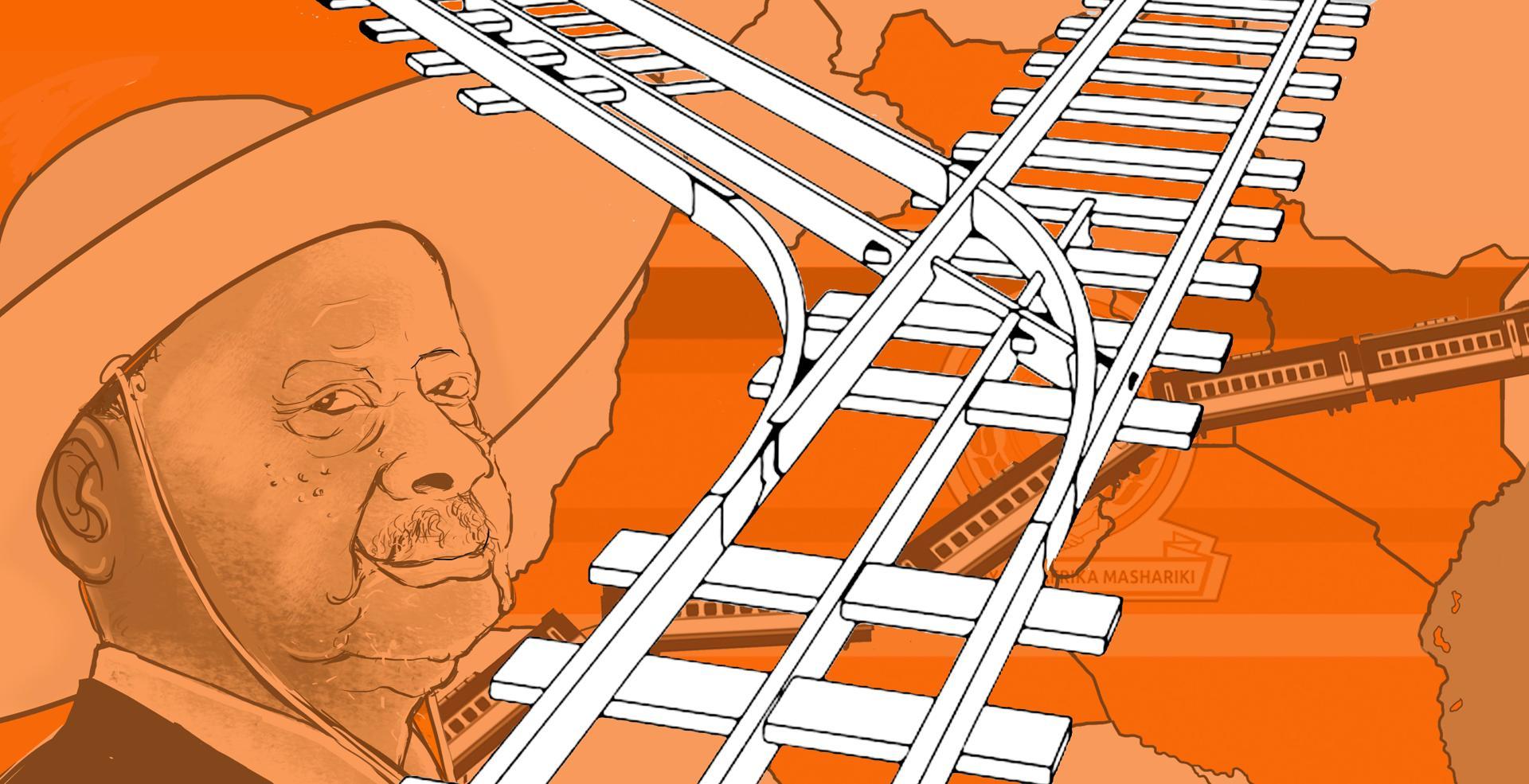
Africa-Press – Kenya. President Yoweri Museveni of Uganda was all smiles when he and President William Ruto launched the Kisumu-Malaba standard gauge railway – a key section of the modern railway network that is to ultimately connect the Ugandan capital, Kampala, to Kenya’s port city of Mombasa.
One word explains it all: landlocked.
The term “landlocked” is used to define a country that is entirely surrounded by other sovereign nations and so has no direct access to an ocean.
This direct access is important because most global trade is carried out by ocean-going vessels. And so being landlocked limits the country’s maritime trade opportunities as well as raises the transport costs of both imports and exports.
But this is a difficulty that can be tackled very effectively by the creation of appropriate infrastructure, in particular, a modern railway network.
I am given to understand that it has long been the dream of the Ugandan president that even if his country remained geographically landlocked, it should have a direct and reliable transport corridor to the Indian Ocean.
Such friction-free access to maritime trade routes, combined with Uganda’s proven capacity to generate cheap electricity, would be the key to the rise of a vibrant Ugandan manufacturing sector.
In this context, you can easily see why the extension of the SGR line to Uganda meant a lot to the country’s leader.
However, maybe he smiled a little too soon. Kenya’s experience with the original SGR track is a reminder that such things as visionary leadership and effective planning can easily end up frustrated by the longstanding Kenyan vices of corruption and incompetence.
Consider what happened when the first stage of the SGR railway – Mombasa to Nairobi – was launched way back in mid-2017. I quote here from a column I wrote in this very newspaper at that time:
…“The policy priority here, rationally, was not that of boosting local tourism. Rather, it was to reinforce our position as the key regional transport hub in East and Central Africa. The vision here should have been one of thousands of containers leaving the port of Mombasa and bound inland; not of hundreds of happy families heading for the coast on the “Madaraka Express.”
Here is how the BBC reported this “good news” in June 2017:“…At $5.6m per kilometre for the track alone, Kenya’s line cost close to three times the international standard and four times the original estimate…
Cost comparisons have been made between this line and Ethiopia’s 756km Addis Ababa-Djibouti line…Both are Standard Gauge Railway (SGR) projects financed by Chinese loans, costing $3.4bn (Kshs340 billion approx.) for Ethiopia and $3.2bn (Kshs320 billion) for Kenya…Ethiopia’s line is more than 250km longer and is electrified, which is typically more expensive; trains running on Kenya’s line will be diesel-powered.”
Now it is bad enough that this SGR was apparently built at a cost of roughly “three times the international standard” (which with these figures, would suggest a loss of about Kshs 200 billion). But worse still it is not functioning as it is supposed to.
Not that long ago, the Minister for Transport and Infrastructure, James Macharia, went on record as ordering importers to use the new SGR voluntarily – or else they would be compelled to use it. And reports have since followed of importers who had arranged to have their cargo delivered only up to Mombasa, finding that their goods were awaiting them at the Kenya Port Authority’s Embakasi Inland Container Depot in Nairobi…”
My point here is that Kenya seems to have a systemic problem when it comes to large infrastructure projects, irrespective of who the project contractors are. Sometimes we get it right: but at other times we don’t.
We can only hope that the project planners for this latest extension of the Kenyan/Ugandan modern railway system got their calculations and estimates right this time.
It would be a great pity if we once again end up with a railway that international traders initially have to be begged – or coerced – to use.
The concept of a railway connecting landlocked Uganda to the Indian Ocean has been a longstanding aspiration for the Ugandan government. Historically, Uganda’s geographical constraints have limited its trade opportunities, making efficient transport infrastructure vital for economic growth. The Standard Gauge Railway (SGR) project, initiated in Kenya, aimed to address these challenges but has faced criticism over costs and operational issues, highlighting the need for effective planning and execution in future projects.