
What You Need to Know
President William Ruto has pledged legal assistance to Gengetone and Urbantone artists who have lost rights to their songs due to questionable contracts. He emphasized the need for protection of creatives’ rights and announced the fast-tracking of the Creative Economy Bill 2026 to safeguard their interests and ensure fair compensation.
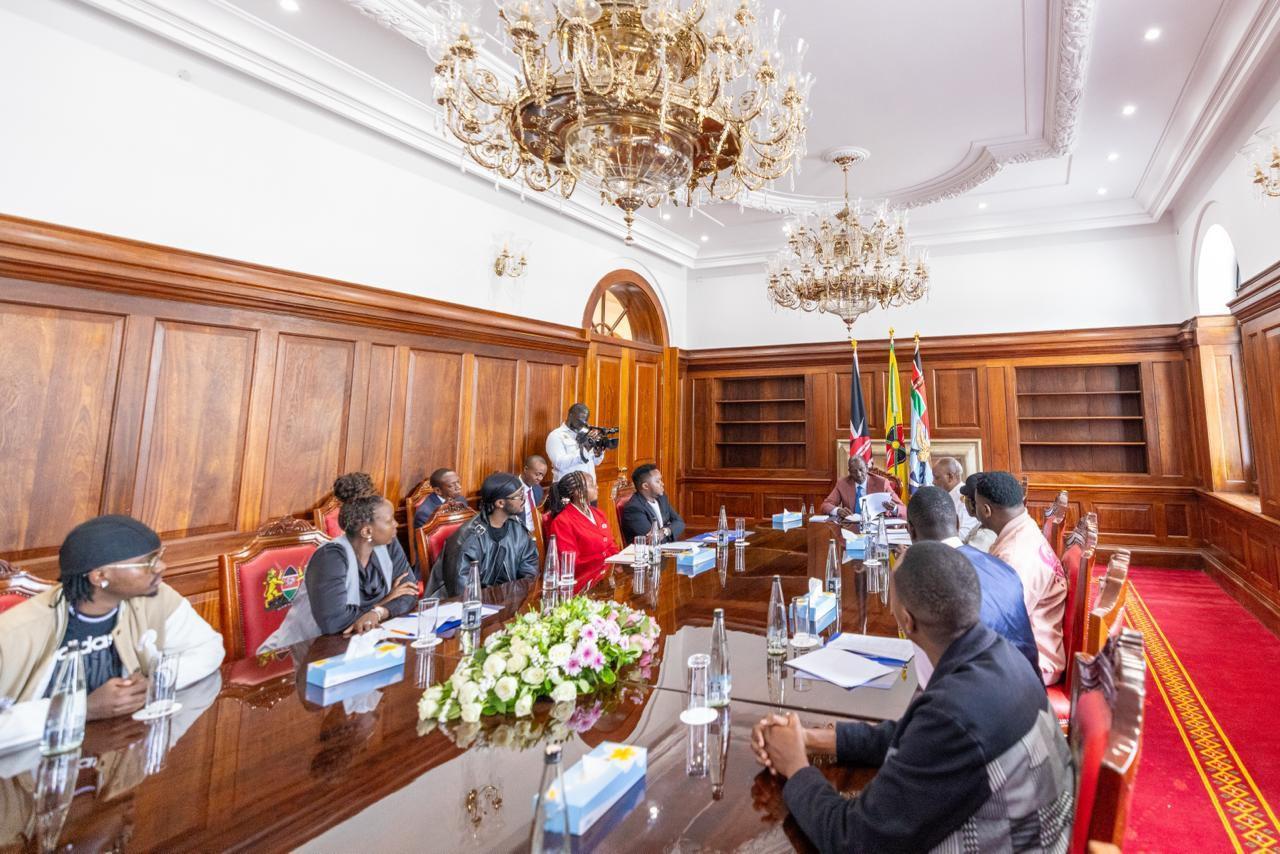
Africa-Press – Kenya. President William Ruto has promised to provide legal support for Gengetone and Urbantone artists who reportedly lost rights to their songs. The creatives held a meeting with Ruto on Wednesday, expressing concerns over losing rights to their music after signing “questionable contracts with foreign entities.”
“They have lost over 700 songs, including ‘Sipangwingwi,’ the song that powered our conversations in 2022,” Ruto said. Ruto described the loss of rights as regrettable, noting that young creatives faced exploitation despite displaying Kenya’s cultural identity.
To combat the loss, Ruto said he has ensured the artists receive legal assistance to ensure their creative rights are upheld. “I have facilitated legal support to ensure they are adequately represented in court,” Ruto said.
The president said the government held discussions to protect the interests of creatives and guarantee their equitable royalties. “We have agreed on practical measures to safeguard their interests and ensure they receive fair reward for their work,” he said.
Ruto added that he directed the National Assembly majority leader, Kimani Ichung’wah, to push for the completion of the Creative Economy Bill 2026. “I have also asked the National Assembly, through the majority leader, to fast-track the Creative Economy Bill 2026 alongside critical copyright reforms,” Ruto said.
The Bill is proposed legislation that aims to regulate, standardise, and monetise the creative industry. The Bill is intended to move the creative sector to a structured and sustainable industry by securing financial, legal, and institutional support for content creators, music artists, and filmmakers.
“These measures are necessary to protect our artistes, strengthen intellectual property rights, and secure the future of Kenya’s creative economy,” the president added.
Ruto further revealed that the government had created a portal in the e-citizen platform meant to ease royalty allocation and protect creator rights. “I also informed them that the government has established a digital portal on e-Citizen to aid royalty collection and distribution,” Ruto said.
The Gengetone genre has gained significant popularity in Kenya, reflecting the country’s vibrant youth culture and urban music scene. However, many artists have faced challenges regarding copyright and music rights, often signing contracts that lead to exploitation by foreign entities. The government’s intervention aims to address these issues and support local talent in navigating the complexities of the music industry, ensuring they receive due recognition and compensation for their work. This initiative is part of a broader effort to enhance the creative economy in Kenya, fostering a sustainable environment for artists.