What You Need to Know
Kenya is grappling with economic challenges as it seeks a new IMF financing program. Factors such as volatile diaspora remittances, rising fuel prices, and stagnating exports due to geopolitical tensions are complicating negotiations. The IMF has reaffirmed its support, but Kenya’s fiscal vulnerabilities remain a concern.
Africa-Press – Kenya. Kenya’s push for a new IMF financing programme faces fresh headwinds from diaspora remittance volatility, rising fuel prices, and export stagnation occasioned by the Middle East war.
This comes even as the IMF moved to re-affirm its support for Kenya at this week’s Spring Meetings in Washington, running from April 13-18.
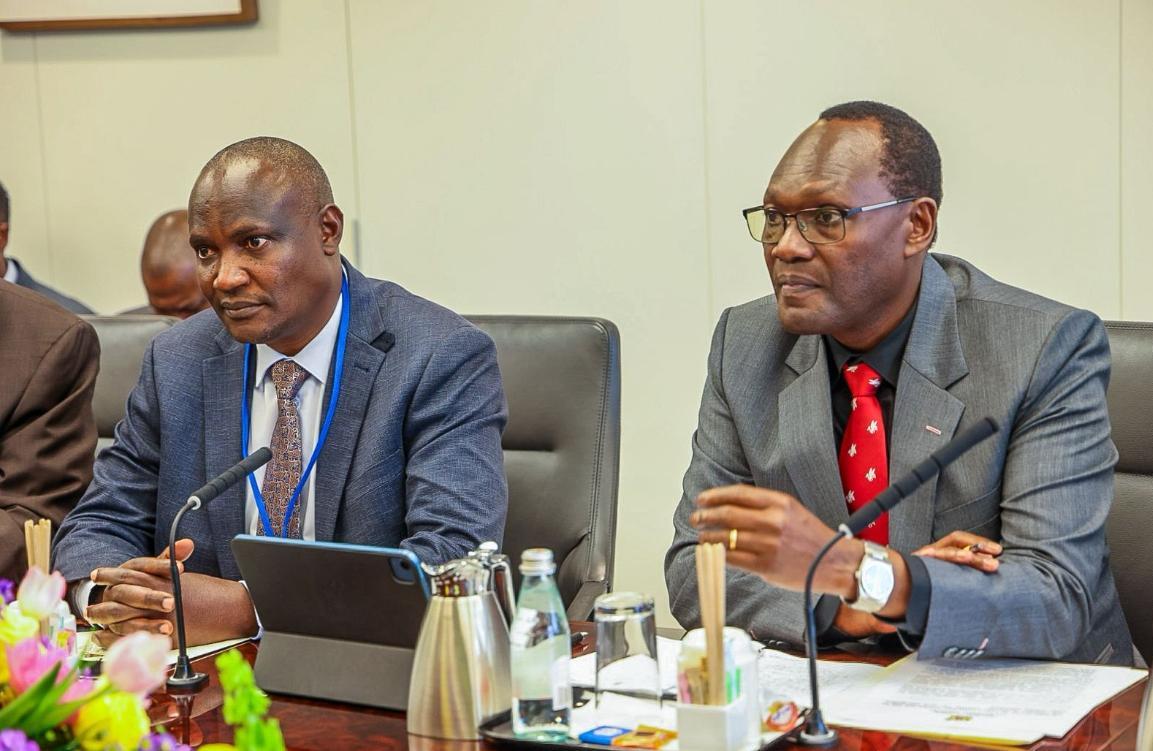
Treasury CS John Mbadi accompanies by PS Chris Kiptoo and Central Bank of Kenya governor Kamau Thugge are leading Kenya’s delegation at the high-level meetings.
On Monday, they held discussions with IMF managing director Kristalina Georgieva at the IMF headquarters in Washington DC.
“The engagement focused on Kenya’s macroeconomic performance, reform priorities and the evolving global economic outlook,” National Treasury said.
It said the discussions took place against a backdrop of heightened global uncertainty, with particular attention to the spillover effects of the Middle East conflict on growth, inflation, financial conditions, and external vulnerabilities, especially for emerging economies.
According to the Treasury, IMF emains committed to support Kenya through policy advice, technical assistance, and, where appropriate, financial support.
This gives hopes to Nairobi, which is keen to secure fresh support from the IMF before the close of the current financial year in June.
Kenya and the IMF in March 2025 agreed to discontinue the ninth review of the previous financing programme under the Extended Fund Facility (EFF) and Extended Credit Facility (ECF) approved in April 2021.
The $3.6 billion (about Sh466.4 billion) programme had been designed to support fiscal reforms, strengthen governance and help the country recover from the economic shock of the Covid-19 pandemic.
By late 2024, Kenya had already received about $3.12 billion (Sh404.2 billion) under the programme, but the final tranche was never released after the review process stalled.
Instead, both sides agreed to discontinue the final review and begin discussions on a completely new arrangement.
One of the major turning points that complicated the programme’s implementation was the wave of Gen Z-led protests in June 2024, which erupted across the country over proposed tax increases contained in the Finance Bill.
The tax increases were linked to IMF-backed fiscal reforms aimed at boosting government revenue and reducing Kenya’s fiscal deficit.
As the global economy grapples with the fallout of the Middle East conflict, analysts view the reaffirmation of IMF support for Kenya as less a celebration of past success and more a testament to the country’s deep external vulnerabilities.
The country’s high recurrent expenditure and high debt, which consumes most of its tax revenues has continued to remain a major concern, amid revenue shortfalls.
Analysts at the World Bank and independent observers point to three specific, compounding risks that formed the backdrop of the Washington discussions.
Among them is remittance volatility where diaspora inflows, often cited as a major contribution to forex reserves and key in Kenya’s balance of payments, are under threat.
March 2026 data indicates that up to $40 million (Sh5.2 billion) in monthly remittances was at risk due to potential job losses in Gulf construction and service sectors alone.
The disruption of maritime logistics in the Red Sea and the Strait of Hormuz has on the other hand sent global brent crude prices past $110 per barrel, fueling inflationary pressures that inevitably hit the Kenyan pump and manufacturing sectors, hence energy and fuel inflation.
Kenya is also facing stagnation on its exports mainly to the Middle East with where Iran, UAE and other Gulf states are significant export markets for the country’s tea and horticulture produces.
The ongoing geopolitical tension has threatened shipping routes and demand, directly impacting the income of thousands of smallholder farmers and agricultural workers.
To prioritise debt repayment and satisfy international creditors, the government could be forced to scale back public spending, which could further dampen growth in sectors like construction and infrastructure.
According to data analyst, Mihr Thakar, the budget deficit is back to six per cent of GDP with recent fiscal consolidation being short-lived, lasted barely two budget cycles and did not take the budget deficit below five per cent.
“It is fairly clear that government spending is out of control. Debt service has already hit 71.2 per cent of ordinary revenue in the previous fiscal year. With elections, education and health spending putting pressure on public coffers, the path towards fiscal consolidation is fraught with potholes,” Thakar said.
He further noted that growth has been lagging due to punitive regulations on small businesses, hence government’s plan to grow out of it has also failed.
Kenya is staring at insolvency if current status holds, according to economist Abraham Rugo, who notes that the solution for Kenya lays not so much in mobilising more revenues but in addressing expenditure drivers.
Meanwhile, IMF has asked Kenya to add pending bills, infrastructure funds from securitisation and non-guaranteed loans by State corporations of over Sh1 trillion to public debt, which would push the country’s debt beyond the Sh13 trillion mark.
CBK has revised this year’s economic growth prospects to 5.3 per cent from a previous projection of 5.5 per cent while World Bank has cut it to 4.4 per cent from 4.9 per cent.
Kenya’s economic landscape has been significantly shaped by its relationship with the IMF, particularly following the COVID-19 pandemic. The country previously engaged in a $3.6 billion financing program aimed at fiscal reforms and recovery, but challenges such as high debt and recurrent expenditure have complicated its implementation. Recent protests over tax increases linked to IMF-backed reforms highlighted public discontent and the complexities of managing economic recovery amidst external pressures.