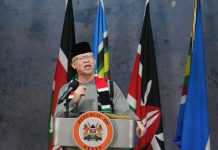

Africa-Press – Kenya. Kenya is on track to achieve its ambitious target of welcoming three million international visitors by the end of 2025, Tourism and Wildlife Cabinet Secretary Rebecca Miano has announced.
Speaking during a briefing, Miano highlighted the impressive performance of the sector, noting that international arrivals had already reached 2.4 million in 2024, signaling strong momentum for the current year.
The surge in visitor numbers, Miano explained, is largely attributable to the implementation of the Electronic Travel Authorisation (ETA) system, which replaced the traditional visa application process for most travelers.
The new system has streamlined entry into the country, reducing bureaucratic delays and facilitating faster, more efficient access for tourists.
“By simplifying entry, Kenya has positioned itself as a destination of choice for the modern, spontaneous global traveler,” Miano noted.
The government’s visa-free and simplified travel policies, introduced under President William Ruto, are designed to eliminate long-standing barriers to entry, making Kenya more competitive on the global tourism stage.
The reforms have not only made travel easier but have also strengthened the country’s profile as a welcoming and accessible destination.
Beyond visitor numbers, Miano emphasised the broader economic impact of the tourism sector.
The ministry projects that tourism will contribute up to Sh1.2 trillion to Kenya’s Gross Domestic Product (GDP) by the end of 2025, bolstering national revenue, supporting the shilling, and helping fund essential public services.
The government’s long-term target is even more ambitious, aiming to attract five million international visitors by 2027 and to raise the sector’s contribution to GDP to 10 per cent.
The reforms have also enhanced Kenya’s position as a regional hub for Meetings, Incentives, Conferences, and Exhibitions (MICE).
The country is increasingly emerging as a preferred destination for business tourism, reflecting its role as a pioneer of African integration and aligning with the objectives of the African Continental Free Trade Area (AfCFTA).
Miano also highlighted the importance of tourism for livelihoods across the country. The sector currently supports more than 1.7 million jobs, providing income for taxi operators in Nairobi, tour guides in the Maasai Mara, hoteliers along the Coast, and artisans in local markets. Looking ahead, the government aims to grow tourism-supported employment to 2.2 million by 2034, with a focus on creating sustainable opportunities for the youth.
The industry has seen a major rebound following the challenges of the past decade, with millions of tourists expected to visit during the festive season.
Miano reaffirmed the Ministry’s commitment to ensuring that every visitor experiences the best of Kenya from the moment they consider traveling.
“Our borders are open, our people are ready, and Kenya’s future as a global tourism hub is brighter than ever,” she said.