
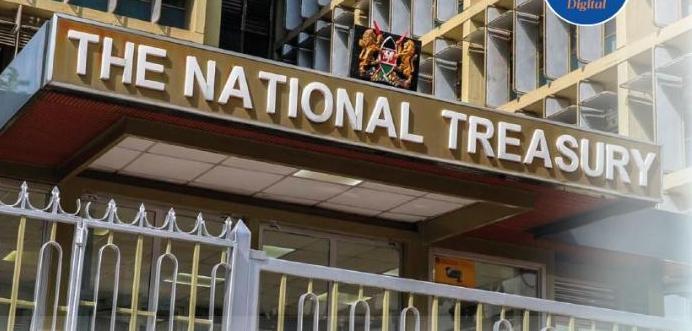
Africa-Press – Kenya. THE private sector wants national and county governments to clear pending bills currently at a high of Sh800 billion and date back to June 2005.
While government has made progress in paying bills owed to road contractors, after securitisation of a portion of the Road Maintenance Levy Fund (RMLF) which raised Sh175 billion, suppliers in other sectors still face financial constraints.
Evident is the recent supply hitch on Grade 10 textbooks where publishers were owned Sh11.4 billion.
According to the Kenya Publishers Association chairperson Kiarie Kamau, the backlog included Sh11.15 billion for Grade 1–8 textbooks and Sh234.5 million for Grade 9 materials.
The financial strain slowed the printing and distribution of essential learning resources.
As of June 30, 2025, national government pending bills owed to suppliers stood at Sh524.84 billion, up from Sh516.27 billion in the previous financial year.
State corporations held the largest share at Sh404.33 billion (77.09%), while Ministries, State Departments and Agencies (MDAs) had bills worth Sh120.51 billion (22.9%).
KeNHA, KeRRA, Ketraco and Rerec are among those that owed huge amounts to suppliers and contractors.
County governments owes approximately Sh177 billion to 180 billion in pending bills, with Nairobi county holding the largest share (over Sh100 billion). The rest is owed by private sector itself.
“Last time we did the assessment, both national and county governments owe businesses over 800 billion. So it is still a pain point in regards to the pending bills,” Kenya Association of Manufacturers CEO, Tobias Alando, said.
VAT refunds hitch also remains a concern for businesses with the sum currently at Sh35 billion.
“We are asking the government to fast track payments of those refunds. In fact, the other new proposal we have is to ring-fenfence the VAT refunds into a kitty,” Alando said.
This, he said, will guarantee timely payments.
Kenya Revenue Authority is required to process a VAT refund application within 120 days of receiving the application.
Financial experts and business leaders are of the opinion that KRA sets up a special fund to speed up tax refunds and boost cash flows for the corporate sector.
The delays, experts warn, are straining the liquidity of compliant taxpayers, particularly exporters and large corporations and undermining faith in the country’s tax administration system.
According to audit and consultancy firm PwC Kenya, taxpayers are increasingly frustrated by cases of system errors, unlawful reapplication requests and refund disputes that drag on even after favourable court rulings.
In some cases, businesses that have won refund cases are still being asked to reapply, a move tax professionals say is contrary to the law.
“The disconnect between legal provisions and actual practice not only frustrates taxpayers but also erodes confidence in Kenya’s tax system. Refund processing remains one of the most contentious areas in tax administration,” said PwC senior manager for tax services, Brian Kanyi.
Meanwhile, manufacturers have backed the e-GP (Electronic Government Procurement System) designed to automate and streamline public procurement, which they say will help cure the problem.
According to National Treasury, centralising public procurement for national and county governments will enhance transparency, efficiency and accountability.
“It addresses critical issues such as manual inefficiencies, corruption high transaction costs and limited bidder participation by providing an end-to-end electronic, open-contracting-compliant system for tenders, contracts and supplier management,” Treasury says.
The system has however faced resistance in both state agencies and Members of Parliament.
Under the system, suppliers are required to register on the e-GP Portal to be eligible to participate in an electronically enabled public procurement process, which KAM says will improve accountability.
“Through the system, there is no approval that will be done unless an allocation exists. So meaning if you supply, you should be guaranteed a payment,” Alando said.