Africa-Press – Lesotho. THE Juvenile Training Centre (JTC) says there has been a surge in the number of inmates convicted of sexual offences. Superintendent Mohlanka Lehloenya, the head of JTC, says nearly 70 percent of the centre’s inmates were convicted of sexual offences.
This, Superintendent Lehloenya says, shows that more teenagers and young boys are committing sexual offences. “Some of the inmates are as young as 11,” he says, adding that sexual offences have reached endemic levels in Lesotho.
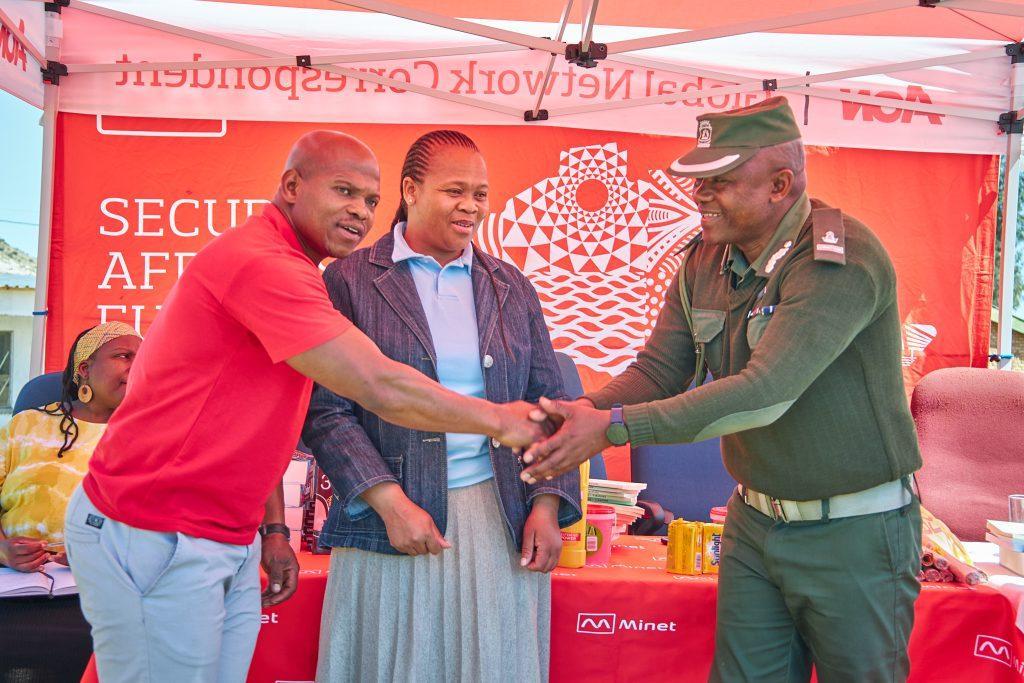
Superintendent Lehloenya was speaking on the sidelines of an event where Minet, an insurance company, donated books, gardening equipment and cosmetics to the cash-strapped rehabilitation centre.
The number of sexual offenders at the centre mirrors that of inmates in adult jails. It is estimated that a staggering nine in every 10 inmates in adult jails are serving sentences for sexual offences.
And it doesn’t appear that the trend will be reversed any time soon. Superintendent Lehloenya says although the number of juveniles convicted of sexual offences has been rising since 2000, the past five years has seen a spike.
He blames alcohol, drugs and peer pressure. But he also says counsellors at the centre are also noticing that the majority of the inmates come from single-parent or child-headed homes. He says the collapse of the traditional family structure has left many children without adults who could mentor and nurture them.
Superintendent Lehloenya says in the absence of parents or adults children are driven to the streets where they are influenced by peers to take alcohol, drugs and commit sexual offences.
He says young men are sexually assaulting both young girls and older women. He says apart from pressure from peers, young people are also being influenced by adults who have also neglected their role as caretakers in communities.
Instead of helping young people to be on the straight and narrow, adults are sharing alcohol and drugs with them, Superintendent Lehloenya says. “We are living in an era where there is no difference between young children and older people.
” He also notes that even children from homes with parents are also falling into bad habits.
“I have been approached by many parents who want to take their children into this facility due to their bad behaviour,” he says.
Superintendent Lehloenya believes that schools should have programmes to groom the children in social skills and religion. The government should have centres to empower the youths with social skills, he says.
“The community should establish forums that will assist in training the children, particularly those who are living at home without parents.
“It takes a village to raise a child.
” One of the inmates is Thato Moratuoa (not his real name) who was admitted to JTC in 2020 after being convicted of rape.
He blames his misdeeds on the influence of his peers he says pressured him to use drugs. “I felt so weak when my peers were ahead of me,” he says. One day, while he was under the influence of drugs, Moratuoa raped his girlfriend.
He has been paying a dear price for his sins since then. Thetela Phumo, the chief officer of the JTC, says Moratuoa’s story is typical of the inmates at the centre.
Phumo says there is a belief among young boys that for one to be regarded as a man he has to have sexual partners. He says those who don’t engage in sex are labelled weak and become the butt of jokes.
He adds that to get their peers’ approval some young men end up raping women. “These young men are picking these terrible habits on the streets,” Phumo says.
He however adds that some of the youths are also picking bad habits from their parents who are themselves delinquents. The result, Phumo explains, is that parents raised without morals and values are raising children who become mirror images of themselves.
This creates a vicious circle of a society that perpetuates itself in a deeply flawed process. The JTC however has some success stories. Moratuoa says the past three years at the centre have helped him become a better person.
He says the most important part of his rehabilitation has been to accept responsibility for his actions. “I have admitted that I wronged people. I am prepared to face them and ask for forgiveness as proof I am now a changed person.
” Moratuoa has gone back to school and is writing his final high school exams this year. He is also getting basic training in carpentry and farming. The police don’t keep a reliable record of sexual offences.
According to the Bureau of Statistics Crime Statistics report 2016, sexual offences are number three on the chart, with house-breaking and stock theft being number one and two respectively.
According to a United Nations study conducted in 2015 Lesotho has the highest rape rate in the world, with 61 percent of women reporting having experienced sexual violence at some point in their lives.
For More News And Analysis About Lesotho Follow Africa-Press