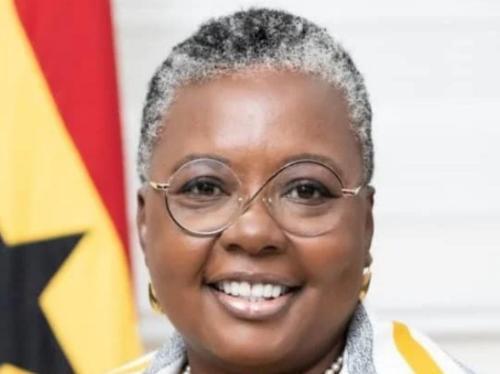
Africa-Press – Liberia. The Minister of Fisheries and Aquaculture Development of Ghana, Madam Emelia Arthur, on behalf of her country, has vowed full support to Liberia quest in the development of its blue economy, noting that there is a need for urgent action, regional cooperation, and firm political commitment.
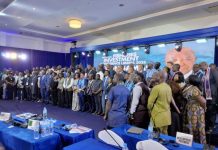
Madam Arthur sounded the commitment at the opening of the just ended two-day National Fisheries Investment Conference “KPONGAMA” 2026 at the Farmington Hotel in Margibi County.
Organized by National Fisheries and Aquaculture Authority (NaFAA), ‘Kpongama’ 2026 is being held under the theme, “Unlocking the Blue Horizons: The Future of Fisheries and the Blue Economy.”
The conference, which brought together government officials, development partners, private sector actors, and academia, aims to position Liberia’s fisheries and aquaculture industries as viable and competitive investment destinations.
The Ghanaian Fisheries and Aquaculture Minister, who described the conference as a declaration of intent by Liberia in shaping marine future of Africa, pointed out Liberia possesses significant natural endowments that can drive national prosperity if backed by clear vision and structured planning.
“Transformation happens by design, not by chance,” she noted, stressing that the development of the blue economy can no longer be delayed.
“Vision must be marked by structure, and structure by law. Beyond infrastructure and policy, the true foundation of the blue economy lies in the people, whose participation will be critical to long-term success,” the Ghanaian government official told the gathering.
Minister Arthur also called for stronger regional collaboration across West Africa, describing it as essential and not optional as the region strives for job creation and improve food security.
With coordinated efforts, Minister Arthur furthered that the region’s coastline could be transformed into “a corridor of possibilities and opportunities,” in unlocking shared economic growth and sustainable development.
Speaking earlier, the Director General of NaFAA, J. Cyrus Saygbe, says Liberia is charting a new course to transform its maritime and fisheries sectors into a major driver of economic growth, according to a new government roadmap focused on the “blue economy.”
He explained that investments in modern infrastructure such as industrial fishing harbors and expanded cold storage networks will help the country add value domestically while reducing post-harvest losses.
A key feature of many strategies, he asserted, is the use of artificial intelligence to monitor and combat illegal fishing, a long-standing challenge in Liberia’s waters, stressing that, this technology will strengthen enforcement and protect marine resources.
The government is also rolling out a ten-year development plan aimed at industrializing aquaculture and boosting sustainable seafood production.
Saygbe reveals that in order to support these ambitions, Liberia is actively seeking international investors and private sector partners to provide financing, expertise, and advanced technology.
The NaFAA boss is convinced that investment in the fisheries sector will create jobs, improve food security, and position Liberia as a regional leader in sustainable ocean-based development, while aligning with global standards for marine conservation.
At the same time, the World Bank has emphasized that sustainable investment is key to transforming the sector into a major driver of the country’s economy.
World Bank Liberia Country Manager Madam Georgia Walle, who spoke on at the fisheries conference, stated that since 2021, the World Bank has been supporting Liberia in shaping a people-centered fisheries agenda that prioritizes coastal communities, artisanal fishers, women, and youth.
“Investments are critical because they create income for the people, drive growth, and build long-term wealth for the country,” she said. “They also provide incentives for the sustainable management of fisheries resources and aquaculture.”
She highlighted the World Bank’s Liberia Sustainable Management Fisheries Project as a cornerstone of efforts to reposition the sector, outlining five key areas of intervention designed to make fisheries more “investment-ready.”
According to the World Bank Country Manager, the first focus is on human capital development, including support to the University of Liberia to establish a modern fisheries academic program aimed at training the next generation of professionals in the sector.
The second area involves strengthening stakeholder participation, with targeted support to aquaculture farmers and women entrepreneurs through training, grants, and improved access to sustainable practices and financial opportunities.
She also pointed to catalytic investments such as the Klay hatchery, the introduction of the country’s first semi-industrial fishing vessel “Sea King,” and an incubator program for new canoes as initiatives intended to attract private sector interest.
Additionally, the World Bank is supporting digitization and modernization within the National Fisheries and Aquaculture Authority (NaFAA), including the establishment of a one-stop service center for fishers and processors, alongside enhanced monitoring and surveillance systems to improve transparency and governance.
For More News And Analysis About Liberia Follow Africa-Press