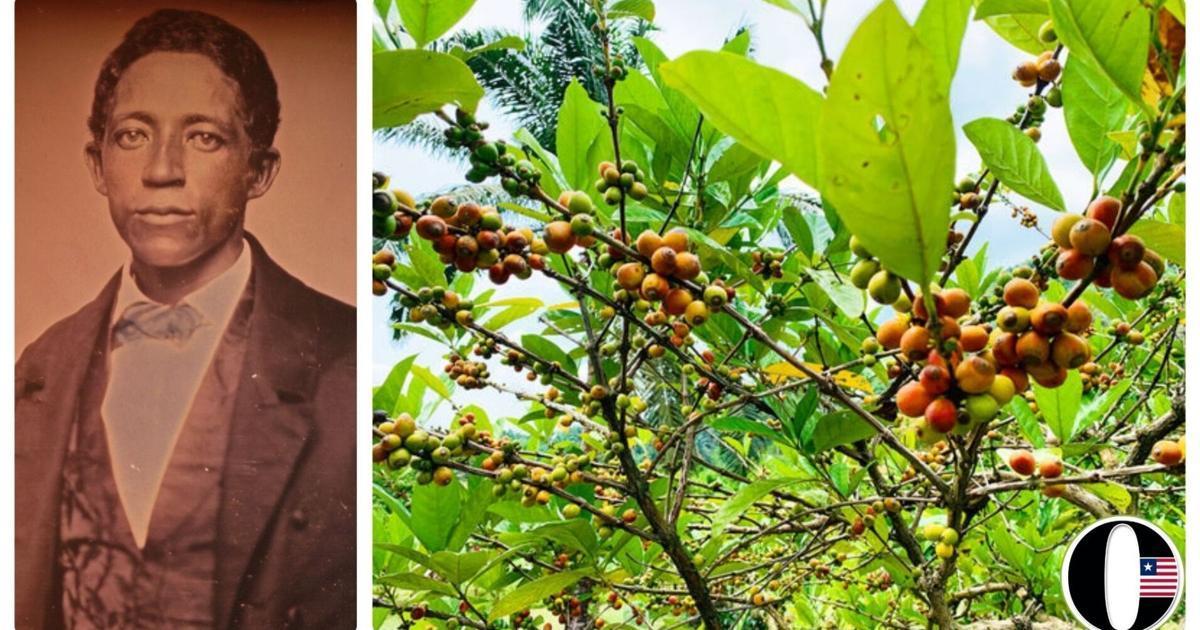
Africa-Press – Liberia. The coffee that Edward Wilmot Blyden proudly described to the American Colonization Society in 1883 — the rare, resilient Coffea liberica — is poised for a remarkable comeback. Indigenous to Liberia and Sierra Leone, the Liberica coffee tree once elevated Liberia to international fame as a producer of some of the world’s finest coffee. Now, amid the intensifying climate crisis, this hardy species offers fresh promise not just for Liberia, but for the future of global coffee production itself.
“The Liberian Coffee is considered among the best in the world,” Blyden wrote, “and the people are now turning their attention largely to its cultivation.” His words ring truer today than ever before, as scientists, farmers, and market analysts look for coffee species capable of thriving in a warming world. Liberica, with its natural resilience, is emerging as a prime contender.
A Legacy of Excellence
In the mid-19th century, Liberian trader Urias Africanus McGill — frustrated by America’s rejection of a trade partnership — turned to Brazil, where his Liberica beans were eagerly welcomed. Through the success of McGill Brothers, Liberia built its early economy on the export of agricultural treasures such as piassava, oil palm, and Liberica coffee. McGill’s cooperative farming model, supported by Gola and Bassa farmers, turned Liberica into one of Liberia’s most celebrated export commodities.
The Liberica coffee tree itself is distinctive: a towering species reaching up to 14 feet, its broad leaves have long been valued for their medicinal properties. Unlike the smaller Arabica or Robusta bushes, Liberica produces beans from flowers blooming along its elongated branches, with fruit that ripens into a deep red. Its exceptional qualities made it popular not only in Brazil but also in countries like Sri Lanka (then Ceylon), Costa Rica, Peru, and Mexico.
Climate Resilience: Liberica’s Competitive Edge
Today, as global temperatures climb and traditional coffee species suffer, Liberica’s extraordinary resilience is drawing critical attention. As Food and Beverage Outlook editor Ed Budds notes in his article, “Goodbye Arabica, Say Hello to Liberica”:
“A confluence of defining factors could prove instrumental in the grand return of Liberica coffee. A robust and high-yielding resource, with incredibly high resistance to deadly pests and disease, as well as an optimal tolerance for warmer temperatures, Liberica looks set to flourish, especially across Africa.”
Where Arabica and Robusta falter under heat stress, Liberica endures. Its genetic tolerance to higher temperatures and pests positions it as one of the few coffee species likely to thrive through the mid-21st century — a period when up to 50% of current coffee-growing land may become unsuitable for traditional varieties, according to climate models.
The Coffee Consulate, an internationally respected research center, reinforces these findings, noting that Liberica’s “extraordinary botanical robustness” and “adaptability to diverse climatic conditions” make it a natural candidate for sustainable coffee farming in an unpredictable future.
By 2050, coffee lovers around the world may find their morning brew increasingly sourced from Liberica beans — if countries like Liberia act now to reclaim and expand their leadership.
Reclaiming Liberia’s Coffee Crown
Strikingly, while Budds lists several African nations where Liberica is gaining ground, Liberia — the species’ birthplace — is notably absent. This gap represents both a cautionary sign and a vast opportunity.
Liberians must move decisively to re-establish Liberica cultivation as a national and regional priority. As Edward Wilmot Blyden urged more than a century ago:
“We dwell in a country rich in resources, which with little exertion can be called forth in sufficient variety and abundance to render us comfortable and independent.”
Today’s Liberian farmers, entrepreneurs, and policymakers have the chance to fulfill Blyden’s vision by revitalizing Liberica as a key pillar of national prosperity. Regional integration, serving a West African market of nearly 500 million people, could magnify the benefits even further — creating stable jobs, boosting agricultural exports, and reducing dependence on imported, inferior goods.
Given projections that global coffee trade revenues will soar from $34.89 billion in 2025 to over $61.60 billion by 2033, the potential financial rewards are enormous. In an era where quality, sustainability, and resilience will define the most prized commodities, Liberica offers Liberia a once-in-a-generation chance to command a premium place in the global market.
A Sacred Duty and Strategic Opportunity
As climate change redraws the agricultural map, Liberia must protect and champion its native treasures. Our sacred markets must be reserved for quality, not cluttered with cheap imports. Our supermarkets should proudly feature Liberica — not inferior, instant coffee from distant shores.
When the climate winds strip away fragile Arabicas across the globe, Liberica — born in Liberia’s soil and nourished by its sun — will stand tall. It will offer the world a superior, resilient beverage at its true value.
We owe it to our ancestors, to the legacy of trailblazers like Urias McGill, and to future generations to labor diligently, secure our wealth, and proudly proclaim that in the age of climate resilience, the world’s best coffee still grows in Liberia.
Source: Liberianobserver.
For More News And Analysis About Liberia Follow Africa-Press