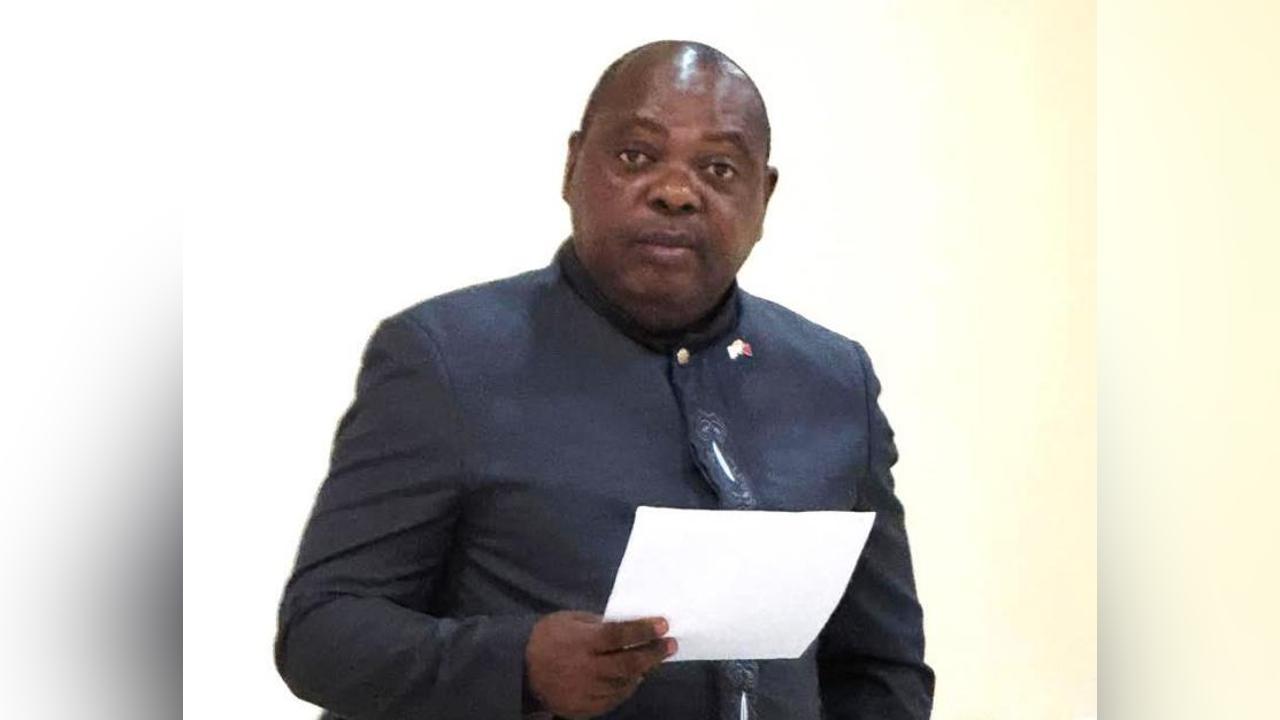
Africa-Press – Liberia. Chairperson of the Law Reform Commission(LRC), Cllr. Bornor Varmah
The Chairperson of the Law Reform Commission(LRC), Cllr. Bornor Varmah, has said the stability, credibility and legitimacy of Liberia’s democracy hinge not merely on the conduct of elections, but on the strength, clarity and integrity of the laws that govern them.
Cllr. Varmah pointed out that electoral reform is not optional, but it is imperative.
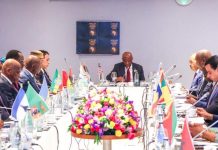
Speaking at the Board of Commissioners Retreat of the National Elections Commission (NEC) in Buchanan City, Grand Bassa County recently, the LRC Chairperson Cllr. Varmah emphasized that institutional collaboration between the NEC and the LRC is not desirable but it is indispensable.
Cllr. Varmah, who is also the National President of the Liberia National Bar Association (LNBA), stated that Liberia has held successive elections since the end of civil conflict.
‘‘We have made progress. But we must also speak truthfully. Every electoral cycle has revealed legal ambiguities, procedural gaps and structural weaknesses that, if left unaddressed, risk eroding public trust,” Cllr. Varmah intoned.
According to Cllr. Varmah, democracy does not collapse overnight, but It weakens gradually through unclear laws, disputed mandates, procedural confusion and preventable institutional tensions.
“This is why the directive for the Law Reform Commission to lead the legal reform process is not a mere administrative decision. It is a recognition that our electoral framework must be systematically reviewed, modernized and strengthened,” Cllr. Varmah accentuated.
He said the LRC cannot and will not undertake this responsibility in isolation.
The President of the LNBA noted that the NEC is the constitutional body charged with administering elections. “You understand the operational realities. You confront the logistical challenges. You manage the tensions of electoral competition. You interpret and apply the Elections Law under real-time pressure,” Cllr. Varmah uttered.
Cllr. Varmah maintained that the LRC brings a different but complementary mandate to scrutinize the law itself, to identify inconsistencies and constitutional vulnerabilities, to draft coherent, enforceable and future-oriented legal frameworks, to ensure that reforms are not reactionary, but structural and durable.
‘‘Where the NEC brings operational insight, the LRC brings legislative precision. Where the NEC experiences implementation challenges, the LRC diagnoses legal causes. Where the NEC identifies gaps, the LRC crafts solutions,’’ saying these roles are not competing, but they are interdependent.
He mentioned that when electoral management bodies and law reform institutions operate in silos, three risks emerge:
Technical reforms without legal backing leading to implementation crises and legal amendments without operational feasibility leading to impractical statutes, public perception of institutional rivalry leading to diminished confidence.
He said Liberia cannot afford any of these. “This retreat must therefore mark a turning point where collaboration moves from courtesy to commitment, from occasional consultation to structured partnership,” he suggested.
Cllr. Varmah said there are specific reform areas where NEC–LRC coordination is non-negotiable:, adding that clarifying electoral dispute resolution mechanisms to prevent post-election instability, strengthening campaign finance regulations to protect the integrity of political competition, reviewing NEC governance provisions to reinforce both independence and accountability, modernizing voter registration, technology frameworks with strong legal safeguards and examining constitutional questions such as diaspora voting and electoral thresholds.
‘‘These are not abstract academic issues. They are matters that directly impact political stability and national cohesion.’And let us remember, poorly drafted electoral laws do not merely create administrative inconvenience, they create political crises,’’ he continued.
He named four areas of testing if NEC and LRC should work collaboratively with constitutional fidelity – Every reform must align fully with the 1986 Constitution, operational realism – Every amendment must be practically implementable, public legitimacy – Every process must be inclusive and transparent, durability – Every reform must outlive individual administrations and political cycles, which he said requires structured collaboration, not informal exchanges.
Therefore, Cllr. Varmah strongly proposed the followings: A Joint NEC–LRC Technical Working Group on Electoral Reform, regular institutional consultations during drafting stages, shared research and data exchange mechanisms, coordinated stakeholder engagement to avoid duplication and mixed messaging, a jointly agreed reform roadmap with timelines and deliverables.
‘‘Electoral reform must not become an arena for partisan advantage. If reform is perceived as politically driven, it will fail before it begins,’’ the LNBA President said.
The strength of this process lies in its neutrality. ‘‘The Law Reform Commission stands ready to exercise its mandate with independence, professionalism, and constitutional discipline. We expect and trust that the National Elections Commission will bring the same commitment,” Cllr. Varmah further mentioned.
‘‘History will not judge us by the comfort of our discussions in this retreat. It will judge us by the strength of the legal framework we leave behind.’’
He indicated that Liberia’s democracy is bigger than any institution represented here, stressing that it is bigger than any administration and that it belongs to the people. “When laws are clear, elections are credible. When elections are credible, governments are legitimate. When governments are legitimate, stability follows,” Cllr. Varmah further uttered.
The LRC Chairperson averred that the partnership between the NEC and the LRC is therefore not bureaucratic coordination, but it is a pillar of democratic stability.
“Let this retreat send a strong national signal. That our institutions are aligned.That reform will be systematic, not superficial. That collaboration will be structured, not symbolic, that Liberia’s electoral laws will be strengthened with seriousness and urgency,” he added.
For More News And Analysis About Liberia Follow Africa-Press