Africa-Press – Liberia. A recent engagement between the Netherlands Institute for Multiparty Democracy (NIMD) and senior staff at the Legislature has once again brought to the surface a long-standing concern among many Liberians and governance experts, development partners, and even legislative staff themselves: Liberia’s National Legislature has persistently failed to embrace meaningful institutional reform, despite years of donor support and clear regional examples of what a modern parliament should look like.
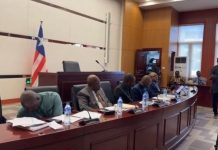
The findings emerged from a one-day Capacity Needs Assessment and Working Session held with Directors and Deputy Directors of all 16 departments of the Legislative Secretariat. The exercise, co-funded by the European Union, Irish Aid, and the Embassy of Sweden under the Liberia Electoral Support Project Plus (LESP+), was managed by UNDP and jointly implemented by NIMD and UN Women.
While the initiative was intended to identify strengths, gaps, and low-cost reform opportunities, it instead revealed a legislature struggling with basic operational functionality—and, more troublingly, a political leadership that appears unwilling to prioritize modernization.
According to some participants who spoke during the session, the challenges facing the Legislature are not technical—they are political.
“We don’t even have basic computers in departments that are supposed to manage information,” said a senior officer in one of the administrative units, who cannot be named due to fear of repercussions. “You can’t talk about transparency or accountability when your ICT department itself has no functional equipment.”
Another department head lamented the absence of support from the central administration and lawmakers themselves, noting that repeated requests for basic logistics such as microphones, record-keeping tools, and digital storage systems are routinely ignored during budget hearings.
“Both chambers don’t even have functional websites,” he said. “Citizens cannot track bills, votes, or committee work. Internally, we rely on paper files that get lost or damaged. This is not a modern legislature.”
The situation is particularly striking given that modernization initiatives were once proposed—and in some cases piloted—within the Legislature, only to be quietly abandoned.
Among these was a public electronic voting system, which would have allowed citizens to see how lawmakers voted on key national issues. The system was discussed, partially demonstrated, and later shelved—largely due to resistance from lawmakers wary of increased public scrutiny.
“There was fear,” said another legislative staff member. “Once votes are public, lawmakers are accountable. That idea didn’t sit well with many members.”
Other stalled initiatives include, digital bill-tracking systems, committee livestreaming, public access portals for legislative documents, institutional social media platforms, and strengthened Legislative Information Service (LIS) operations
Despite repeated donor interest and technical support offers, appropriations for ICT infrastructure have consistently failed to materialize.
Regional Comparison: Liberia Falling Behind
During the session, NIMD Country Director, Cllr. Oscar Bloh, presented findings from a learning tour across the sub-region, highlighting best practices in parliamentary openness and accountability using the Open Parliamentary Index (OPI).
The results were stark, Ghana: 63%, Cape Verde: 61%, Sierra Leone: 57%, Liberia: 33.6%
Liberia ranked near the bottom in all three OPI pillars, Transparency Liberia scored 17.5%, ranking fourth from the bottom, Civic Participation, at 9.33%, Liberia ranked second from the bottom—reflecting weak public engagement mechanisms and limited access to legislative processes, Public Accountability, Liberia scored 6.82%, again ranking near the bottom, underscoring the lack of systems that compel lawmakers to answer to citizens.
In contrast, Ghana’s Parliament operates a state-of-the-art media center, maintains active social media platforms, and has institutionalized cooperation with civil society through formal MoUs. Civil society organizations even have designated desks within the Ghanaian Parliament—something unthinkable in Liberia’s current legislative culture.
The troubling situation back home shows leadership silence and institutional weakness. Perhaps the most troubling revelation from the NIMD engagement was the near-total absence of strong leadership endorsement from the heads of both chambers for reform initiatives that would empower departments and professionalize legislative operations.
Critical bodies such as the Legislative Information Service (LIS), the Legislative Budget Office (LBO), and the Public Accounts Committee (PAC) Secretariat remain under-resourced, understaffed, and politically marginalized—despite their central role in oversight, accountability, and fiscal governance.
Without leadership backing, even the most well-designed donor-supported interventions risk failure.
Why Resistance to Reform Matters
A weak legislature has consequences far beyond Capitol Hill, as without proper records, public access to information, or digital systems, citizens cannot hold lawmakers accountable, oversight of public spending weakens, lawmaking becomes opaque and personalized, and trust in democratic institutions erodes.
Ironically, these reforms do not require massive financial investment. As NIMD officials noted, many are “low-hanging fruits”—websites, basic ICT tools, open committee hearings, and vote records.
What they do require is political will.
The NIMD engagement sets the stage for future training and advocacy, including engagements with the House and Senate departments and targeted institutional strengthening. But unless lawmakers themselves embrace reform, progress will remain limited.
As one senior legislative staffer put it bluntly, “We are being asked to build a modern parliament with 20th-century tools—and 19th-century attitudes.”
The question now confronting Liberia’s first branch of government is no longer whether reform is possible. It is whether lawmakers are willing to be governed by the same transparency and accountability they demand from others.
Until that question is answered, Legislature risks falling further behind its neighbors—and further away from the democratic ideals it was created to uphold.
Source: Liberianobserver
For More News And Analysis About Liberia Follow Africa-Press