Africa-Press – Malawi. There is an erroneous notion that the three arms of government: the Executive, the Legislature and the Judiciary, are equal in their powers. The confusion comes in when people associate equality with independence of these three institutions.
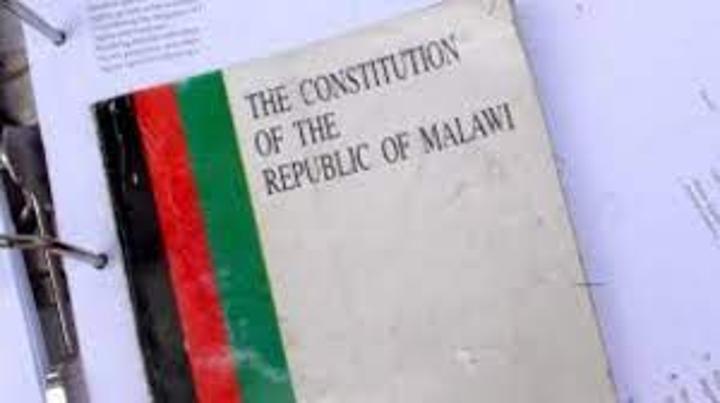
It must be asserted that the three arms of government are simply independent but not equal in power and supremacy. For starters, sections 7, 8 and 9 of the Malawi Constitution outline separate status, functions and duties of each arm of government respectively.
In other words, these three institutions must work without interference of the other. However, the independence of these arms of government does not imply that they are equal in superiority and power.
The question that is pertinent here is, if they are not equal, what is the hierarchy of these institutions? Simply put, the hierarchy is as follows: the Executive, the Legislature and the Judiciary. That is the order of their supremacy
It must be pointed out that the supremacy of one arm of government does entail that it has absolute control over other lesser arms because the Constitution of Malawi enforces the separation of powers and functions among these three institutions.
But what are the factors that substantiate the supremacy of the Executive arm of government over others? Or the superiority of the Legislature over the Judiciary? Only two aspects are tackled here: functionaries of each institution and the mandate of its leadership.
The Executive
The Executive is concerned with the administration of the state. It ensures that laws made by the Legislature are properly executed. In a nutshell, the Executive is responsible for implementation of laws, diplomatic relations, checks on other arms of government, appointments and treaties.
The Executive, therefore, wields the greatest power as it plays a great role in governance including the police, Malawi Defence Force, ministries and parastals.
The head of the Executive is the President. He has powers to appoint the Inspector General of Malawi Police Services and the Commander General of the Malawi Defence Force. Of course, such positions are later confirmed by the National Assembly.
The President also appoints board of directors of various parastatals. The President also appoints Chief Justice who heads the Judiciary. He also makes other judicial appointments.
The State President who also heads the Executive opens budgetary sessions in Parliament. He assents to bills deliberated upon by the National Assembly. The functions of the Executive make it the most powerful arm of government.
To be elected into the office of the President, one needs to amass the majority of the votes cast in the whole country. In other words, the head of the Executive is an elected position.
The legislature
This is the second powerful arm of government. It is responsible for law making, amendments and review of laws. The Judiciary also checks on other arms of government so that they work in accordance with guiding laws and rules for the benefit of the citizens.
For example, we saw the National Assembly redefining explicitly the meaning of the word ‘majority’. It indicated that the word ‘majority’ means first past the post for parliamentary and local government elections contrary to the general interpretation of the courts.
The head of the Legislature is the speaker who is also a member of Parliament elected by their constituents. The Speaker must also be elected by the National Assembly.
The judiciary
Contrary to the views of many people, the Judiciary is the least powerful arm of government. Its main duty is to interpret the Constitution and laws enacted the legislature. It also settles disputes amicably among various aggrieved parties.
Being the least powerful, the Judiciary shouldn’t be underrated as it also provides checks on other arms of government. It has powers to review the actions of the Legislature and the Executive through judicial review.
One of the reasons the Judiciary is rated as the least powerful is that its head is not an elected position. The Chief Justice is appointed by the President and confirmed by another arm of government, the Legislature. The Judiciary has no mandate to amend either the Malawi Constitution or a Acts of Parliament.
For More News And Analysis About Malawi Follow Africa-Press