By Ben Bongololo
Africa-Press – Malawi. Education debates in Malawi often follow a familiar pattern: private and mission secondary schools are praised for strong MSCE results, while government schools are often criticised for underperformance.
Yet at the university level, public institutions remain the most competitive and highly respected compared to private and mission universities.
This raises a question that is often overlooked: are we really being fair when we judge schools, or are we comparing systems that were never meant to be measured in the same way?
The answer lies in how the system is structured, rather than in simple comparisons of performance.
Private and mission schools: Excellence before exams
Private and mission secondary schools are widely associated with strong MSCE performance, with institutions such as Marist Secondary School, St. Mary’s Secondary School, Likuni Boys Secondary School, and Maranatha Academy often among the top performers in Malawi.
At first glance, this may suggest clear academic superiority. However, a closer look shows that performance is shaped more by structure and student intake than by results alone. One key factor is selection.
Many of these schools admit learners who already have strong academic foundations, teaching often begins with a high-performing intake.
Discipline and structured learning environments also play a key role.
Mission schools, in particular, are known for strict routines, supervised study time, and disciplined cultures that minimise disruption and maximise learning time. Accountability also strengthens performance.
In many fee-paying or mission-run schools, strong pressure to maintain high pass rates influences teaching standards, student support, and overall school management. In some cases, how schools manage student progression may influence who sits for national examinations.
Learners who struggle academically may repeat a class, transfer, or take alternative pathways before reaching exam level, meaning MSCE candidates may, in some instances, be a more prepared group of students.
In addition, some schools admit students who have already written MSCE and allow them to repeat to improve their grades.
While this supports learner improvement and second chances, it may also mean final results reflect students who are already relatively strong academically.
Taken together, these factors suggest that strong MSCE results in some schools are influenced not only by teaching quality, but also by student selection, learning environments, and progression pathways within the education system.
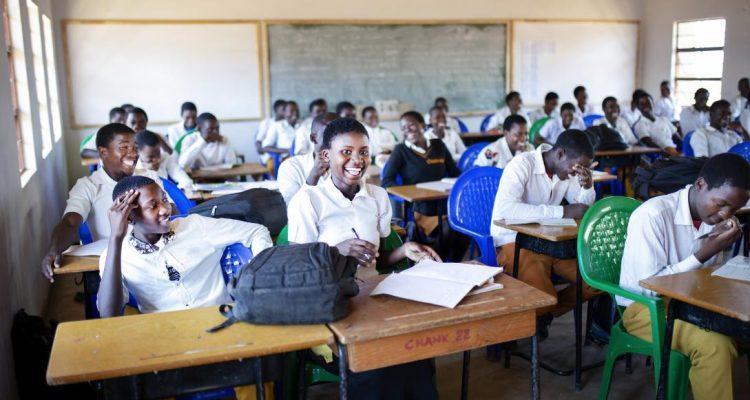
Public secondary schools: Inclusion under pressurePublic secondary schools, including community day secondary schools, operate under a broad public education mandate.
Their primary role is access, providing learning opportunities to all students regardless of academic background or ability.
As a result, classrooms often include mixed-ability learners, from high performers to those needing additional support. Unlike selective institutions, public schools generally do not filter students based on performance.
At the same time, many public schools face significant structural challenges, including overcrowded classrooms, limited learning resources, and shortages of qualified teachers in some subjects.
Such conditions can affect the learning environment and make it difficult to achieve consistently strong examination results, even where teachers are committed and working under difficult conditions.
Against this background, only a small proportion of MSCE candidates in Malawi gain admission into public universities each year, reflecting the competitiveness of entry and wider system pressures.
Why public universities remain the most competitive? At tertiary level, the pattern changes again.
Public universities such as Mzuzu University and the University of Malawi remain the most prestigious and competitive institutions in the country.
This is largely because admission is highly selective. Only top-performing MSCE candidates qualify, meaning universities receive a concentrated group of high achievers from across the country.
Beyond selection, these institutions benefit from long academic traditions, government support, and their central role in training professionals in fields such as medicine, engineering, law, education, and public administration.
Private universities, including the Catholic University of Malawi, continue to expand access and offer alternative pathways to higher education.
However, many are still developing research capacity and long-term institutional influence, shaping public perception of their academic standing.
A system where success is shaped by structureWhat emerges is not a contradiction, but a system shaped by design and function.
At secondary level, performance is shaped by factors such as student selection, discipline, and learning environments.
At university level, outcomes are driven by national competition and the concentration of top-performing students nationwide.
In simple terms, secondary education tends to reward how schools manage intake and learning conditions, while university education rewards academic competition and performance ranking at a national level.
This is why comparisons based only on examination results can be misleading without considering the structure behind those results.
What public debate often overlooksIn many public discussions, government secondary schools are criticised for weak performance, while private and mission schools are praised as superior.
However, this comparison often overlooks the structural differences that shape these outcomes.
Public schools are mandated to provide access to education for all learners, regardless of academic ability.
Private and mission schools, on the other hand, often have greater control over student admission and how learners progress through the system.
In addition, many public institutions operate under pressure from limited resources, overcrowded classrooms, and high demand, factors that can directly affect teaching and learning conditions.
Despite these realities, many Malawian families continue to make significant sacrifices to secure places in mission or private schools, believing this offers a more reliable path to academic success.
Yet educational outcomes are influenced by more than school reputation alone, they are also shaped by access, opportunity, and how students are selected and supported within each system.
For this reason, education performance is better understood in context, rather than reduced to simple league tables or examination rankings.
Beyond perception and comparisonMalawi’s education system presents a paradox that is often misunderstood.
The shift in performance from secondary schools to universities is not a contradiction, but a reflection of how different levels of education are structured.
The real challenge is not deciding which system is better, but ensuring that quality, fairness, and opportunity are strengthened across all levels of education.
Until that reality is fully appreciated, public debate will continue to confuse structure with superiority and comparison with understanding.
Source: Malawi 24
For More News And Analysis About Malawi Follow Africa-Press