Africa-Press – Mozambique. The International Monetary Fund (IMF) advocates that the Mozambican Government should strengthen governance reforms and safeguard the future management of the new Mozambique Sovereign Wealth Fund (SWF), which it considers already follows international best practices.
“Strengthening governance reforms will be fundamental to safeguarding the integrity of the SWF structure and ensuring the efficient use of revenues derived from natural resources,” the IMF writes in its conclusions on the annual consultations on the Mozambican economy.
The report, dated 19 February, recalls that the SWF management agreement with the Bank of Mozambique, signed in November 2025, allowed the “completion of the fund’s legal framework.”
“This will ensure that revenues are managed in accordance with the law,” it states.
The document notes that, to “ensure transparency in the management of revenues” from liquefied natural gas (LNG), which will feed the fund, and their “responsible” and “independent” administration, prior budgetary support was defined, specifically to “manage revenues efficiently, avoiding high volatility in budget flows.”
In this regard, highlighting the work already carried out, the IMF emphasises that the Government has already approved the SWF Investment Policy, revised in October 2025, which is “an important step in strengthening the institutional structure.”
The IMF further states that, in addition to now being “fully operational,” the SWF “was designed in accordance with international best practices to ensure the transparent, responsible, and sustainable use of natural gas revenues, while supporting intergenerational equity and fiscal sustainability.”
Lusa reported on 8 January that the value of the SWF grew by nearly 6% in the first month of central bank management, reaching US$116.41 million (€99.6 million), following a new capital injection.
The Government delivered to the Bank of Mozambique (BoM) on 10 December the first US$109.97 million (€93.9 million) of gas exploration revenues, intended to capitalise and start the fund’s operations.
According to an update from the BoM, by the end of 6 January, the market value of the SWF had risen to US$116.41 million, after closing December at US$110.18 million. This increase is essentially explained by a new capital injection made on 6 January by the Government, amounting to US$6.159 million.
The BoM previously explained that the SWF “is a portfolio of financial assets, managed according to the principles, rules and procedures established by law,” and that its creation — approved by Parliament at the end of 2023 — was “motivated by the imperative need to ensure that revenues generated from oil and gas exploitation drive the country’s social and economic development.”
Mozambique’s Parliament approved the creation of the SWF on 15 December 2023, providing that it should be funded with 40% of annual gas exploration revenues, which by the 2040s are expected to reach US$6,000 million (€5,123 million) annually.
Mozambique has three approved megaprojects for the development of the Rovuma Basin gas reserves, ranked among the largest in the world, off the coast of Cabo Delgado. These include a TotalEnergies project — 13 million tonnes per annum (mtpa), now resuming after suspension due to terrorist attacks in the region — and an ExxonMobil project (18 mtpa), awaiting final investment decision, both on the Afungi Peninsula.
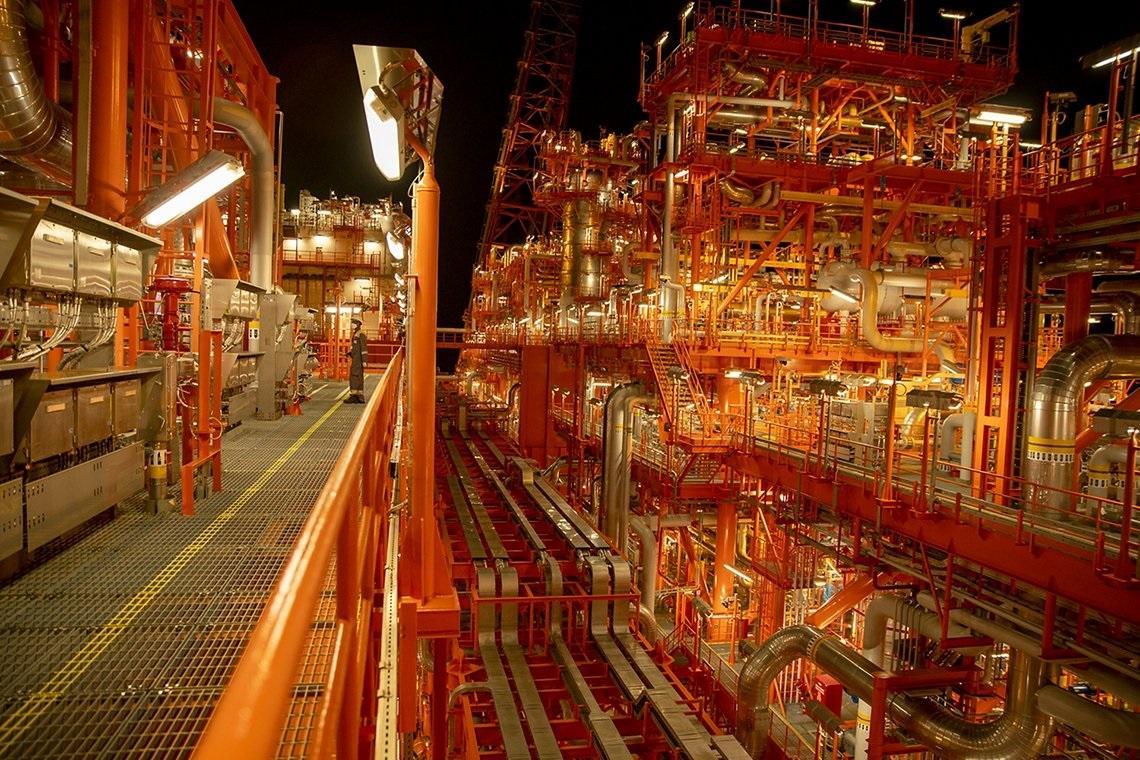
In addition to these two projects, in the ultra-deep waters of the same basin, there is Area 4, led by the Italian consortium Eni, operating since 2022 with the Coral Sul floating unit, now advancing to the second Coral Norte unit, with production expected to start in 2028.
Source: Lusa