What You Need to Know
Mozambique has launched its first mobile phone assembly plant at Beluluane Industrial Park, marking a significant step towards local electronics production. The facility, operated by Moz-Source, aims to reduce mobile phone imports by 14-15% and create over 160 jobs, contributing to the development of a local electronics value chain.
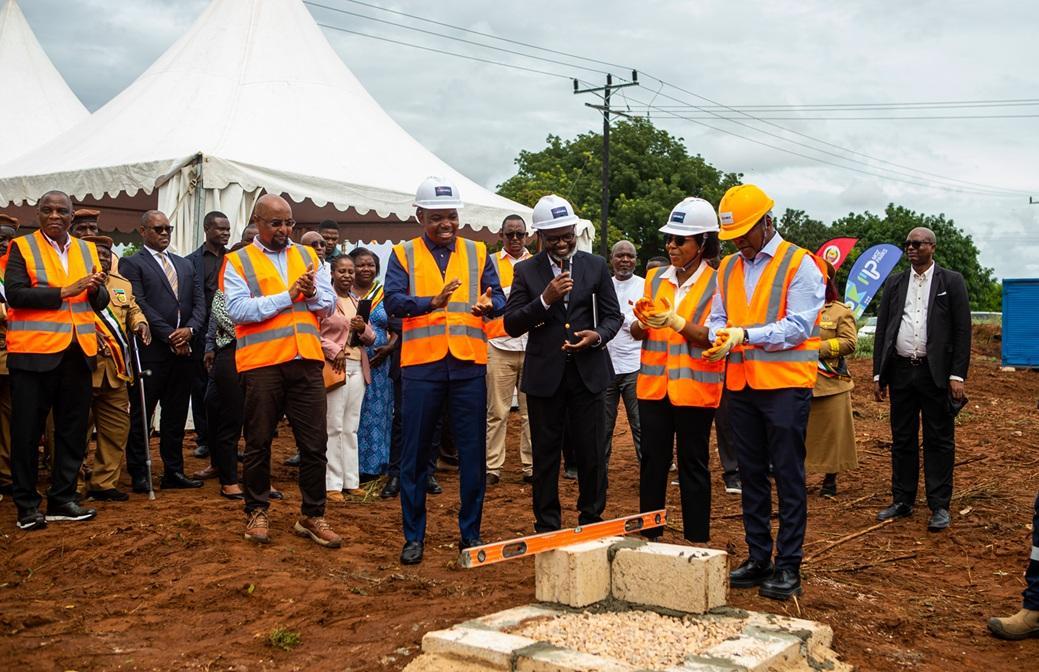
Africa-Press – Mozambique. MozParks today hosted the groundbreaking ceremony of Mozambique’s first mobile phone and electronics assembly plant at Beluluane Industrial Park, marking Moz-Source’s entry into the park.
The ceremony was led by Américo Muchanga, Minister of Communications and Digital Transformation, together with provincial and municipal authorities, representatives of MozParks, strategic partners and the management of Moz-Source. The launch signals a concrete step towards local production of electronic devices in Mozambique, an area until now fully dependent on imports.
The Moz-Source project will involve the construction of a dedicated industrial facility for the assembly of mobile phones, laptops and, in later stages, small household appliances. The plant will operate two semi-automated assembly lines of around 40 metres each, with an initial capacity of 80,000 units per month and the potential to scale up to 300,000 units monthly as production expands. The project is expected to generate more than 160 direct jobs.
Once operational, the factory is expected to reduce Mozambique’s annual mobile phone imports by an estimated 14 to 15 per cent, while contributing to the gradual development of a local electronics value chain. Installation of the main equipment is expected to take place within six to eight months following the start of construction.
Following the presentation of the project, Onório Manuel, General Director of MozParks, spoke about what the investment means for the evolution of Beluluane Industrial Park.
“Beluluane Industrial Park was built as a platform for industrial growth, but growth only becomes sustainable when it is diversified,” said Onório Manuel. “Bringing electronics manufacturing into the park means creating new types of jobs, developing technical skills and reducing our dependence on imports. This is how industrial parks contribute to structural change in the economy — not through volume alone, but through the kind of industries they host.”
In addition to its production capacity, the project is expected to create direct and indirect employment, support the training of Mozambican technicians and operators, and generate fiscal revenues through taxes and fees. For Beluluane Industrial Park, the Moz-Source investment reinforces its position as a hub where different sectors — from heavy industry to technology manufacturing — coexist and strengthen Mozambique’s path towards a more balanced and resilient industrial economy.
About MozParks
MozParks is a developer and operator of Sustainable Economic Zones, established as a public-private partnership between the African Sustainable Economic Zones Alliance (ASEZA) and Mozambican Government Agency for Investment and Export Promotion (APIEX). MozParks manages parks in Maputo and Nampula provinces, with plans for expansion into Cabo Delgado province. To date, MozParks has attracted over 80 companies from 20 countries, contributing to income generation for more than 120,000 people in Mozambique and securing over USD 4 billion in investments.
Mozambique has historically relied on imports for electronic devices, which has hindered local economic growth. The establishment of the mobile phone assembly plant represents a shift towards self-sufficiency in electronics manufacturing, aligning with broader economic development goals. This initiative is part of a larger strategy to diversify the economy and create sustainable job opportunities in the region.
The Moz-Source project is expected to play a crucial role in transforming the industrial landscape of Mozambique. By fostering local production capabilities, the plant not only aims to reduce import dependency but also to enhance the skills of the local workforce. This move is seen a