What You Need to Know
The Mozambican parliament has unanimously approved the national payments system law, aimed at enhancing regulatory powers, reducing risks, and improving security measures in financial transactions. This law will adapt to technological advancements and establish a legal framework for secured transactions, promoting efficiency and stability in the financial ecosystem.
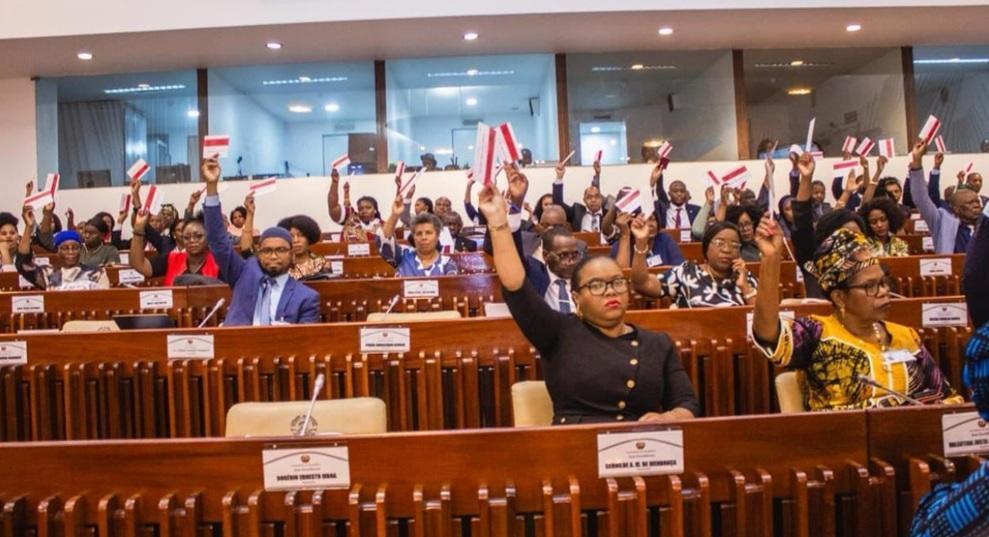
Africa-Press – Mozambique. The Mozambican parliament on Tuesday approved in principle the national payments system law, aimed at adjusting the powers of the regulator, reducing risks, improving sanctions and establishing security measures for the use of technology and artificial intelligence.
The proposed national payments system law was approved in principle by consensus by parliamentary benches of the Mozambique Liberation Front (Frelimo, parliamentary majority), the Optimistic People for the Development of Mozambique (Podemos, opposition leader), the Mozambican Democratic Movement (MDM) and the Mozambican National Resistance (Renamo).
In its justification, the government states that the revision of this legal instrument will adjust the powers of the regulatory and supervisory authority, the Bank of Mozambique, enabling it to reduce risks in the system and promote robustness, security, confidence and efficiency in financial market infrastructures.
The proposal also seeks to broaden the scope of the law to cover secured transactions, creating a specific legal framework to regulate financial guarantees.
It further aims to establish the “treatment to be adopted in the event of insolvency of an institution” and define rules for the issuance and retention of securities within the payments system, including their dematerialisation.
The government says the law is intended to accommodate developments in the payments system, in a context where artificial intelligence and technology are transforming the financial ecosystem, requiring measures that ensure safety and stability.
“In Mozambique, developments in the payments sector have been driven by technological solutions and the emergence of various financial services. In addition, cross-border relations and the need to ensure regional integration increase the importance of providing a modern and robust payments system,” the proposal adds.
Mozambique has begun implementing a new Instant Payment System, METIX, which will eliminate bank charges on transfers between individuals, allowing payments to be made within seconds, the central bank governor announced.
“Despite the notable progress achieved, some challenges remained in our National Payments System, particularly regarding the efficiency of interbank retail transactions, namely in terms of speed, convenience and costs,” Bank of Mozambique Governor Rogério Zandamela said on 16 March.
With METIX, “funds will be made available immediately, that is, within a few seconds”, and transfers between banks made by individuals through the platform “will be free of charge” and will be “available 24 hours a day, seven days a week and 365 days a year”.
The system will be “operated and managed” by the Interbank Society of Mozambique (SIMO), and financial institutions may set daily maximum limits for instant transfers of 200,000 meticais (€2,670) for individuals and 500,000 meticais (€6,680) for legal entities.
Mozambique: Banks unveil Instant Payment System
Mozambique has 15 commercial banks and 12 microbanks, as well as credit cooperatives and savings and credit organisations, among others.
In November, Mozambique had more than 24.6 million mobile wallet accounts, compared with 6.6 million accounts in traditional banks, according to central bank data.
The national payments system in Mozambique has evolved significantly, particularly with the rise of digital financial services and mobile banking. The introduction of the Instant Payment System, METIX, marks a crucial step in modernizing financial transactions, aiming to eliminate fees and enhance transaction speed. This legislative move reflects the government’s commitment to adapting to technological changes and ensuring a robust financial infrastructure that meets the needs of its citizens and promotes regional integration.