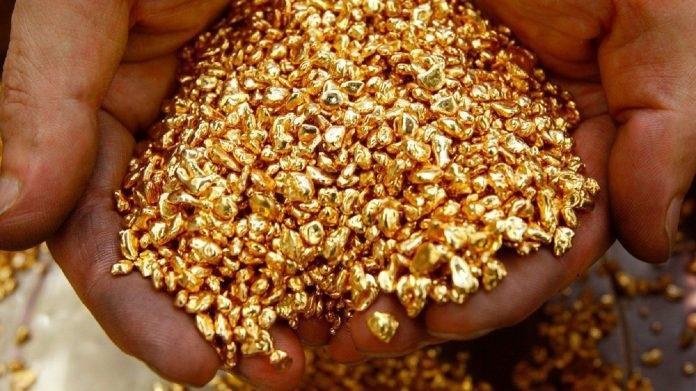
Africa-Press – Mozambique. Mozambique forecasts producing more than 1,723 kilograms of gold in 2026, which if realised, will set a new annual record, according to government projections.
“The increase in gold production will result from strong performance by the sector’s two main companies and investment in expanding production capacity,” the government states in documents supporting the 2026 Economic and Social Plan and State Budget (PESOE) proposal.
This represents a 4% rise on the estimated 1,651 kilograms forecast for this year, which already marked a 1% increase over 2024. The 2024 figure was affected by reduced activity in Manica province, which accounts for much of the country’s gold output, following post-election protests that disrupted some mining operations.
Each kilogram of gold currently commands around €108,000 on the international market, meaning Mozambique’s total expected 2026 production, based on November prices, is valued at nearly €186 million.
According to government data, 44% of Mozambique’s gold output last year was exported. This share is expected to rise slightly to 45% in 2025, with a target of 85% by 2029.
However, the government suspended all mining licences in Manica province on 30 September and established an interministerial commission to review the licensing system, strengthen oversight, and implement environmental recovery measures.
“The suspension must be applied comprehensively, covering licensed operators and those working illegally, to halt degradation and create an institutional framework for sustainable operations,” said Council of Ministers spokesperson Inocêncio Impissa.
President Daniel Chapo said on 17 September that mining was causing an “environmental disaster” in the province.
This followed a report from the Defence and Security Forces (FDS), which inspected the province between 17 and 19 July to assess environmental conditions related to mining.
The commission found “uncontrolled mining” by licensed operators, with companies lacking environmental recovery plans and waste containment systems, alongside violations of workers’ rights.
“There were also risks to national security and sovereignty, with foreign groups involved in illegal mining entering through informal routes, fuelling parallel gold trade networks, extortion, public insecurity, and social tension,” Impissa added.
The government described Manica’s environmental situation as critical, pointing to “severe river pollution” with “reddish, cloudy, and opaque water,” caused by direct ore washing and untreated waste discharge from mining activities.
In response, the government formed an interministerial commission including the ministries of Defence, Mineral Resources and Energy, Interior, Foreign Affairs and Cooperation, Finance, Economy, Agriculture, Environment and Fisheries, Health, Justice, Labour, Gender and Social Action.