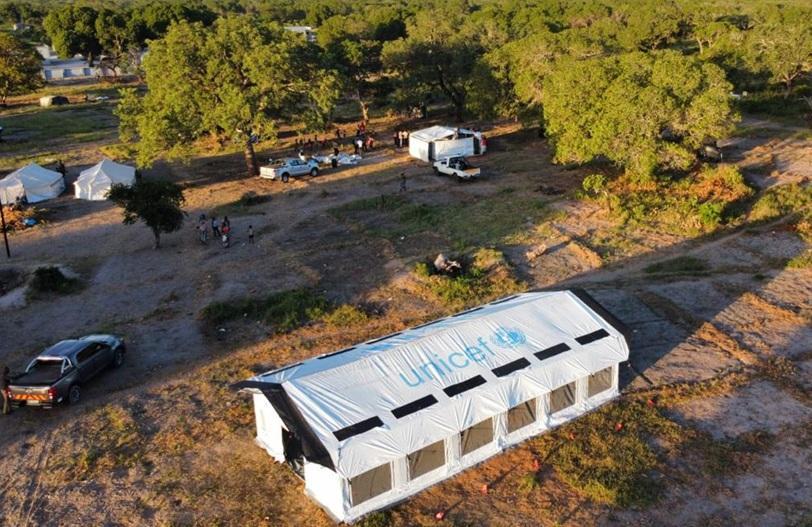
Africa-Press – Mozambique. The United Nations Children’s Fund (Unicef) warned on Friday of multiple challenges in providing support to one million flood victims in Mozambique, half of whom are children, describing the situation as a “deeply child-centric emergency”.
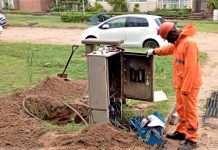
“Floods have had a devastating impact on access to drinking water, sanitation and hygiene. Water supply systems have been submerged and contaminated, with electrical equipment damaged, wells contaminated by surface water carrying faecal matter and other pollutants, latrines collapsing or overflowing, and basic sanitation infrastructure destroyed,” said Omar Khan, Water, Sanitation and Hygiene project manager at UNICEF Mozambique, speaking to Lusa today.
According to Khan, in many communities affected by the rains over recent months, families have been forced to rely on unsafe water sources, which for children — who are biologically more vulnerable — poses serious risks of developing diseases such as diarrhoea, which remains one of the leading causes of child mortality, cholera, one of the biggest concerns for the UN children’s agency, as well as malaria, skin infections and respiratory diseases associated with exposure and poor living conditions.
“In accommodation centres, where thousands of people are gathered, the pressure on water and sanitation infrastructure is enormous, and any failure quickly becomes a collective public health risk,” he warned, highlighting the “absolutely central” role of prevention through safe water, adequate sanitation and hygiene promotion.
Acknowledging the insufficiency of the response in relation to needs recorded mainly in the provinces of Gaza, Maputo, Sofala, Zambezia and Inhambane, Omar Khan highlighted UNICEF’s support in providing water treatment products, ensuring access to safe drinking water in accommodation centres, and installing emergency latrines to prevent faecal contamination of the environment.
“UNICEF needs US$34 million (28.8 million euros) over the next six months to reach 450,000 people — including 225,000 children — with essential services in water, sanitation, health, nutrition, education, child protection and cash assistance. Without these resources, we will have to make difficult choices about who is prioritised, when everyone is a priority,” he added.
Cláudio Julaia, UNICEF Emergency Specialist, explained that with more than one million people affected, half of them children, Mozambique is now facing a large-scale humanitarian crisis with a profoundly child-centred dimension. In a country where the average age is 17, he warned that “a crisis of this magnitude compromises the future of an entire generation”.
The crisis, Julaia warned, could have long-term impacts on child development and protection, from prolonged school disruptions to irreversible growth delays, increasing the risk of setbacks in child survival indicators in the country.
“Malnutrition is a central concern. Even before these floods, more than one in three Mozambican children under five already suffered from stunting, and about one in six experienced acute malnutrition. The floods are dramatically worsening this situation,” he noted.
In response to the crisis, UNICEF Portugal is launching an appeal to raise funds to support children and families affected by flooding in Mozambique.
The number of deaths in the current rainy season in Mozambique has risen to 311, with 1.07 million people affected since October, alongside 24,229 partially destroyed homes, 11,996 fully destroyed and 209,219 flooded. A total of 304 health units, 109 places of worship and 764 schools have been affected in less than six months, according to an update from 31 March by the National Institute for Disaster Management and Risk Reduction (INGD).