Africa-Press – Namibia. Erongo governor Natalia /Goagoses says there is an urgent need to review Namibia’s laws to address challenges surrounding illegal mining and ensure locals benefit from the region’s opulent natural resources.
She made the appeal while addressing National Council members during their induction and orientation seminar in Swakopmund.
Her submission comes after Uis residents on Friday demanded N$300 million in compensation from the Chinese lithium mining company Xinfeng Investments after it was caught red-handed while allegedly conducting illegal mining near Uis in the Daures constituency. “The Erongo region is very rich in minerals. When God created the Earth, it seems he placed everything in the Erongo region,” she boasted.
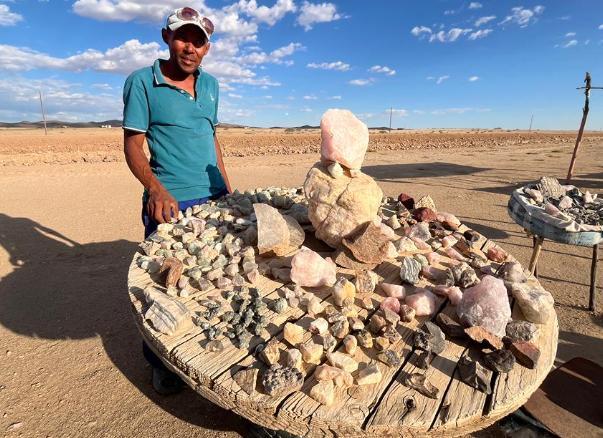
She, alongside the mines and energy minister Modestus Amutse, recently visited the Daures constituency, where several small-scale miners operate.
On the ground, she observed, most residents depend on small-scale mining for survival, despite being labelled illegal miners under current legislation.
Citing the Namibia Statistics Agency’s 2023 Population and Housing Census, she said the Daures constituency is among the poorest constituencies in the country, despite being rich in natural resources.
“People are very poor, but they are living under and on top of these resources,” she lamented.
The governor said most small miners have been extracting minerals in the area long before Namibia’s independence. However, after the introduction of new mining laws and the issuing of exclusive prospecting licences (EPLs), these miners became classified as illegal operators.
“These people have been mining these resources since the 1960s and 1970s. The laws were later made, and exclusive prospecting licences were issued while these people already had their claims,” she said.
As a result, the original miners who relied on the stones for their livelihoods are now considered illegal because EPL holders are the recognised licence holders.
She also questioned the role of buyers in the illegal mining chain.
“Where do these illegal stones go? They are sold to people with money, but we do not seem to check who the buyers are. They go scot-free and are not called illegal buyers,” the governor said.
She stressed that the issue requires urgent attention from lawmakers and those responsible for reviewing legislation governing mineral resources.
“When we talk about minerals benefitting Namibians, we must empower our people.
Natural resource beneficiation should have true meaning if we want to change the lives and livelihoods of Namibians,” she added.
The governor said conditions on the ground remain difficult for many residents who rely on informal mining activities to survive.
“Our people are poor, and it seems the laws are not benefiting them, especially in this constituency, if not the entire Erongo region,” she said.
Meanwhile, Deputy National Assembly Speaker Phillipus Katamelo said lawmakers must seriously consider the realities raised by the governor.
“These are realities we must consider,” he said, adding that the house of review should guide the country on such matters when conditions become difficult.
Katamelo said accountability must be strengthened, particularly where illegal activities have continued for years.
“We say we want to fight corruption, yet the governor says people are mining illegally. Why has that been allowed for 35 years? It means there is a legislative gap in terms of accountability,” he said.
For More News And Analysis About Namibia Follow Africa-Press