
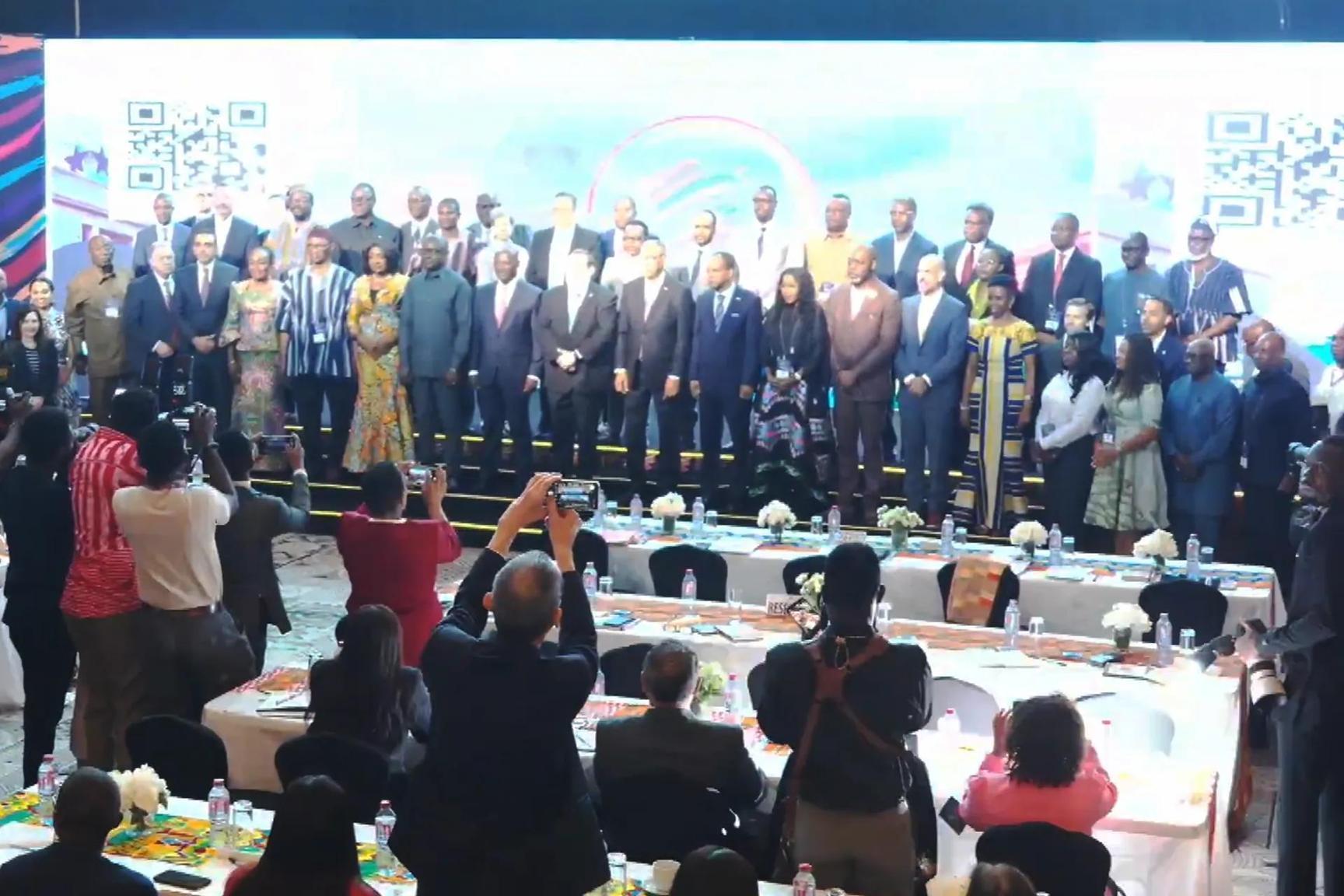
Africa-Press – Nigeria. The African American Nuclear Energy Summit, which began on Wednesday in Accra, the capital of Ghana, places human resources at the forefront of discussions about nuclear expansion on the continent. Experiences from countries seeking to introduce nuclear energy reveal that the skills gap is just one part of broader challenges that include funding, electricity grid capacity, regulatory frameworks, and technology selection, all of which continue to delay the transition of several announced plans into the implementation phase.
The summit is taking place from August 19 to 21 under the theme “Building and Sustaining the Nuclear Workforce in Africa.” Its official program focuses on technical training, engineering education, and regulatory capabilities, as part of a U.S.-African effort to expand the skill base required for nuclear programs.
These issues are particularly significant in Ghana, which is hosting the summit and has been working for years to incorporate nuclear energy into its electricity mix. According to the Ghanaian Nuclear Regulatory Authority, the country is still in the second phase of the International Atomic Energy Agency’s framework, which is the preparatory stage before constructing the first plant. This phase includes issues such as funding, the electricity grid, human resources, site selection, regulatory frameworks, and industrial participation.
Costs Exceeding the Reactor
Ghanaian data indicate that the financial challenge extends beyond merely covering the cost of the plant. The Ghana News Agency reported in March that Ghana has been exploring options for years, including export credits, commercial loans, bonds, and equity investments. It noted that financing nuclear investments poses challenges even for more advanced countries, and that Ghana’s financial situation and rising geopolitical risks have impacted the costs and risks associated with its nuclear plans.
The agency quoted the director of the Nuclear Energy Institute at the Ghana Atomic Energy Commission, Archibald Boah-Koffie, stating that the program has reached the second phase, which currently focuses on grid capacity, institutional capabilities, financing, and securing the site, while site assessment work remains necessary before moving to the third phase.
From an economic perspective, this means that the decision to build a nuclear plant is linked to parallel investments in networks, regulation, safety, security, fuel management, waste management, and workforce development. The Ghanaian Nuclear Regulatory Authority lists these elements among 19 infrastructure issues that need to be developed in the nuclear program, alongside industrial participation and procurement.
Risks of Delay
The lengthy preparation time for nuclear projects adds another element to the calculations. The Ghana News Agency reported in an analysis published in April that the Ghanaian program is still in its preparatory second phase, and that slow coordination and decision-making represent obstacles to progress. It noted that delays in infrastructure projects could increase financing costs due to rising risk premiums.
Conversely, Nuclear Power Ghana believes that fluctuations in imported fuel prices support the economic rationale for diversifying the electricity mix. The Ghanaian agency quoted a company official, Bilona-Gerard Vitor-Kwao, stating that global shocks in energy prices highlight the importance of a more stable source, especially as Ghana also faces local disruptions in gas supplies for power plants.
This argument remains tied to the nuclear project’s ability to secure economically viable financing, as reducing exposure to fuel price fluctuations in the future requires significant capital commitment before electricity generation begins.
A Market for Suppliers
The summit also carries a commercial dimension for American suppliers, as the nuclear program creates demand that extends beyond the reactor to engineering, training, regulatory services, operations, maintenance, and supply chains.
American and Ghanaian companies signed an agreement in 2024 regarding a small modular reactor project in Ghana, while the United States launched a training program that includes a reactor operations simulation center and a welding accreditation program aimed at developing the workforce and regional supply chain, according to the U.S. State Department.
However, the current focus on the workforce can also be interpreted as an indicator of the extent of the infrastructure still needed before implementation. The Ghanaian Nuclear Energy Institute itself includes local workforce development and advising on investment, financing, technology, and plant operation management among its tasks.
Thus, the Accra summit does not provide a clear indication of an imminent wave of reactor construction in Africa. The Ghanaian experience thus far shows that transitioning from expressing a desire for nuclear energy to establishing an actual plant requires addressing a complex set of interrelated financial, technical, and institutional constraints.
From this perspective, the choice of workforce as a focal point for the 2026 summit is part of a readiness-building phase rather than evidence of its completion, while the economic feasibility will remain tied to capital costs, financing conditions, grid capacity, technology selection, and the extent to which host countries can localize labor, services, and supply chains.