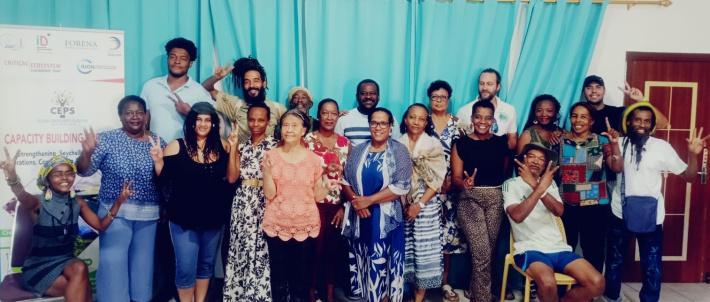
Africa-Press – Seychelles. In 2025 the Citizens Engagement Platform Seychelles (Ceps), with financial support from the Critical Ecosystem Partnership Fund (CEPF), has embarked on a transformative project aimed at addressing governance and operational challenges among civil society organisations (CSOs). The initiative seeks to mitigate institutional risks and enhance CSO effectiveness through structured training and capacity-building activities, ensuring that civil society remains resilient and impactful in addressing pressing environmental and social issues.
The project was officially launched on April 25, 2025 during a forum attended by Ceps members, staff, and post-secondary students. The event featured presentations by the project consultant Dr Barry Nourice (presently the director of the Seychelles Institute of Agriculture and Horticulture) and a representative from the Seychelles Conservation and Climate Adaptation Trust (SeyCCAT). Both speakers emphasised the importance of strengthening CSO governance and technical capacity, highlighting the role of civil society in advancing sustainable development and climate resilience in Seychelles.
Ceps has since organised a series of training sessions, that will conclude later this year. These initiatives reflect Ceps’ commitment to empowering civil society and nurturing future leaders in environmental stewardship. These have included climate change, ecosystem-based adaptation (EbA), and Nature-Based Solutions (NBS). This year the series of trainings will seek to empower CSO in the areas of governance and management.
Alongside the Ceps membership, various other stakeholders have benefited from the sessions held and these include the wider civil society, schools and staff of the secretariat who work to support the platform and the sector.
Initially, the project kicked off with a four-day training programme, organised for Ceps members representing a wide range of thematic areas. The sessions emphasised technical capacity-building, with a particular focus on climate resilience and ecosystem-based adaptation (EbA) practices. By equipping NGOs with practical knowledge and tools, the programme empowered Ceps members with the ability to implement sustainable solutions and address pressing environmental challenges.
Recognising the importance of institutional knowledge, Ceps also conducted a three-day training session for seven of its core team. The programme was designed to broaden understanding of EbA and NBS, thereby strengthening organisational effectiveness. This initiative ensures that Ceps staff are well-prepared to support member organisations and contribute to the platform’s long-term sustainability.
Young people also benefited from the series of trainings. Youth engagement was a central component of the initiative. A three-day training programme brought together over 40 students from five secondary schools. The sessions introduced participants to the importance of climate change, EbA, and NBS, fostering awareness and encouraging active involvement among young stakeholders. By investing in youth education, Ceps is cultivating a generation of environmentally conscious leaders who can champion resilience and adaptation in their communities.
Through these targeted training activities, Ceps has successfully engaged CSOs, staff, and students in building knowledge and skills essential for climate resilience. By strengthening technical capacity and fostering awareness across multiple levels of society, Ceps is laying the groundwork for a more sustainable and adaptive future in Seychelles.
The first phase of the project concluded with a site visit to Baie Lazare, Anse Sours, where participants engaged in both theoretical and practical exercises on EbA. This hands-on component provided direct exposure to ecosystem restoration and adaptation practices, bridging the gap between classroom learning and real-world application. At the end of the programme, all participants were awarded certificates of participation, formally recognising their involvement and achievement.
The Ceps-CEPF project has successfully completed its initial phase, delivering targeted training to CSOs, staff, and students. By strengthening governance structures and enhancing technical capacity in climate change adaptation, the project has laid a solid foundation for improved CSO effectiveness and resilience. Future phases will continue to build on these achievements, ensuring sustained impact across civil society in Seychelles. 2026 will see the launch of the second phase, and in due course Ceps seeks to strengthen the governance of the various stakeholder groups.
For More News And Analysis About Seychelles Follow Africa-Press