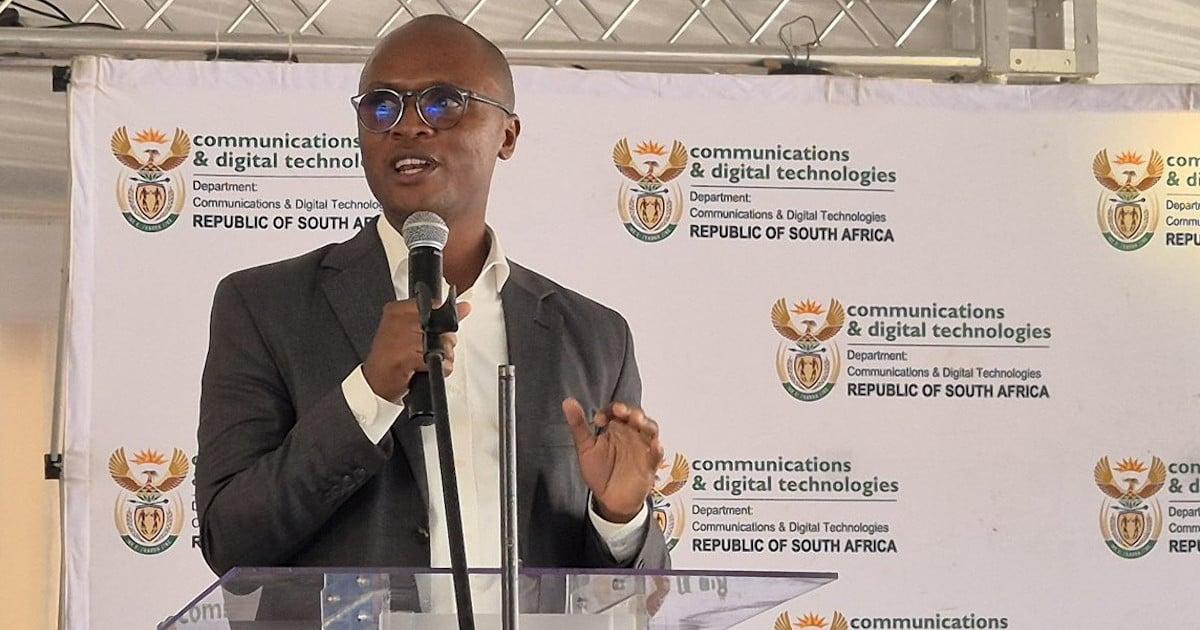
Africa-Press – South-Africa. Stephen Grootes speaks to Duncan McLeod, Founder and Editor at TechCentral, about the controversy surrounding communications minister Solly Malatsi’s policy directive on BEE in the ICT sector and its implications for Icasa and foreign providers like Starlink.
The Government of National Unity (GNU) is facing renewed strain after a controversial policy directive issued by Communications and Digital Technologies Minister Solly Malatsi triggered sharp backlash from political partners and rivals alike.
The directive, published in the Government Gazette on 12 December, is widely interpreted as an attempt to clear the regulatory path for foreign satellite operators, most notably Elon Musk’s Starlink to operate in South Africa without meeting the country’s strict 30% Historically Disadvantaged Groups (HDG) ownership requirement.
Instead, the policy introduces an “equity equivalent” model, allowing companies to substitute local ownership with alternative investments such as digital infrastructure, skills development and enterprise support.
At the heart of the dispute lies a fundamental policy tension within the GNU: the Democratic Alliance’s pro-business, deregulation agenda versus the ANC’s long-standing commitment to Black Economic Empowerment (BEE) and state-led transformation.
Speaking to Stephen Grootes on The Money Show, Duncan McLeod, Founder and Editor at TechCentral says the minister has the power to issue policy directives, albeit to the disapproval of the DA’s GNU partners.
“I think the ANC’s being a bit rich here in claiming that he’s [Malatsi] breaking the law etc., etc., when in fact this is a mechanism that is being allowed under the law and used extensively by ANC ministers in the past…”
For More News And Analysis About South-Africa Follow Africa-Press