Luke Fraser
Africa-Press – South-Africa. The rand remains squarely on the back foot, and South Africans should not expect anything to change for the foreseeable future.
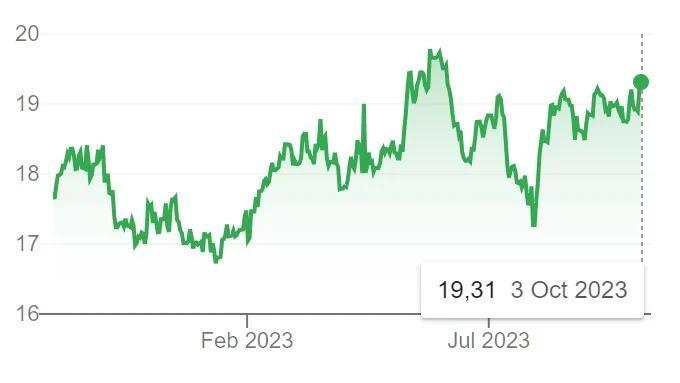
According to Investec Chief Economist Annabel Bishop, the rand remained relatively flat last week, staying around the R19/$ area.
The rand did take a slight hit this week as the Absa Purchasing Managers’ Index (PMI) dropped from 49.8 points in August to 45.4 points in September, with conditions in the SA manufacturing sector deteriorating more than expected.
The local currency is now trading at R19.31/$.
Meanwhile, in Europe, CPI dropped to a two-year low of 4.3%, which strengthened investor sentiment somewhat as there are now signs that the Eurozone interest rate hike cycle may soon be coming to an end.
However, Germany, the Eurozone’s largest economy, is expected to see a contraction of -0.6% this year as high interest rates and inflation weakened demand in Q3 2023.
“The European Central Bank is likely to prove cautious on ending its hawkish communications and will also most likely signal the need for higher interest rates for longer, and the potential for more cuts, with inflation not back at target,” Bishop said.
Returning home, the rand will likely experience low volatility as the market waits for the Fed’s next meeting on 1 November, followed by the final one for the year on 13 December. However, markets have not fully factored in a further 25 basis point hike.
“That is, markets do not expect the US to hike its interest rates again this year, but have shifted interest rate cut expectations for the US further out, with the first seen to occur end 2024. These shifts in expectations undermined the rand somewhat last month,” Bishop said.
Higher US interest rates generally weaken the rand and other emerging currencies as investors turn to the relatively low-risk, high-reward of the dollar.
South African interest rates
Although the South African Reserve Bank (SARB) could hike rates in an attempt to counter the dollar’s appeal, this is unlikely to occur as several analysts and commentators have predicted that South Africa has ended its interest rate hiking cycle with inflation now in the central bank’s target range.
However, there are still risks to inflation, including rising oil prices, drier conditions caused by the El Nino weather pattern and the struggling logistics sector.
RMB Chief Economist Isaah Mhlanga said that this implies that SARB will keep interest rates where they are for longer than initially expected, with the central bank expected to cut rates only in the second half of the year.
However, Investec’s base case still sees the SARB cutting rates by 25 basis points as early as Q1 2024.
Nevertheless, many economists expect the SARB to start cutting rates in 2024, with Nedbank’s economists expecting a 100 basis points worth of cuts throughout the entirety of next year.
source:businesstech
For More News And Analysis About South-Africa Follow Africa-Press