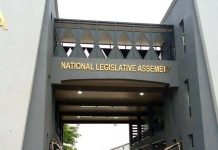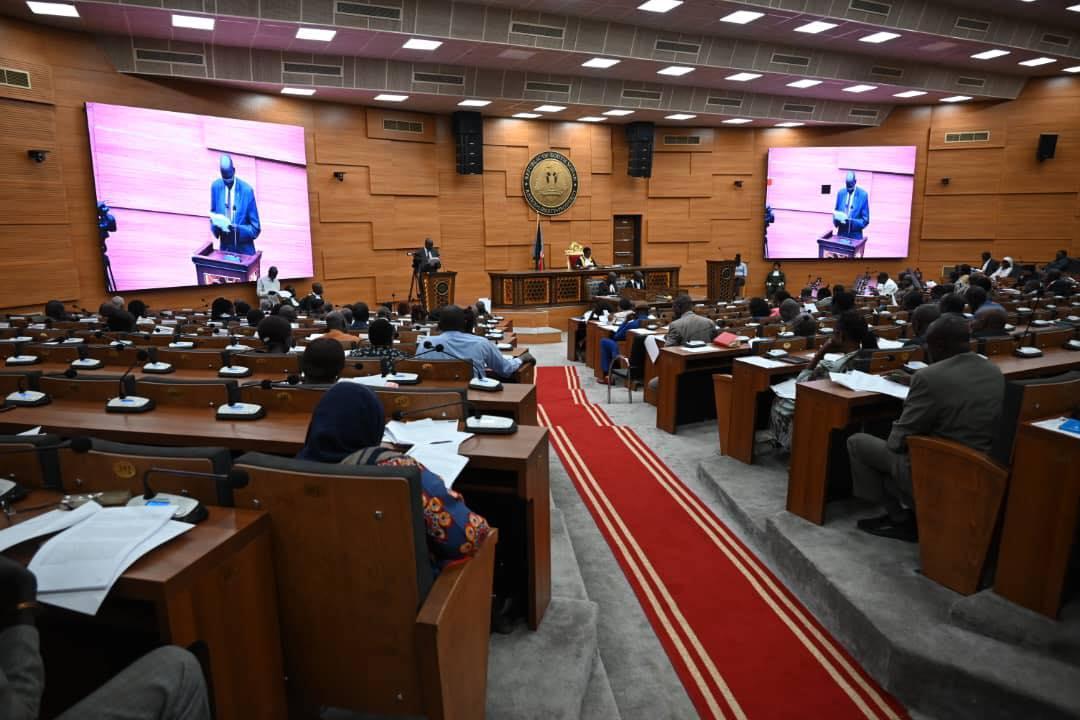
Africa-Press – South-Sudan. South Sudan’s legislative landscape is set for a historic transformation as the National Elections Commission (NEC) confirmed it will revert to the 102-constituency model for the upcoming 2026 general elections.
Edmond Yakani, Executive Director of the Community Empowerment for Progress Organization (CEPO), described the move as a necessary end to the current “bloated” legislature, predicting the 550-member assembly will be reduced to just 102 geographical seats to match the country’s previous electoral map.
On December 22, 2025, the National Elections Commission confirmed that voting will be conducted using the 2010 constituency boundaries. The decision follows an agreement by parties to the Revitalized Peace Agreement to delay the conduct of a national population census ahead of the polls.
Yakani explained that the National Elections Commission (NEC) acted in accordance with the law when it declared the use of the 2010 geographical constituencies and proportional representation seats.
He cited the National Elections Act (Amended 2023), Section 41, Subsection 1 (E and G), which requires the NEC to declare the geographical constituencies 12 months before polling day.
According to Yakani, the 12-month countdown officially began on 22nd December 2025, giving NEC two legal option to declare newly created constituencies, if any exist; to revert to the old constituencies if no new ones have been established.
“In the absence of newly created constituencies, the law compels NEC to revert to the 2010 election geographical constituencies and proportional representation system,” Yakani said.
Under the 2010 system, there were 102 geographical constituencies*, translating into 102 Members of Parliament (MPs). An additional 102 seats were allocated under proportional representation, bringing the total size of parliament at the time to 204 seats.
Yakani noted that this represents a sharp reduction compared to the current parliament of 332 members, meaning 128 seats would be lost if the 2010 model is applied.
He also raised concerns about affirmative action, pointing out that women’s representation under the 2010 elections stood at 25 percent, compared to the current 35 percent, as well as the recently introduced 20 percent quota for youth participation in public life.
Yakani questioned whether these affirmative action provisions would be fully accommodated under the 2010 framework.
He further highlighted that under the 2010 geographical constituency system, the president had no constitutional power to appoint additional MPs.
If the current political practice is to continue, he said, the law would need to be amended to allocate a fixed number of presidential appointees.
“For example, allocating 10 appointed seats would raise parliament from 204 to 214 members, but still mean a loss of 118 seats from the current parliament,” he explained.
The implications extend beyond the national parliament.
Yakani said the Council of States would be reduced from 100 members to 60, effectively dissolving 40 seats. Similarly, state legislative assemblies would shrink from 100 seats to 48, resulting in the loss of 52 seats at state level.
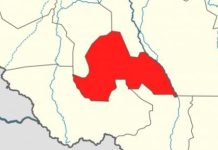
Yakani also pointed to unresolved political questions surrounding Ruweng Administrative Area and Greater Pibor Administrative Area. Under the 2010 constituencies, Ruweng fell under Unity State, while Greater Pibor was part of Jonglei State.
“Today, both Ruweng and Greater Pibor are independent administrative entities. Political decisions must be made on how they are treated under the 2010 constituency framework,” he said.
Yakani urged current legislators to prepare for a significant downsizing of legislative bodies: National Parliament: from 332 seats to 204 plus presidential appointees
Council of States: from 100 to 60 seat State Assemblies: from 100 to 48 seats.
He described the changes as a move toward a leaner governmen, calling it “the beauty of using the 2010 geographical constituencies and proportional representation.”
Looking ahead, Yakani said the NEC’s next steps, following its declaration on 22nd December 2025, should be the launch of voter registration and voter education.
He noted that voter education must begin early to prepare citizens for registration, and that by 22nd June 2026, the NEC is legally required to publish the final voters’ register for the elections scheduled on 22nd December 2026. Campaigns are also expected to begin around the same time.
“This means parliamentarians at all levels will shift into campaign mode, and the country will immediately begin transitioning to much leaner legislative institutions,” Yakani said.
He concluded by stressing that the information is being shared for public awareness as part of CEPO’s Election Watch programme under its domestic election observation activities.
“This is a call for readiness. The implications are real, and the public must understand what lies ahead,” Yakani concluded.
For More News And Analysis About South-Sudan Follow Africa-Press