Africa-Press – South-Sudan. South Sudan’s struggle to save Temporary Protected Status for its citizens in the United States has moved beyond legal briefs and court filings and spilled into urgent diplomatic phone calls aimed at salvaging a fraying relationship with Washington, spurred by travel bans, visa revocations, and deepening mistrust.
On the eve of Christmas celebrations, a coalition of South Sudanese nationals and a U.S.-based immigrant rights organisation has filed a lawsuit in a United States federal court seeking emergency relief to block the termination of Temporary Protected Status (TPS) for South Sudan, warning that the decision exposes hundreds of people to grave danger amid escalating violence and humanitarian collapse in the country.
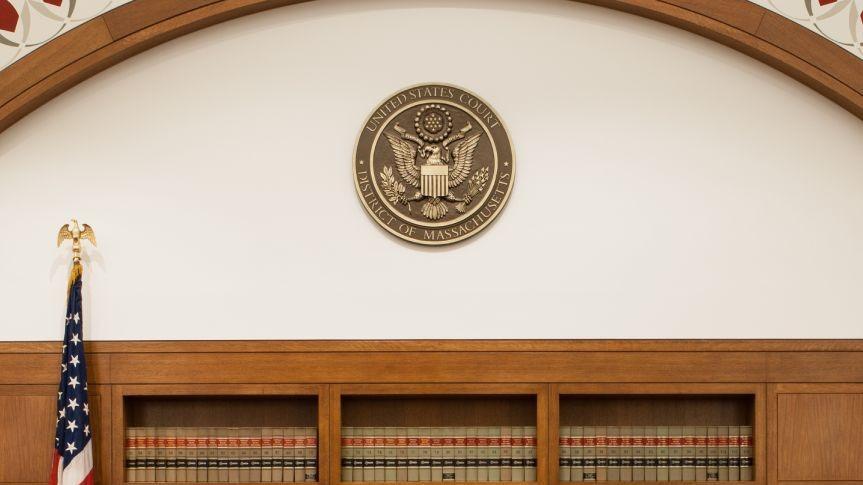
The case, filed in the U.S. District Court for the District of Massachusetts, names African Communities Together (ACT) alongside four individual plaintiffs — Mary Doe, David Doe, Peter Doe, and Jacob Doe — all South Sudanese TPS holders who have lived and worked in the United States for years.
The petition, obtained by Sudans Post, challenges a November 6, 2025 decision by U.S. Department of Homeland Security Secretary Kristi Noem to terminate South Sudan’s TPS designation effective January 6, 2026.
According to the complaint, the decision is “unlawful, arbitrary, and politically driven” and violates the Temporary Protected Status statute, the Administrative Procedure Act, and the Fifth Amendment of the U.S. Constitution.
The plaintiffs argue that South Sudan remains engulfed in armed conflict and extraordinary humanitarian crises that make safe return impossible. “South Sudan is currently facing a humanitarian crisis, and ongoing armed conflict continues to threaten the safety of its nationals, as the country teeters on the brink of another civil war,” the filing states.
South Sudan has been designated for TPS since 2011, following independence and decades of war. The designation has been repeatedly extended by successive U.S. administrations due to persistent conflict, mass displacement, food insecurity, flooding, and widespread human rights abuses.
Yet DHS now claims conditions have improved sufficiently to warrant termination — a conclusion the plaintiffs strongly dispute. The complaint accuses the Secretary of ignoring overwhelming evidence that violence has worsened, noting that “all indicators point to a slide back toward another deadly war,” including aerial bombardments of civilian areas, political detentions, and renewed clashes among armed groups.
The plaintiffs further argue that DHS failed to follow legally required procedures, including meaningful consultation with relevant agencies such as the U.S. State Department. Instead, the decision allegedly relied on selective and superficial indicators of progress while disregarding authoritative assessments from the United Nations and U.S. government bodies.
The filing notes that the State Department continues to maintain a Level 4 “Do Not Travel” advisory for South Sudan due to “crime, kidnapping, and armed conflict,” warning that weapons are widely available and civilians are routinely targeted.
The complaint alleges that South Sudan’s designation was ended as part of a wider effort to dismantle TPS protections for nationals of predominantly Black and non-European countries.
“The Termination is one of a series of purposeful and pretextual terminations… whose apparent goal is to significantly reduce the number of non-white and non-European immigrants in the United States,” the lawsuit claims.
For the individual plaintiffs, the consequences are immediate and personal. TPS is their only lawful immigration status, enabling them to work, obtain driver’s licenses, support families, and contribute to their communities.
Without it, they face what the complaint describes as an “impossible choice”: deportation to a country where their safety is at risk, remaining in the U.S. undocumented and vulnerable to detention, or seeking refuge in a third country. The plaintiffs warn that a mere 60-day wind-down period — the shortest allowed under the law — leaves no realistic pathway to alternative legal status, particularly amid recent freezes on asylum and immigration benefit processing.
In seeking emergency court intervention, the plaintiffs are asking the judge to halt the termination and restore TPS protections while the case is litigated.
“Should TPS for South Sudan terminate imminently and unlawfully, the individual Plaintiffs and other South Sudanese TPS holders will face unconscionable harm,” the filing concludes, urging the court to intervene before lives are upended by what it describes as a legally flawed and dangerously premature decision.
A diplomatic phone call
On 26th December 2025, Ambassador Monday Semaya K. Kumba, the Minister of Foreign Affairs and International Cooperation of the Republic of South Sudan, held several high-level telephone conversations, including one with Massad Boulos, the United States Senior Presidential Advisor.
Details of the conversation were not made public. The ministry says the phone conversations were “to exchange season’s greetings and discussed” the status of bilateral relations, regional, and international cooperation”.
But the call came at a time when Washington imposed a full travel ban on South Sudan, placed South Sudanese nationals under TPS in the United States on notice, and warned the country against aid and United Nations operations, threatening widespread international isolation.
For More News And Analysis About South-Sudan Follow Africa-Press