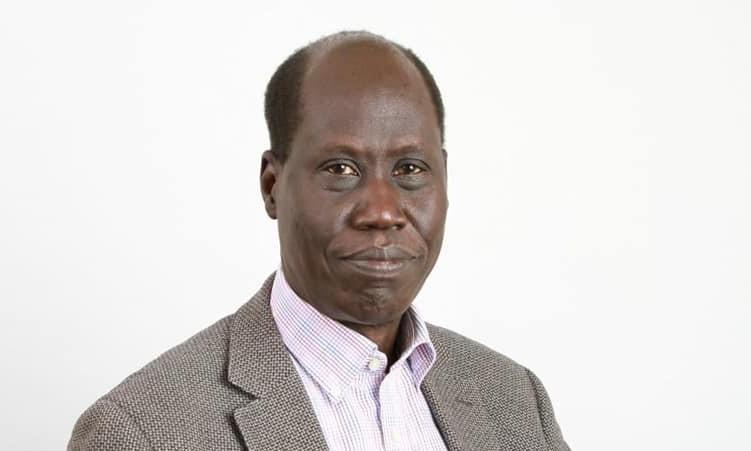
Africa-Press – South-Sudan. Former University of Juba Vice Chancellor, Professor John Akec, has called on the government to professionalize key public institutions, warning that political interference and mismanagement are hindering effective service delivery.
His remarks follow Wednesday’s announcement by the Civil Registry, Nationality, Passports and Immigration Department that citizens seeking urgent medical treatment abroad will temporarily be issued business passports or emergency travel documents due to a shortage of passport booklets.
Speaking to Eye Radio on Thursday, Prof. Akec said the latest crisis reflects deeper operational failures that have plagued government parastatals for years.
“Every year, you hear that they are issuing emergency passports simply because they have run out of papers… This problem keeps repeating itself, and it shows they are operating with the wrong business model,” he said.
“A passport should be issued at a value that covers not only the cost of production, but also broader operational expenses—staff salaries, materials, equipment, software licenses, and everything else required to run the service… The customer deserves a reliable system. This current model is not sustainable.”
Prof. Akec argued that public institutions can become profitable and efficient if managed with clear business principles—free from political pressure—and staffed with productive, qualified personnel.
He said challenges such as overstaffing, weak management, and political interference have undermined the performance of several major parastatals, including Nile Petroleum Company (NilePet), South Sudan Broadcasting Corporation (SSBC), Urban Water Corporation, and the National Electricity Corporation.
“The people appointed to run these institutions must embody the core values of civil service—objectivity, professionalism, and level-headedness. They must be protected from political interference,” he said.
“Some parastatals could actually perform very well, but their leaders become victims of political alignment or internal power blocs. This undermines professionalism.”
Prof. Akec emphasized that while he is not calling for privatization, public enterprises should adopt the discipline, standards, and efficiency of private companies to generate revenue, create jobs, and improve essential public services.
He concluded that reforming the management of South Sudan’s parastatals is not only feasible but necessary to prevent recurring crises like the passport booklet shortage and to restore citizens’ confidence in government services.
For More News And Analysis About South-Sudan Follow Africa-Press