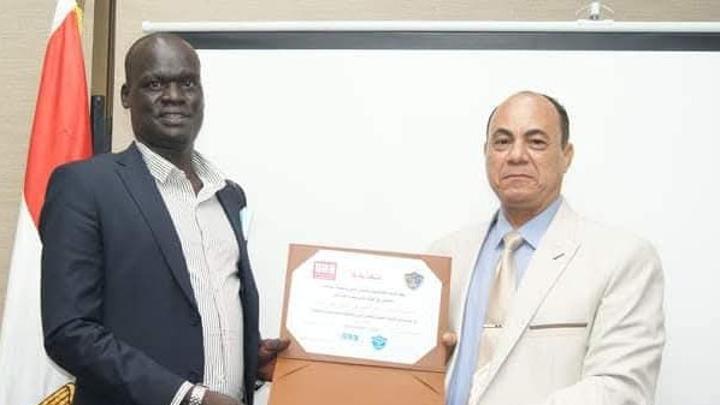
Africa-Press – South-Sudan. JUBA, South Sudan (Eye Radio) —A new academic study is suggesting the separation of the Public Prosecutor’s office from the Ministry of Justice and the establishment of a Constitutional Court to stabilize South Sudan’s fragile state.
The research, conducted by doctoral researcher Peter Achuil Agoding and delivered as part of a recent lecture at the University of Juba, argues these two institutional reforms are essential prerequisites for constructing a lawful, modern state in South Sudan’s current environment of political and security instability.
Achuil’s research identifies two non-negotiable pillars for constitutional order establishment of an independent Constitutional Court, and separation of the Public Prosecutor’s office from the Minister of Justice.
The absence of these institutions, the study warns, has led to weakened constitutional governance, limited accountability, and exposed the entire justice system to undue political influence.
The study identifies the lack of a Constitutional Court as creating a significant institutional vacuum. Achuil argues that this gap prevents effective checks on political and executive power, the enforcement of constitutional duties by government organs, and the proper protection of citizens’ rights and freedoms.
Drawing a comparative approach, Achuil notes that countries like Kenya, Uganda, and Tanzania have utilized independent constitutional courts as “safe havens” to strengthen their modern states.
Achuil’s most pointed finding concerns the merging of the powerful roles of the Minister of Justice and the Public Prosecutor. The study finds that this merger results in weak independence of the criminal justice system, increased political interference in prosecutions, and reduced accountability and poor protection of rights.
The research recommends clear criteria for appointing the Public Prosecutor and fully separating the role from all political functions to safeguard the integrity of criminal justice.
The doctoral study concludes with a stern warning that South Sudan’s constitutional reform efforts will “be in vain” if they do not immediately prioritize an independent Constitutional Court and a fully separate Office of the Public Prosecutor, alongside strong guarantees of judicial independence.
Achuil affirms that implementing these structural changes is the decisive step needed to move the country toward long-term stability and constitutional order.
The study is currently available through the Mansoura University e-library, where it was formally submitted as part of Achuil’s doctoral research.
For More News And Analysis About South-Sudan Follow Africa-Press