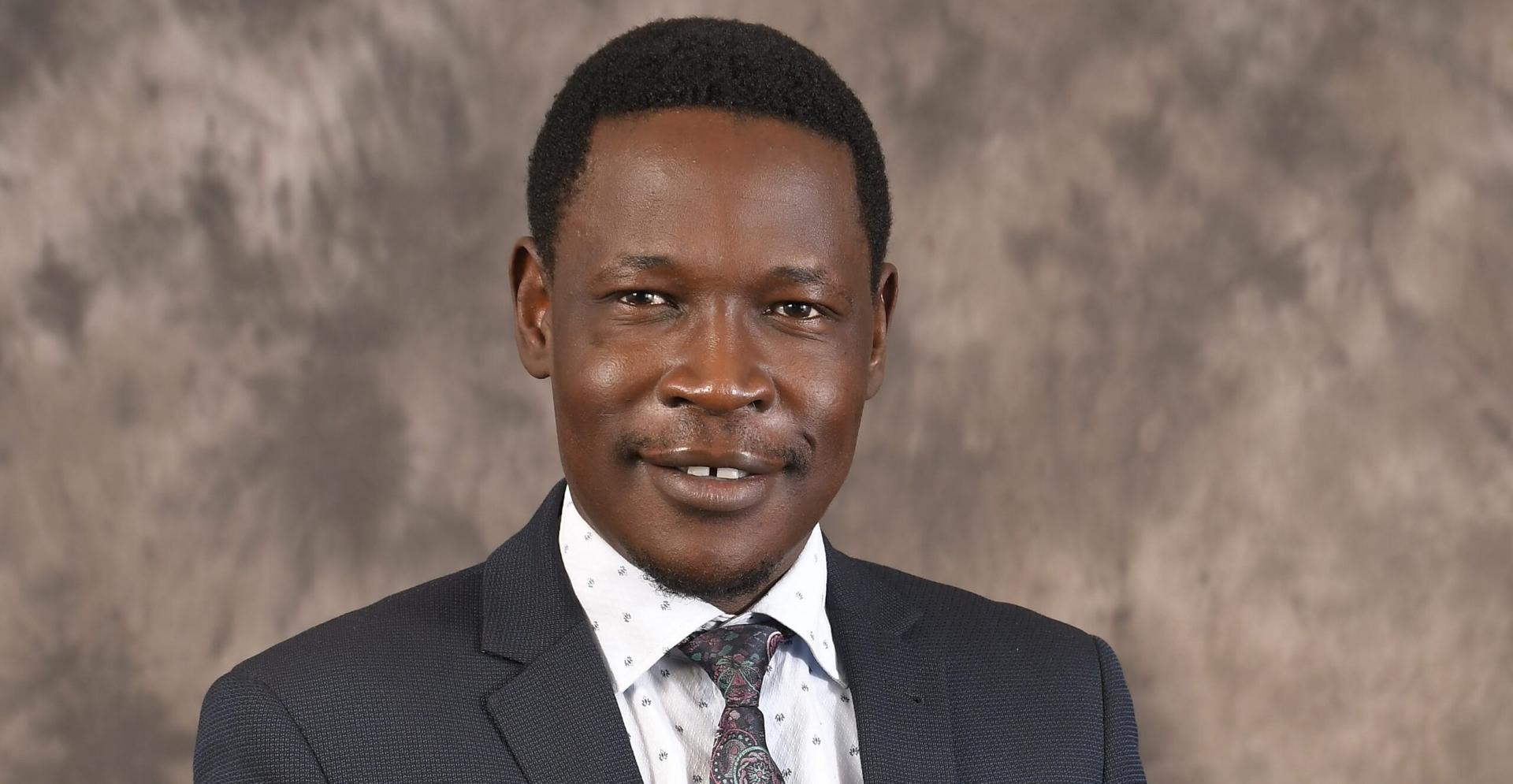
DIING DENG MOU
Africa-Press – South-Sudan. Are South Sudan’s December 2026 elections a democratic milestone—or a dangerous political device designed to legitimize incumbency? By any orthodox democratic standard, credible elections derive legitimacy from verifiable demographic data, functioning institutions, security-sector neutrality, judicial independence, and public trust. Elections are not ceremonial events; they are constitutional mechanisms intended to reflect the sovereign will of the people and facilitate peaceful transfers of power. Remove those pillars, and what remains is not democracy but choreography.
As South Sudan is once again promised elections in December 2026, the critical question is no longer whether citizens will cast ballots, but whether what is being prepared qualifies as an election in any substantive sense. On paper, the announcement signals progress. In practice, it increasingly resembles a ritual intended to confer political legitimacy without satisfying the structural, legal, and demographic foundations that make elections credible.
The 2010 Census: A rejected foundation revived
At the center of the current controversy is the National Elections Commission’s decision to rely on the 2010 population census to delimit constituencies and organize the vote. The 2010 census was conducted under the former government of Sudan before South Sudan’s independence. At the time, the then Government of Southern Sudan formally rejected the results, arguing that the census grossly undercounted Southern populations and distorted demographic realities. It was criticized as politically manipulated and methodologically flawed.
This raises unavoidable questions:
1. Can a census rejected in 2010 as inaccurate suddenly become the foundation of credible elections in 2026?
2. If it was deemed unreliable, then on what rational or methodological basis can it now be resurrected as the bedrock of democratic legitimacy?
Even if one suspends disbelief and assumes the 2010 census was statistically sound, its relevance today is deeply problematic.
In 2010, children who were two years old are now 18 and eligible voters. Adolescents of that period are now in their late twenties and early thirties—an entire political generation that did not meaningfully exist in the demographic framework being proposed. Constituency boundaries and voter allocation would therefore rely on data that predates the political adulthood of a significant portion of the electorate.
Representation in a democracy is population-based. If population data is obsolete, representation becomes demographic fiction.
War, displacement, and demographic upheaval
The problem extends far beyond age progression. The outbreak of conflict in December 2013 triggered mass displacement, cross-border refugee flows, and widespread internal migration. Communities were uprooted, fragmented, and reconstituted. Entire counties experienced depopulation, while urban centers absorbed substantial inflows of internally displaced persons.
A census conducted before civil war, before prolonged displacement, and before more than a decade of demographic transformation cannot plausibly capture today’s population realities.
If representation is tied to population, then delimiting constituencies using pre-conflict data undermines the principle of equal political representation. Elections conducted under such conditions risk becoming exercises in symbolic legitimacy rather than expressions of popular sovereignty.
The missing preconditions for credible elections
Credible elections require more than voter registration and ballot papers. Credible elections in South Sudan require, at a minimum:
An updated census or scientifically sound population register
Properly demarcated constituencies
A unified and reformed security sector
An independent electoral management body
A functional judiciary
A political environment free from intimidation
At present, South Sudan does not fully satisfy these prerequisites. Elections conducted in the absence of unified national forces and institutional functionality risk becoming triggers for renewed instability rather than pathways to peace.
Regional mediation and the risk of elite recycling
The regional and continental guarantors of South Sudan’s peace process also bear scrutiny.
The African Union Commission C5 (AU-C5) has issued communiqués and proposed high-level engagements, including a retreat in Pretoria. However, communiqués without enforcement mechanisms risk becoming diplomatic formalities rather than corrective interventions.
If the proposed Pretoria retreat is confined to the same political elites who have presided over prolonged stagnation, it risks recycling elite bargains without broad national ownership.
In contrast, the Kenyan-led Tumaini Initiative offers a more inclusive framework. Unlike closed-door elite negotiations, the Tumaini process aspires to convene a broader non-hierarchical spectrum of South Sudanese stakeholders: civil society actors, professional associations, women’s groups, youth representatives, faith leaders, opposition movements, and political parties.
Durable settlements cannot be negotiated by a narrow political class alone. They must be nationally owned, transparently debated, and socially anchored.
Six non-negotiable requirements
If South Sudan is to conduct credible national elections in December 2026 and avoid contested legitimacy, six conditions are non-negotiable:
1. A credible population audit—either a new census or an internationally supervised demographic assessment to determine fair constituency boundaries.
2. Completion of security-sector reform, ensuring unified and neutral forces capable of safeguarding—not shaping—the electoral process.
3. Restoration of institutional functionality, including regular payment of civil servants and organized forces, to stabilize state administration.
4. Legal and constitutional clarity, including agreement on electoral laws, disputeresolution mechanisms, and an independent electoral commission.
5. Expanded civic and political space, guaranteeing freedoms of assembly, expression, and participation.
6. Repatriation of refugees and resettlement of internally displaced persons (IDPs) to their places of origin or permanent residence under secure and dignified conditions so that citizens can vote where they legitimately belong.
Without addressing refugee repatriation and IDP resettlement, elections risk formalizing displacement as a political outcome. Citizens uprooted by conflict cannot meaningfully exercise franchise rights if they remain scattered across camps and foreign territories. Representation must correspond to stable, recognized residency—not emergency displacement patterns.
Legitimacy is not sustained by rhetoric; it is sustained by institutional performance and constitutional compliance. If December 2026 arrives without credible preparations, the resulting legitimacy crisis will not be theoretical. It will be immediate and destabilizing.
A Transitional Corrective Mechanism?
In a scenario where elections cannot be conducted by December 2026, what, then, will be the alternative? If elections are not conducted within the proposed timeline, South Sudan should consider establishing a time-bound transitional national administration composed of civil society representatives, professional bodies, faith leaders, non-partisan national figures, and opposition groups. Such an arrangement would serve as a corrective mechanism to prevent institutional collapse.
Its mandate would be strictly limited:
Restore institutional functionality
Complete security-sector reform and force unification
Conduct a new census or credible population registration.
Finalize the permanent constitution-making process
Establish the legal and technical framework for free and fair elections within an agreed timeframe.
Optics or substance?
This critique is not an argument against elections. On the contrary, elections remain the ultimate institutional expression of popular sovereignty. But fraudulent or structurally compromised elections masquerading as democracy do not confer legitimacy; they erode it.
South Sudan deserves a peaceful, orderly, and legitimate transfer of power. That requires updated demographic data, unified forces, institutional reform, constitutional clarity, and genuine political competition.
Without these prerequisites, December 2026 risks becoming not a democratic milestone but a symbolic exercise designed to entrench incumbency.
For the sake of national stability, South Sudan must choose between the optics of elections and the substance of democracy. It cannot afford to confuse the two.
Source: Radio Tamazuj
For More News And Analysis About South-Sudan Follow Africa-Press