Africa-Press – South-Sudan. It is clear: our country has entered a phase where truth walks barefoot—bruised and bleeding profusely from the actions of those who claim to protect it.
We are now witnessing a chorus of critics targeting Hon. Adut Salva Kiir Mayardit, the youngest senior presidential envoy for special programs, as if her rise to power is an offense and her presence in the national political structure disrupts a sacred order. Perhaps, in some ways, it does.
However, the “sacred order” she has disrupted was a machinery that tore at our national fabric, drained our economy through misappropriated oil proceeds, and fostered insecurity. The entrenched cabals, whose remnants are now fleeing while others remain in government, have left their fingerprints on every wound this country still bears—from the coordinated chaos in Nasir to the painful divisions exacerbated by the detention of Dr. Riek Machar Teny, the principal peace partner. These elements deserve complete elimination, not just disruption, and anyone who takes action against them deserves the citizens’ applause.
With the cabal network disrupted, citizens are beginning to feel the shifts of a new political climate, one cultivated by sharp, youthful, and selfless individuals. This transformation is not solely attributed to Hon. Adut but also to figures such as Hon. Ateny Wek Ateny, Hon. Mabior Garang de Mabior, Hon. Atong Kuol Manyang, and others.
This new climate is reflected in tangible outcomes. Within just a few days of taking office, Hon. Ateny Wek Ateny posed a straightforward question to telecommunications networks regarding soaring tariffs and the barriers that have long constrained citizens. The walls of tariffs that have asphyxiated the people for years are starting to crumble. Even before unveiling his policy framework, he emphasized that this country has long yearned for responsible and protected speech—a media environment free from fear of repression, and journalists recognized as essential contributors to nation-building, not targets for obliteration.
Hon. Mabior Garang de Mabior has been at the Ministry of Environment and Forestry for less than a week and has already secured over $50 million from the Green Climate Fund. This funding marks the initial phase of acquiring resources that will serve as a lifeline for national climate resilience—an effort overlooked by predecessors who held the position without vision.
These examples clearly indicate a generational shift. This change is not coincidental; it reflects the commitment of individuals dedicated to making a positive impact on the lives of citizens.
In her brief tenure as Senior Presidential Envoy, Hon. Adut has ventured into some of the most challenging areas of South Sudan’s justice system, where many others hesitate to tread. She personally inspected prison facilities and listened to the silence of inmates whose humanity has long been ignored. By securing the release of prisoners convicted of minor offenses and settling outstanding prison bills, she has worked to restore dignity in a system that has recurrently failed its obligations.
Hon. Adut engaged with communities in Western and Eastern Equatoria states, meeting with returnees from refugee camps. She assessed the condition of feeder roads, which were more akin to scars than proper pathways, and addressed security concerns in collaboration with the governor and traditional authorities by interacting with local chiefs and elders. Her active presence underlines her commitment to governing with accessibility and approachability.
In addition, she visited the South Sudan Embassy in Nairobi—not for a ceremonial occasion, but to gain insight into its operations. During her visit, she discussed migration issues, legal matters, and the welfare of our people facing challenges abroad with the ambassador. This demonstrates her commitment to genuine service aimed at making a meaningful impact on people’s lives.
Her earlier consultations with vice presidents, veterans, and other senior government officials were not mere political rituals; they were genuine efforts to align her mandate with the country’s priorities. She reinforced this commitment by promising to deliver in key areas such as health, education, hospitality, and tourism, emphasizing that the foundation of peace lies not in rhetoric but in effective basic service delivery.
Her actions have illuminated the understanding that youth are not merely a demographic; they represent a vital force for positive change. Her ascent and the beneficial impact of her initiatives inspire hope that the country can embrace a new political climate.
It is important to recognize that she has been in office for only a little over three months, while Hon. Ateny and Mabior have been in their positions for less than three weeks. Despite this, critics—armed with sophistry and fueled by the dire state of our troubled country—have already sharpened their knives, not to refine these young leaders, but to undermine them completely.
Each day begins with critics hurling insults soaked in personal bitterness, dragging private lives and sexuality into a dialogue that should demand seriousness from every young person in the country. The personal attacks and harsh insults directed at Hon. Adut do not constitute constructive critique that shapes leaders and nations; they are cowardice camouflaged as civic duty. I passionately abhor this behavior.
To the critics: allow these individuals and others to take on responsibilities. Let them experience failure and rise again; through these experiences, their impact will be felt by all. Given the opportunity, these leaders can help rebrand the country.
As good citizens, we should pose questions that propel the nation forward, not questions rooted in envy. For instance, can Vivacell—the leading network that was expelled from our country and forced into international litigation due to mistreatment by authorities—be welcomed back? Can the same government that previously rejected it, now under a new minister, reopen negotiations in good faith and persuade Vivacell to withdraw its case—a case that highlighted our institutional shortcomings—thereby recommitting to rebuilding the digital infrastructure of a country that needs everyone’s efforts? Questions like these can strengthen our nation. A country cannot be fortified by petty gossip aimed at young leaders striving to address inherited institutional failures.
Many critics are wishing ill upon Hon. Adut and Hon. Mabior, among others, simply because they are the children of Dr. John Garang de Mabior and President Salva Kiir Mayardit. Such negative sentiments are detrimental and will not bring about positive outcomes. Citizenship is not an inherited privilege; it is an inherited responsibility. These individuals, along with others from families of leaders—including myself—are South Sudanese just like every other citizen; no more, no less. Being born to a leader is neither a crime nor a disqualification.
In a civilized society, children should not be judged based on their parents’ legacies; they should be evaluated on their merits, shortcomings, contributions (whether good or bad), integrity, and ability to deliver services. In essence, all assessments should be based on meritocracy.
It is evident that in every prolonged struggle for liberation, each generation must shoulder its share of the burden. Today belongs to them, while tomorrow will belong to you.
Regardless of the critics’ opinions, the country is entering the initial phase of a new leadership characterized by action rather than entitlement, engagement instead of isolation, and courage as opposed to complacency.
The myopic criticism directed at me claims that I have been bought, that I am a sycophant, and that I have abandoned rebellion. As a person of solid character, this will not deter me, because I am advancing a voice of reason. Our country requires serious dialogue and dedicated work to redirect it toward prosperity. Sensible citizens achieve peace when they prioritize humility and compromise over pride and arrogance. It is up to us to make South Sudan great, and this can only happen if we think clearly.
Let us allow them to work. Together, we should rise with them—not out of envy, but with humility.
Till then, yours truly, Mr. Teetotaler!
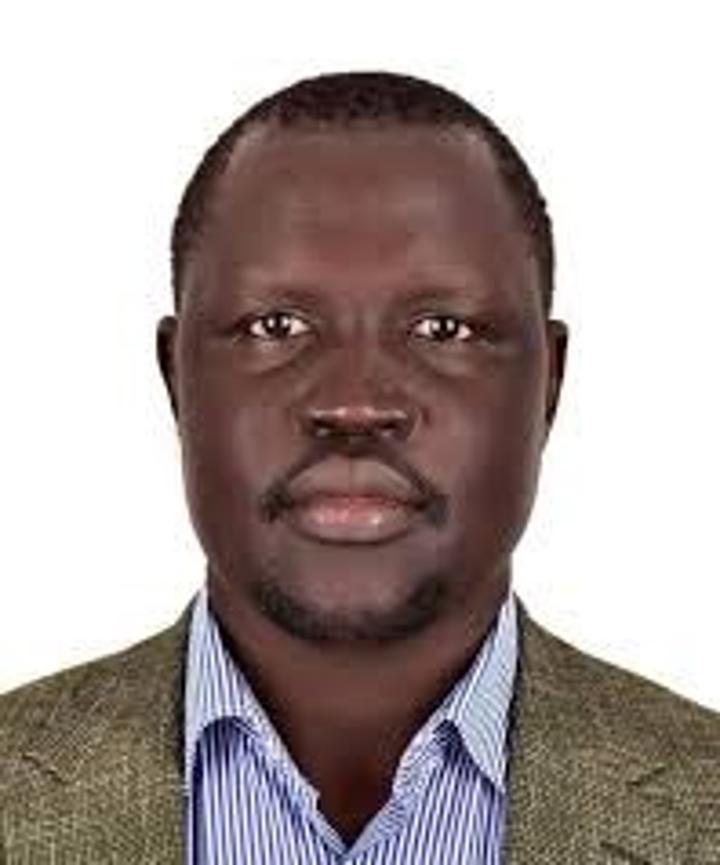
The writer, Dr. Sunday de John, holds an MBA and a Bachelor of Medicine and Bachelor of Surgery (MBChB) from the University of Nairobi, Faculty of Business and Management Sciences and Faculty of Medicine, respectively. He is the current Chairman of the South Sudan United Front-Progressive and can be reached via [email protected]
The views expressed in ‘opinion’ articles published by Radio Tamazuj are solely those of the writer. The veracity of any claims made is the responsibility of the author, not Radio Tamazuj.
For More News And Analysis About South-Sudan Follow Africa-Press