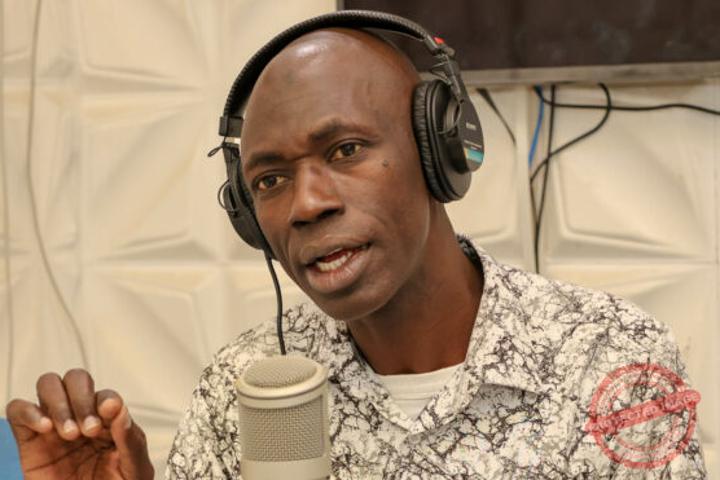
Africa-Press – South-Sudan. Civil society activist Edmund Yakani has called on South Sudan’s political leadership and Cabinet to strictly follow established legal procedures in the proposed amendment of the 2018 Revitalized Peace Agreement, warning against shortcuts in the process.
Yakani, who is the Executive Director of the Community Empowerment for Progress Organization (CEPO) and a signatory stakeholder to the peace agreement, said any amendment must be carried out in accordance with the provisions of the agreement, particularly Article 8.4, which outlines the procedure for making amendments through consensus among signatory parties.
Speaking in an audio statement, Yakani expressed concern following the Council of Ministers’ recent endorsement of a proposed amendment bill aimed at creating a legal framework for the conduct of elections scheduled for December 2026.
“I would like to take this opportunity with high respect and honor in a constructive manner to express my take on the lately development following the last week Council of Ministers meeting, which unanimously endorsed an amendment of the R-ARCSS through the scheme of amendment bill 2026,” he said.
He noted that while the government’s intention to facilitate elections is important, any legal changes must follow agreed procedures among stakeholders.
“The amendment of the agreement should be done through triggering Article 8.4 that requires the assembly of the RJMEC meeting among stakeholders, the parties signatory to the agreement and other friends of South Sudan to vote for that amendment,” Yakani said.
Yakani further argued that the country is in a situation where further extension of the transitional period is no longer an option, while also emphasizing that elections should not be postponed, as they represent the will of the citizens.
He stressed that key preconditions for elections—such as the constitution-making process, population census, and security sector reforms—are long-term processes that cannot realistically be rushed before the planned polls.
“You can’t hurry the constitution-making process. You need time for citizens’ engagement. Population census also requires resources and the return of IDPs and refugees,” he said.
Yakani said stakeholders had previously agreed on the need for a “minimum amendment” to create a conducive legal framework for elections without objecting to the principle of amendment itself. However, he cautioned against altering provisions of the agreement that are not directly linked to elections.
He specifically warned against tampering with Articles 8.2 and 8.3 of the agreement, which relate to the supremacy of the peace accord, saying such provisions are not directly connected to electoral processes.
“The clarity is that amendment of the agreement should focus on creating a conducive legal framework for the conduct of elections, not on altering unrelated provisions,” he said.
Yakani urged the government and parties to the agreement to respect previously followed procedures during earlier extensions of the transitional period in 2022 and 2024, which he said were conducted without dispute.
“This time round, we appeal to our leaders that the same procedures enshrined in Article 8.4 be followed,” he said.
He further appealed for consensus among all signatory parties, stressing that elections are a demand of the citizens rather than political leaders.
“Let us not have shortcuts in interpretation and let us not entertain misinterpretation or diversion of decisions that we have already agreed upon,” Yakani said.
He reiterated that elections are essential for the country’s political transition but must be conducted within a properly agreed legal framework that respects the peace agreement.
For More News And Analysis About South-Sudan Follow Africa-Press