
Africa-Press – Tanzania. A DAY after the 2026 Kilimanjaro International Marathon, Tanzania’s commanding performance in the half marathon has emerged as the defining storyline—highlighting the country’s growing depth and consistency in distance running.
Held in Moshi over the weekend as part of the wider Kili International Marathon, the 21-kilometre race drew strong regional and international competition.
While the full marathon titles went to Kenyan athletes, it was the 21.1km race that offered the clearest evidence of Tanzania’s upward trajectory, with local runners dominating both the men’s and women’s fields.
In the men’s race, Tanzanians not only secured the top two positions but also placed a strong contingent within the leading pack, underlining a shift from reliance on individual brilliance to a broader, more competitive base.
That depth was equally evident in the women’s race, where Tanzanian athletes controlled the front of the field, outpacing regional rivals and reinforcing the steady rise of the country’s female distance runners.
Taken together, the results point to a maturing athletics structure—one that is beginning to produce sustained performances across categories rather than isolated podium finishes.
For stakeholders, this is a significant development.
Speaking after the race, Minister for Information, Culture, Arts and Sports, Paul Makonda, described the event as a powerful reflection of the country’s athletic progress and national spirit.
He said the performances witnessed were not only about competition, but also a demonstration of discipline, resilience and patriotism among Tanzanian runners. Makonda also conveyed a message from President Samia Suluhu Hassan, who has pledged to attend next year’s edition and boost prize money, signalling continued government support for the event and the broader sports sector.
“The steady rise of Tanzanian athletics to the country’s peace and stability, a conducive environment has enabled sports to flourish while attracting increasing numbers of international participants.
“Beyond competition, the marathon continues to play a vital role in promoting tourism and stimulating local economies.”
He said businesses and residents in Kilimanjaro Region benefit directly from the influx of visitors, with the race serving as a key platform to showcase Tanzania’s natural beauty and hospitality.
Makonda also commended security agencies and regional leadership for ensuring a safe and well-organised event, while praising the national athletics association for its efforts in developing the sport and raising Tanzania’s profile internationally.
He highlighted ongoing plans, approved in collaboration with the global athletics governing body, to construct an international-standard stadium in Kilimanjaro, an investment expected to further elevate the country’s sporting infrastructure.
Makonda, noted that Tanzania’s diplomatic missions abroad will play a more active role in promoting the marathon, helping to attract even greater international participation in future editions.
Event sponsors echoed the positive outlook, pointing to the increasingly competitive standard of the race and the enthusiasm it continues to generate among both elite and recreational runners.
The marathon’s long-term backing has supported not only sports development but also broader national initiatives, including digital connectivity and environmental conservation.
Sustainability efforts remained a key highlight of this year’s event, with thousands of trees planted around Mount Kilimanjaro as part of an ongoing campaign to preserve the iconic landscape.
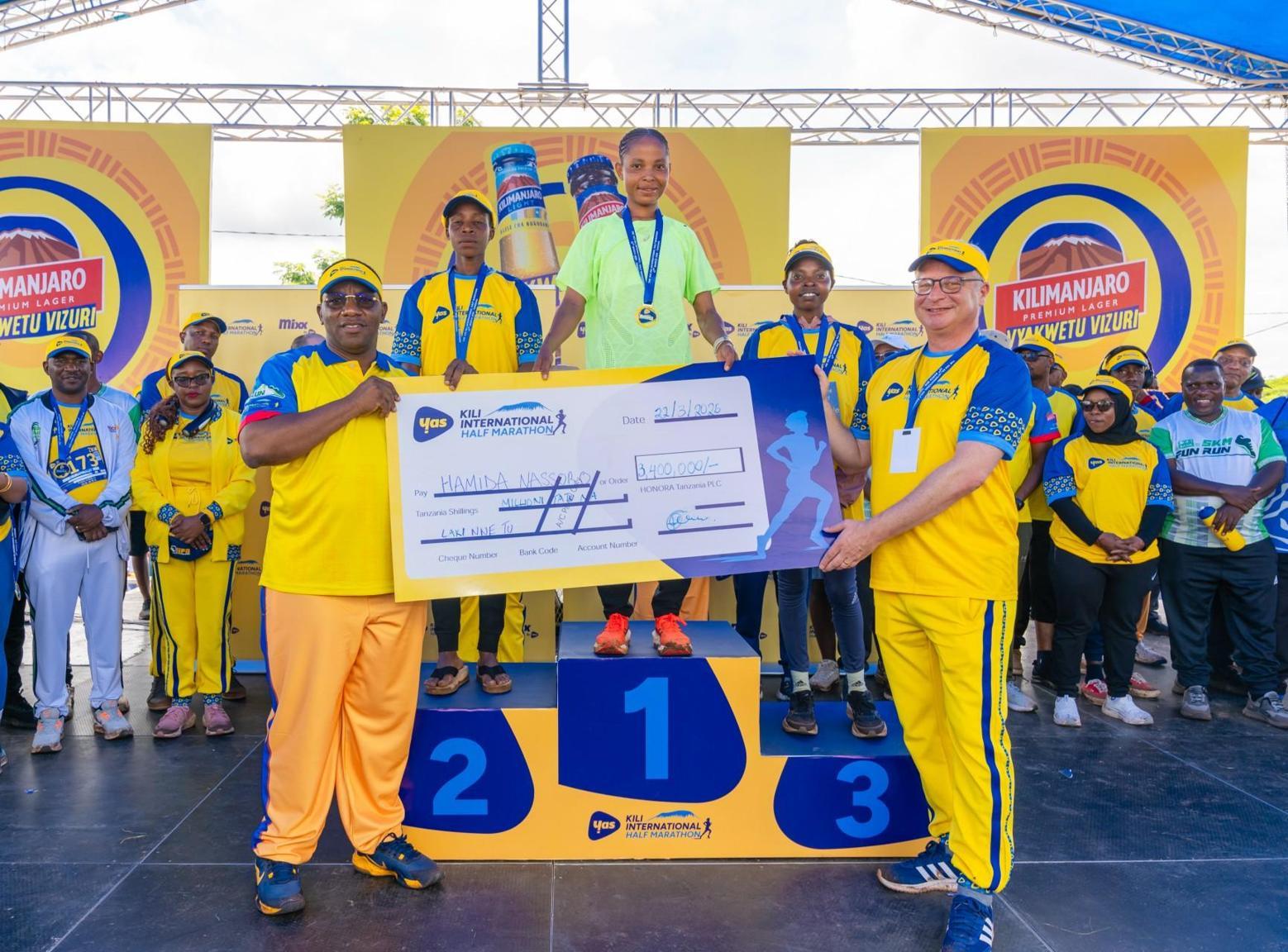
The Chief Executive Officer of Yas-Tanzania, the sponsor of half-marathon category, Pierre Canton Bacara, said the level of competition seen in the 21.1-kilometre race reflects both the strength of Tanzanian athletics and the growing enthusiasm the marathon inspires each year.
According to Bacara, Yas’s more than 12-year sponsorship of the Yas Kili International Half Marathon is rooted in the company’s longterm commitment to supporting sports development.
He added that this year’s theme, “Every Corner, Every Step – Faster,” aligns with Yas’s efforts to expand 4G and 5G connectivity across Tanzania.
“We continue to invest in network infrastructure to ensure every Tanzanian has access to reliable connectivity-whether for business, education, agriculture, or celebrating achievements like today’s Yas Kili International Half Marathon across our socials,” he said.
On environmental sustainability, Bacara reaffirmed Yas’s commitment to advancing the Yas Green for Kili initiative, launched in 2021 to protect and restore natural habitats around Mount Kilimanjaro.
“This year, we are planting more than 50,000 trees and just yesterday, we planted 3,000 seedlings in the Njoro area. This is part of our continued contribution to safeguarding Kilimanjaro as a national and global icon,” he added.
Kilimanjaro Regional Commissioner, Nurdin Babu praised the marathon’s impact, saying it promotes tourism, trade and community development in the region.
The 2026 edition attracted thousands of participants, with Tanzanian runners delivering standout performances that reinforced the country’s reputation as an emerging force in long-distance running.
From modest beginnings in 2003, when only a few hundred runners took part, the Kili Marathon has grown into a major international event drawing tens of thousands of participants across multiple race categories.
Today, the race not only identifies and nurtures Tanzania’s top athletic talent but also connects local communities with the global sporting stage, cementing its place as a cornerstone of the country’s sports and tourism calendar.
Tanzanian runner, Michael Geay led the Half Marathon men’s field with an impressive winning time of 1:04:10, narrowly ahead of compatriot Josephat Joshua Gisumo, who clocked 1:04:14, while Kenya’s James Kairiuki secured third place in 1:04:30.
The top 10 in the men’s race reflected a strong East African presence, with Tanzania’s Sule Elisante, Dickson Paul, Robert Makenzi and Joshua Amos all finishing among the leading pack, alongside Kenya’s Benard Kiplagat and Boniphace Mwangi.
In the women’s race, Tanzania’s Hamida Musa emerged victorious, followed closely by fellow Tanzanian Failuna Matanga, as Kenya’s Veronika Wanjiku and Florence Wachira also delivered strong performances to finish among the leaders.
Other notable finishes in the women’s category included Tanzania’s Irene Mkungu, Tunu Andrew and Anisa Badalo, while international competitors such as Germany’s Leah Bek and Leah Abeid, along with Uganda’s Everlyne Roytich, added depth to a highly competitive field.
Meanwhile, Kenyan runners once again asserted their dominance at the Kilimanjaro Marathon, claiming the top two positions in the full marathon.
William Morwabe set the pace in a tightly contested race, powering to victory in 2:18:52, with compatriot Letanto Stephen finishing close behind in 2:19:21.
Tanzania’s Charles Sule delivered a strong performance to secure third place in 2:19:31, ensuring the host nation maintained a presence on the podium.
This year’s results highlighted a notable improvement in performance levels among Kenyan athletes, building on last year’s winning time of 2:20:23 recorded by John Chirchir Tubei, with Robert Komen finishing second in 2:20:48.
A similar script unfolded in the women’s race, where Kenya’s Alice Kamunya surged ahead to claim victory in 2:50:33. Tanzania’s Angel John and Neema Sanka followed in second and third place, clocking 2:58:19 and 3:03:13 respectively, rounding off a competitive field.