
What You Need to Know
Tanzanian Foreign Affairs Minister Mahmoud Thabit Kombo has called for enhanced teaching of negotiation and conflict resolution skills at the Dr Salim Ahmed Salim Centre for Foreign Relations. He emphasized the importance of these skills for future diplomats to effectively represent Tanzania on the global stage and promote peace in international forums.
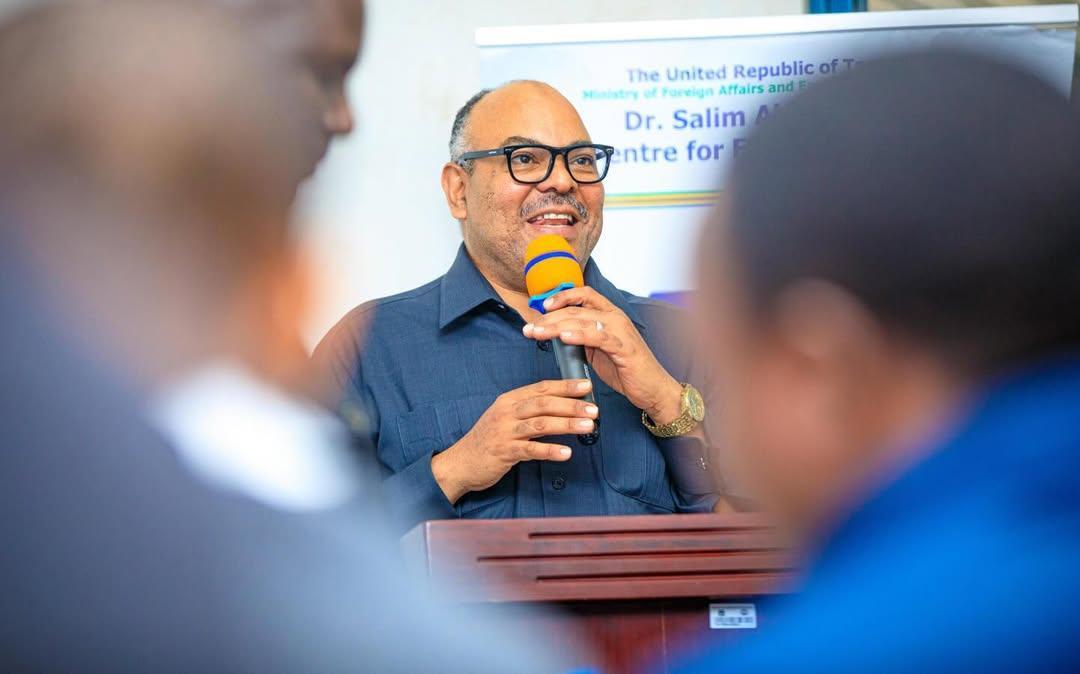
Africa-Press – Tanzania. MINISTER for Foreign Affairs and East African Cooperation, Ambassador Mahmoud Thabit Kombo has urged the management of Dr Salim Ahmed Salim Centre for Foreign Relations to place greater emphasis on teaching negotiation and conflict resolution skills to students as future leaders to effectively represent and defend the country on the international stage.
He said in the current world which is characterized by multilateralism, competent diplomats with outstanding negotiation skills are crucial to defend the country’s interest and advance the country’s image to a new height.
Amb Kombo made the remarks on Monday at the Centre for Foreign relations while delivering his public lecture themed “the Position of Tanzania in the Global Dynamics; a Strategic Perspective”.
“I would like after my retirement to live safely with my life in the hands of these youths. We are preparing future leaders to represent and protect our country,” Amb Kombo said.
He said competent negotiators are required in making meaningful diplomatic engagements for the prosperity of the country as well as promoting peace in international platforms including the United Nations (UN).
More remarkable, he said effective communication skills are strongly recommended even in the private sector for young professionals who dream to serve in multinational companies.
Furthermore, he encouraged the Centre for Foreign Relations to prepare graduates who can debate with sound arguments in English in various international platforms and engagements.
He also urged the management to put more emphasis on conflict resolution skills and soft power.
Soft power is the ability to influence other nations through persuasion and attraction rather than through force.
Amb Kombo said he was optimistic to see the centre preparing competent graduates in upholding the name of the Tanzanian diplomat, Dr Salim Ahmed Salim who during his active practice in diplomacy attracted global attention.
Reacting to the public lecturer, a student pursuing a bachelor degree in International Relations and Diplomacy (First Year), Ms Christina Nogisha said the lecture elevated her confidence to dream big and work hard so as to have a successful career in the future.
“It was an honour of life to participate in this historic lecture by the minister. I’m so delighted. I have received the brain food that broadened my perspective,” Ms Nogisha told the Daily News.
Another student pursuing a bachelor degree in International Relations and Diplomacy (First Year), Mr Anold Mmari shared similar sentiments, saying “changes start now”.
Mr Mmari said his dream is to grow academically and prosper as the prominent Tanzanian figure in international diplomacy.
Earlier, the Centre for Foreign Relations’ Acting Director Professor Felix Wandwe thanked Mr Kombo for visiting the centre and delivering the lecture.
He said the move reflected his transformative leadership and readiness to share knowledge.
The emphasis on negotiation and conflict resolution skills in education reflects a broader trend in international relations, where diplomacy plays a crucial role in addressing global challenges. As countries navigate complex geopolitical landscapes, the ability to engage in constructive dialogue and resolve disputes peacefully has become increasingly vital. In Tanzania, fostering these skills among students is seen as essential for preparing the next generation of leaders to engage effectively in global diplomacy and represent national interests.
Historically, Tanzania has been active in regional and international diplomacy, often advocating for peace and stability in East Africa. The call,