
Africa-Press – Tanzania. The government has reminded institutions that feed more than 100 people and have not yet adopted clean cooking technologies to do so immediately in order to advance the country’s clean cooking agenda.
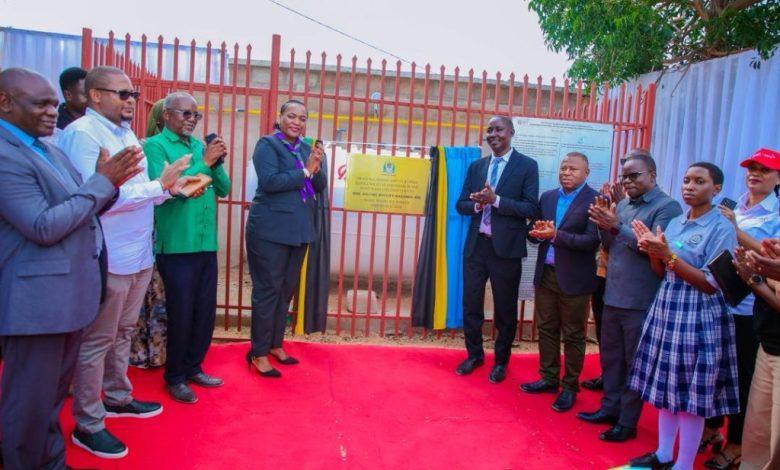
Deputy Minister for Energy, Ms Salome Makamba, issued the directive recently while launching a clean cooking project at Bunge Girls Secondary School, located on the outskirts of Dodoma City. She noted that out of about 30,000 institutions nationwide, only 1,136 have so far joined the initiative.
She called on the private sector to join the drive to ensure clean cooking energy is accessible across the country, especially in villages and peri-urban areas.
“We have many stakeholders participating in this initiative, but I would like to emphasied that there are still vast opportunities. We have institutions, auction centres, modern markets, food vendors, as well as youth at bus stands and terminals — all of whom need affordable clean cooking technologies,” she said, adding that the technologies should be affordable and suited to users’ ability to pay.
According to the Deputy Minister, the use of clean cooking energy has reached 23.2 per cent, up from just 6.9 per cent recorded in 2021.
She explained that failure to adopt clean cooking technologies has resulted in respiratory-related diseases and deforestation caused by excessive cutting of trees for charcoal and firewood.
Regarding the project launched at the school, Ms Makamba commended the private sector for taking the initiative to support implementation of the agenda, which forms part of the National Clean Cooking Strategy (2024–2034) aimed at scaling up the adoption of sustainable energy solutions nationwide.
ALSO READ: Tanzania sees its clean cooking energy as a healthy, transformative shift
The Deputy Minister also launched Bunge Girls Secondary School’s Clean Cooking Club, which will be used to raise awareness about the benefits of clean cooking energy.
Representing the Chairperson of the Parliamentary Standing Committee on Energy, Mbinga Urban MP Jonas Mbunda said the newly launched project will not only help preserve the environment but also save time spent on cooking and improve health outcomes.
He praised President Samia Suluhu Hassan for spearheading the initiative and pledged Parliament’s continued cooperation with the Ministry of Energy to ensure effective implementation of the programme.
Meanwhile, Acting Head of Bunge Girls Secondary School, Richard Msana, said that between July 2020 and May 2022 the school relied on firewood for cooking and spent up to 10.5m/- quarterly, equivalent to over 3m/- per month.
He added that after shifting to charcoal, monthly costs dropped slightly to 2.753m/-.
Mr Msana further noted that following the installation of cooking gas technology, the school purchased one tonne of gas which was used from November 2025 to February 2026, reducing the monthly cost to only 1.3m/-.
The government, in collaboration with various stakeholders, has developed the National Clean Cooking Strategy 2024-2034, which aims to achieve an 80% adoption rate of clean cooking among Tanzanians by 2034.
Clean cooking, as outlined in the strategy, refers to appropriate energies and technologies that collectively produce minimal toxic emissions, ensuring efficiency and safety.
Approximately 72.5 percent of energy is utilised in households, primarily for cooking. However, it is widely recognised that the use of traditional cooking solutions can lead to various health ef fects, such as respiratory disease, environmental impacts including deforestation, drought and Carbon emissions emanating from wood and charcoal production, social consequences like gender-based violence, as well as educational and economic repercussions due to the time lost in gathering these energy sources.