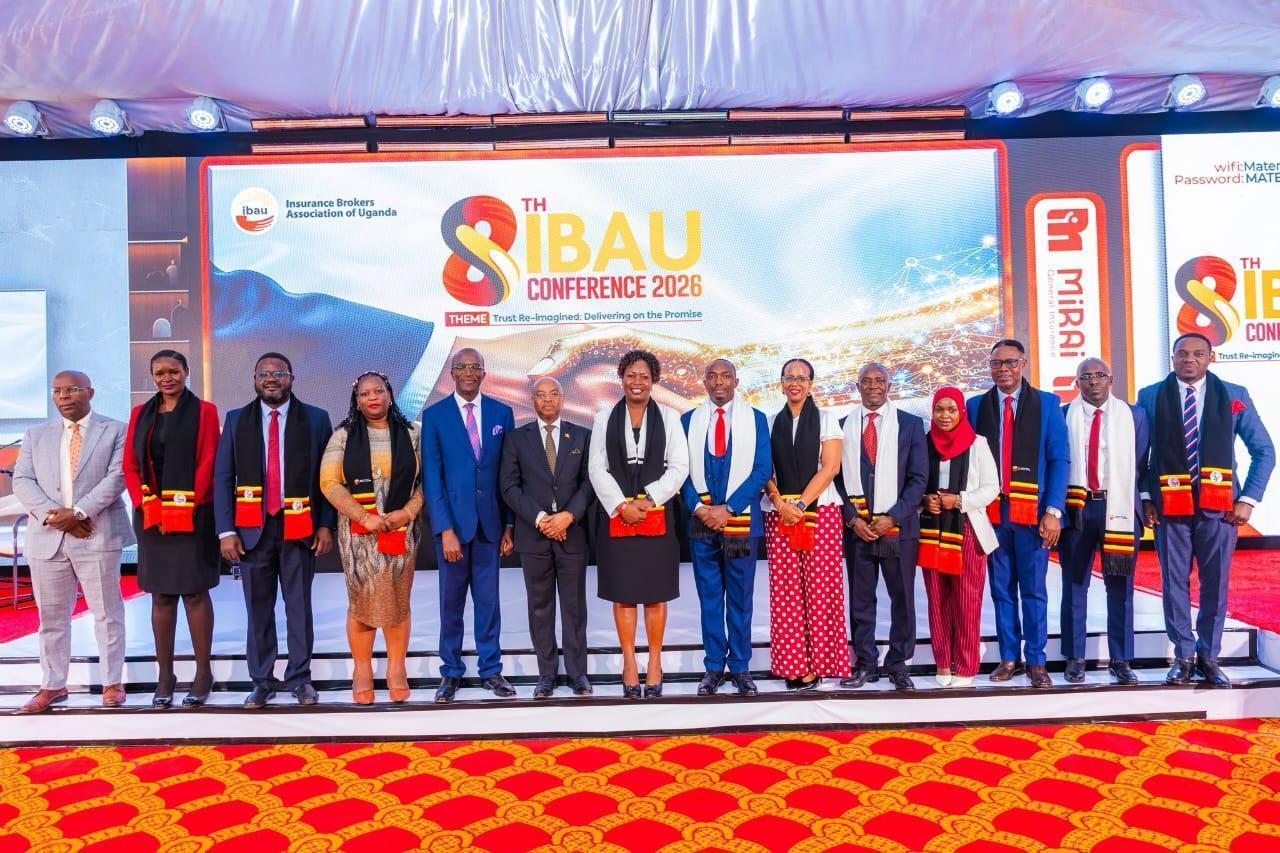
Africa-Press – Uganda. The 8th Annual Insurance Brokers Association of Uganda (IBAU) Conference in Mbarara has spotlighted a defining challenge for Uganda’s insurance industry: rebuilding public trust in a sector rich with opportunity but constrained by credibility concerns.
Held under the theme “Trust Reimagined: Delivering on the Promise,” the conference brought together insurers, brokers, regulators, and regional stakeholders to examine persistent gaps in confidence and explore pathways to inclusive growth.
At the center of the discussions was Mirai General Insurance, the event’s platinum sponsor, whose operational model and messaging strongly influenced the tone of the conference. The company positioned trust not as a branding exercise, but as a measurable outcome driven by efficiency and accountability.
Claims Settlement at the Heart of Trust
Mirai’s Chief Executive Officer, Joseph Nsubuga, delivered one of the conference’s most direct messages, arguing that the industry’s credibility hinges on its ability to honor claims promptly.
“A promise delayed is a promise denied,” Nsubuga said, pointing to the company’s 24-hour claims settlement benchmark as a practical demonstration of its commitment.
His remarks underscored a broader industry concern: delays in claims processing have long undermined public confidence in insurance. By prioritizing speed and transparency, Mirai is positioning itself within a growing push toward performance-based trust-building.
Nsubuga also emphasized the evolving role of brokers, describing them as critical partners rather than intermediaries. He noted that brokers now serve as advisors who shape customer experience and carry the industry’s reputation.
Discussions at the conference repeatedly returned to a central paradox: while Uganda’s insurance industry continues to grow, its reach remains limited.
Gross written premiums surpassed shs 2 trillion in 2025, yet insurance penetration remains below 1% of GDP. This indicates that the majority of Ugandans, particularly those in the informal sector, remain outside the safety net of insurance.
Delivering the keynote address, Deputy Governor Augustus Nwagaba linked insurance directly to financial stability and economic transformation.
He stressed that trust is most visible at the point of claims settlement and highlighted improvements in claims payouts, which now stand at nearly 50% of premiums. However, he cautioned that incremental progress is not enough.
Nwagaba called for greater focus on micro, small, and medium enterprises, as well as informal workers, urging the industry to adopt simplified products, flexible payment systems, and technology-driven distribution models.
Insurance Regulatory Authority CEO Alhaj Kaddunabbi Ibrahim Lubega outlined a shift in regulatory approach, from strict enforcement to enabling innovation.
He pointed to ongoing efforts in risk-based supervision, microinsurance frameworks, and conduct regulation as key to fostering growth while safeguarding consumers. Uganda’s regulatory leadership, he noted, is increasingly shaping insurance governance discussions at regional and continental levels.
Regional perspectives added further depth to the discussions, with MUA Rwanda CEO Condi advocating for a shift from measuring penetration through premiums to evaluating actual risk coverage.
His remarks reinforced the need for customer-focused product design and aligned with calls for expanding microinsurance and retail offerings in Uganda.
A recurring theme from previous conferences gained sharper focus this year: the role of brokers.
No longer viewed as optional intermediaries, brokers are now seen as central to the industry’s trust architecture, bridging knowledge gaps, advising clients, and supporting claims processes.
Unlike the 7th conference, which focused on global trends such as digital transformation and ESG, this year’s gathering marked a shift toward implementation.
Trust emerged not only as a goal, but as a measurable standard against which the industry must now be judged.
Stakeholders agreed that unlocking this potential will depend on consistent delivery, particularly in honoring claims and meeting customer expectations.
For More News And Analysis About Uganda Follow Africa-Press