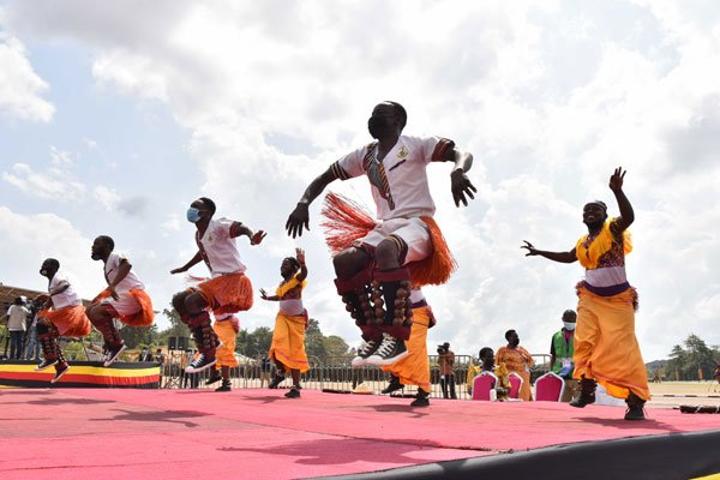
Africa-Press – Uganda. International Women’s Day was yesterday marked for the 111th time the world over. In Uganda, after the coronavirus pandemic and its attendant effects shorn the event of in-person celebrations for a couple of years, Kololo Independence Ground was a beehive of activities. There was a ubiquitousness of masks and indeed other pandemic curbs to underline the fact that Covid-19 is still a clear and present danger.
At the outset of the pandemic in March of 2020, the application of a gender lens made clear the fact that men had a higher death rate. Over time, though, evidence—both empirical and anecdotal—has come to show that the female gender has felt the brunt of the pandemic much more acutely than others.
Stay-at-home orders that had families cooped up indoors exacerbated domestic violence. Police reports, for one, showed an increase of 10 percentage points inside the first week of Uganda’s first nationwide lockdown.
Also, when schools in Uganda twice shut their doors to coronavirus, the issue of teenage pregnancy reared an ugly head. Adolescent girls were exposed to risks of sexual violence, pregnancies, exploitation and abuse as well as child marriages. Statistics show that 354,736 teenage pregnancies were registered in 2020, and 196,499 in the first six months of 2021 for good measure.
The working woman was also buffeted from side to side. Female healthcare workers, for instance, found themselves more exposed to a virus that is anything but a run-of-the-mill. This was simply because PPE are male bespoke. Elsewhere, a new normal that was headlined by a shift to working at home appears to have made things worse. The work-life balance still proved elusive as women’s unpaid work—such as childcare—increased.
At Kololo, yesterday, President Museveni presided over International Women’s Day celebrations under the theme: “Gender Equality for a Sustainable Tomorrow.” Mr Museveni was quick to point out how his government’s affirmative action has addressed gender disparities. In fact, government functionaries have needed little invitation to bask in the glory of statistics that show Uganda has 14 senior (44 percent) and 23 junior (46 percent) ministers. While this is an appealing avatar of female progress, we ought to be alive to the fact that gender-blind policymaking still exists.
As the world emerges from the pandemic, now is the time to ensure that issues of women are mainstreamed.
Evidence shows that women make good on the promise to create a safer and more equitable world as they are more attuned to childcare, social care and poverty. If the pandemic has shown us anything, it is the purpose in cherishing gender sensitivity. This should not be lost upon us as a nation.
[email protected]
For More News And Analysis About Uganda Follow Africa-Press