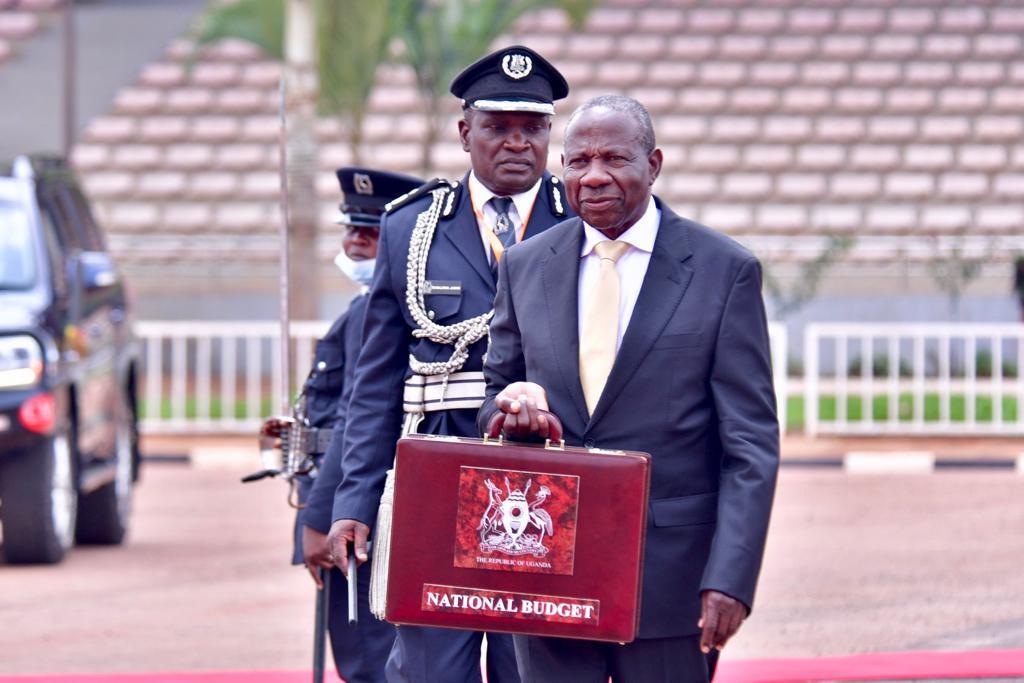
Compiled by Franklin Draku, Tonny Abet & Jane Nafula
Africa-Press – Uganda. The Finance ministry has poured cold water on frantic appeals by business and other leaders for a supplementary fund to be urgently mobilised for the country to conduct elections for Local Council officials whose term ended on Monday, July 10.
Appeals for urgent funding of the Shs59b elections continued to flood news media yesterday as the country entered a second day of a power vacuum at the critical village and parish level with no chairpersons and committees.
No supplementary
Unmoved, Mr Jim Mugunga, the spokesperson at the Finance ministry, told the Monitor last evening that “a supplementary budget, according to established guidelines, is intended to cover unforeseen expenditures”.
“I do not think elections qualify under this category… This matter can be best explained by the Electoral Commission (EC) whose mandate is to plan and budget for such activity,” he said.
Mr Mugunga, however, did not say why the Finance ministry did not disburse funds to the EC despite several reminders, instead choosing to express ignorance of any request ever having been made.
In April, EC chairperson Simon Byabakama told the Legal and Parliamentary Affairs committee how “the Commission has planned to conduct the elections in the 2023/2024 financial year but no appropriation was made in the Budget”.
A month later, EC spokesperson Paul Bukenya confirmed that the EC “submitted a budget on time” for an election which is provided for under the country’s Constitution, clearly making it a foreseen expenditure area which should have been covered by the Finance ministry.
Mr Mugunga was responding to calls by Kampala City Traders Association, whose chairperson, Mr Thadeus Musoke Naggenda, advised that the best way out of the crisis is a supplementary budget.
A similar appeal was presented by Mr Hassan Mudiba, the general secretary of the Uganda Local Government Workers Union.
“Our appeal to the government is that let us follow the Constitution and improvise a supplementary budget so that elections can be conducted as soon as possible. This is a very vital administrative structure which we cannot ignore. What they (former councils) will be doing before elections will be illegal and is going to inconvenience us,” Mr Naggenda said.
“If government says there is no money, it becomes a challenge. The best option is to pass a supplementary budget. That office is an important office. LC3 or 4 can wait but that LC1 can’t,” said Mr Mudiba.
These views backed growing fears that with LC1s and 2s playing a central mediatory role in so many transactions, it would be disastrous for them to illegally stay in office as any functions they would purport to exercise now would be rendered null and void.
On Tuesday, Local Government minister Raphael Magyezi had purported to have the authority, without saying under what law he enjoyed that power, to extend their term of office by proclamation. His assertion has, however, since been exposed as unconstitutional and, patently without legal basis.
In Parliament, shadow ministers Betty Ethel Naluyima (Local Government), Helen Nakimuli (Fisheries) and others, also demanded at a hastily convened press conference that money be found.
They reminded the government that without LCs1 and 2, Ugandans now have nowhere to turn to for dispute resolution at community level, recommendations for identification documents, endorsement on property sale agreements and authentication of sureties in court cases, among others.
“Most of the [former] chairpersons in the areas we represent are confused, they don’t know what to do. There are land transactions going on…they are supposed to stamp and sign them but don’t know what to do. There is going to be a lot of confusion in the country,” Ms Nakimuli said.
Background
Under Article 181(4) of Uganda’s Constitution and Section 170 of Local Government Act, as amended, the EC must organise local council elections every five years.
The last election was organised on July 10, 2018, meaning LC1s and 2s elected then completed their term in office this Monday, July 10, 2023.
The Constitution only allows the responsible minister to temporarily extend an existing term by no more than six months in cases where the country is in a state of war, or if a state of emergency has been declared.
After the six months, any subsequent term variation is only possible through recourse to Parliament.
However, in the current situation, lawyers said on Tuesday evening that government allowed the term to run out hence there is nothing to extend, which leaves elections as the remaining option.
For More News And Analysis About Uganda Follow Africa-Press