Africa-Press – Uganda. Government officials on Thursday defended gains made in strengthening Uganda’s private sector but warned that the country’s expanding informal economy remains a major obstacle as the transition to the Fourth National Development Plan (NDP IV) begins.
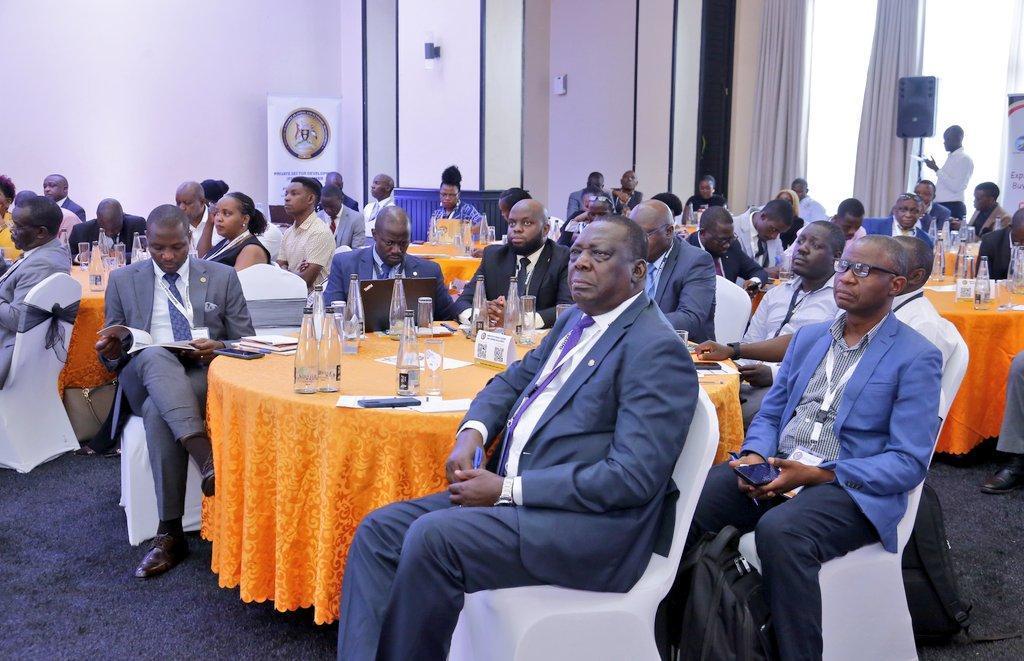
The Director for Economic Affairs at the Ministry of Finance, Planning and Economic Development, Moses Kaggwa, represented the Permanent Secretary and Secretary to the Treasury, Ramathan Ggoobi, at the Annual Review of the Private Sector Development Programme — the final assessment under the Third National Development Plan (NDP III).
The review brought together government institutions, private sector players, development partners and civil society to assess five years of implementation and shape priorities for the next development cycle under NDP IV.
The meeting comes at a critical moment as Uganda shifts focus toward strengthening enterprise formalisation and competitiveness under the new development framework.
Ggoobi said the annual review provides a platform for stakeholders to reflect on achievements registered under the Private Sector Development Programme and identify areas that require adjustment to improve performance under NDP IV.
He noted that under NDP III, government institutions with private sector mandates operated under a coordinated programme framework aimed at strengthening private sector competitiveness to drive sustainable and inclusive economic growth.
The Private Sector Development Programme is one of the flagship programmes under NDP III, designed to enhance the competitiveness of Uganda’s private sector, widely recognised as the engine of economic growth, job creation and domestic revenue mobilisation.
According to Ggoobi, government and partner institutions contributed to five core objectives: reducing the cost of doing business, strengthening institutional capacity within the private sector, promoting local content in public programmes, unlocking investments in strategic sectors, and strengthening standards enforcement and the overall business environment.
These objectives align with NDP III targets such as reducing the size of the informal sector, increasing access to affordable financing for priority sectors, boosting exports, and increasing the share of government contracts awarded to local firms.
Recent data indicates mixed outcomes. Local firms secured about 98 percent of government contracts by number in the 2024/2025 financial year.
However, they continue to lag behind foreign firms in terms of total contract value, pointing to structural capacity gaps within domestic enterprises.
Ggoobi said non-commercial lending to key growth sectors expanded significantly, rising to about 4 percent of GDP from 1.5 percent in the 2018/2019 financial year.
Despite this progress, concerns remain over the expanding informal economy.
He noted that the informal sector share increased to about 54.75 percent, up from roughly 51 percent over the same period, signalling the need for stronger formalisation strategies moving forward.
Reducing informality has been a central goal of NDP III because a large informal economy constrains tax collection and limits the country’s ability to finance development priorities sustainably.
Ggoobi urged stakeholders to draw lessons from the implementation of NDP III and prioritise reforms that will improve programme effectiveness under NDP IV.
He said government will continue working with Ministries, Departments and Agencies, private sector actors and development partners to address long-standing barriers to private sector growth, including the high cost of doing business, limited access to long-term financing, and weak institutional capacity in some sectors.