Africa-Press – Uganda. The proposed increase in fuel tax was presented as a replacement of the earlier proposed road licence fee.
The government intends to increase the tax per litre of petrol and diesel by Shs100 in order to increase revenue in the next financial year, junior Finance minister David Bahati, has said.
The proposed tax increases will raise the tax on petrol to Shs1,450 per litre and Shs1,130 per litre of diesel.
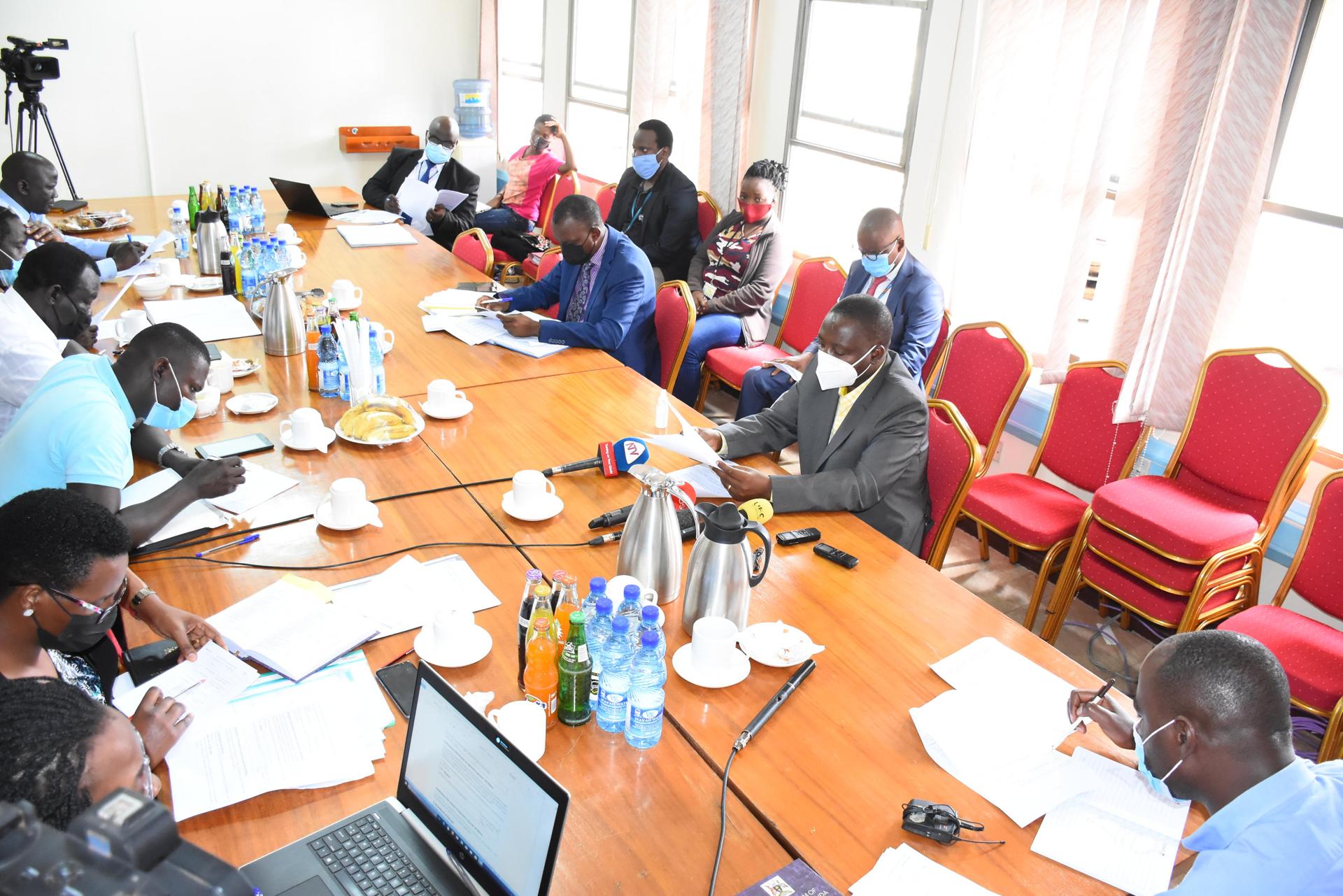
Appearing before the Finance Committee of Parliament yesterday, minister Bahati said the arrangement will help the government raise an additional Shs196b in 2021/2022 financial year.
“The increase is not expected to cause significant increase on the pump prices. We estimate that an increase of Shs100, per litre in excise duty will increase pump prices by only Shs100 assuming the entire increase is passed on to the consumer and the exchange rate and international fuel prices remain constant,” Mr Bahati said.
Fuel prices in Kampala and other towns went up at least twice within a week over the past two weeks, with the price of a litre of petrol jumping from Shs4,050 in some areas of Kampala to Shs4,150, while diesel rose from Shs3,630 to Shs3,710.
Fuel dealers expect the prices to rise further owing to an increase in global crude oil prices that have since December 2020 risen from $49.99 (about Shs181,000) to $65.41 (Shs236,000) per barrel as of last month.
The proposed increase in fuel tax was presented as a compensation for the revenue that the government would have raised through the earlier proposed road licence fee, which has since been withdrawn.
In the tax measures tabled on April 1, the government had proposed to introduce an annual road licence fee of Shs200,000 per motor vehicle and Shs50,000 per motorcycle. This was expected to generate Shs20.5 billion.
Mr Bahati said the government is yet to establish a system that would enable the smooth implementation of the tax. The proposal was also based on the recommendation by the finance committee not to impose a direct tax to avoid compliance challenges
The government is looking to collect at least Shs596 billion from 10 Tax (Amendment) Bills including the Traffic and Road Safety Act (Amendment) Bill, 2021, The Fish (Amendment) Bill 2021, The Stamp Duty (Amendment) Bill 2021, The External Trade (Amendment) Bill, 2021, and the Mining (Amendment) Bill, 2021.
In other proposed amendments, the government has dropped the $0.4 per kilo of wheat bran, maize bran and other by-products of the milling industry. This will be compensated by a proposed Shs100 excise duty per kilo of wheat, from which the government expects to generate Shs30 billion.
Mr Bahati said this will also propel the government’s policies on import substitution and value addition, by promoting other sources of flour such as cassava and maize.
The government has also dropped the Shs70,000 levy that it had proposed per kilo of fish maw. In its place, traders will now incur a 10 per cent tax on the total value of fish maw exported.
Importers of plastic products and local factories with no recycling facilities will also incur a 2.5 per cent tax.
On Thursday, the government presented a revised budget for the 2021/2022 financial year, with the overall figure rising from an earlier proposed Shs41 trillion to Shs44 trillion.