Africa-Press – Uganda. In Nabongo Sub-county, Bulambuli District, the drought is severe, vegetation cover is depleted and the water sources are running dry.
Locals and those living in the neighbouring sub-counties of Bunambutye, Muyembe, and Bukhalu are also experiencing higher temperatures than usual.
Mr James Magona, a resident of Buwekanda Village in Nabongo Sub-county, on Monday said an increase in extreme weather patterns has resulted in extended dry spells with far-reaching effects, more so water shortage.
“We will face famine because as we speak now, we struggle to get what to eat. During a dry spell, we used to grow crops along the river banks but that is not possible now because the rivers are also drying up,” Mr Magona.
Mr Gilbert Kituyi, another resident, said weather patterns have become worse both during dry and rainy seasons.
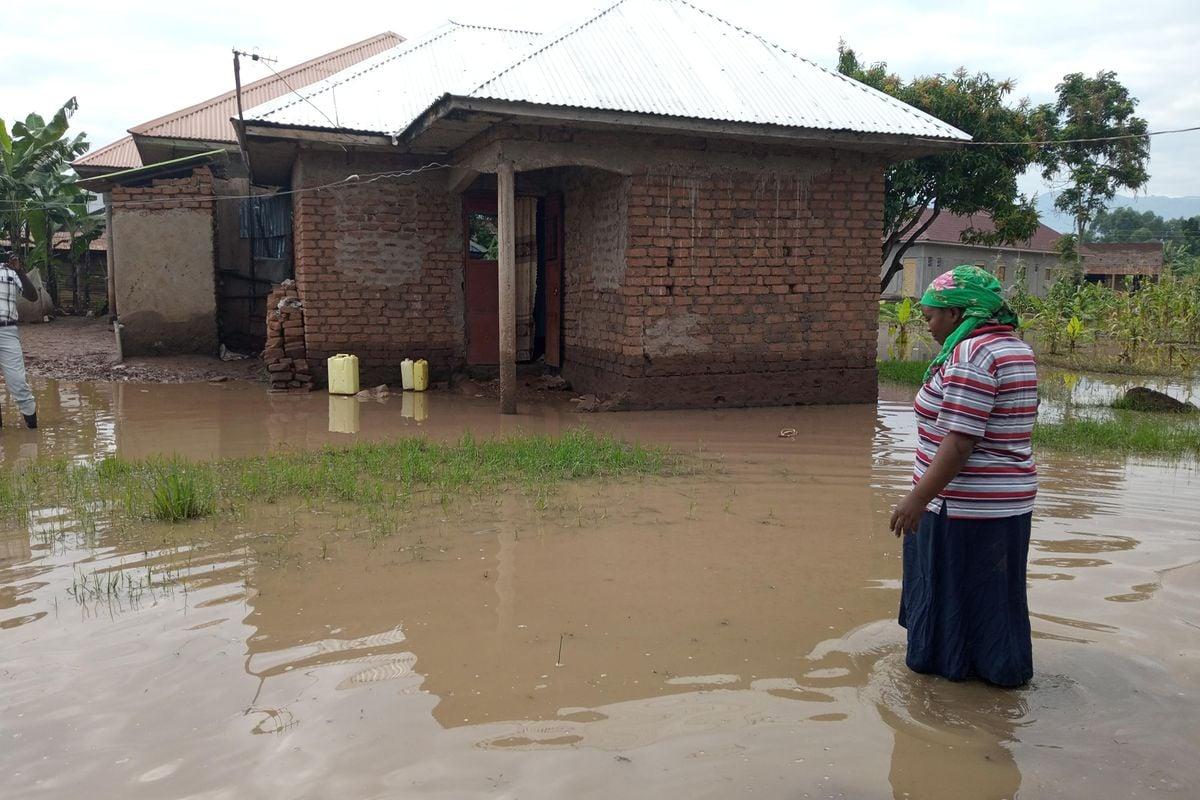
“When it rains, its despair because our houses flood and crops are washed away. We are always left homeless. And when it is dry, this is what we get,” Mr Kituyi said.
Last year, hundreds of locals were displaced by floods following heavy rainfall. Others were admitted to Muyembe Health Centre IV after they sustained injuries.
In Sironko District, several families settling along River Sironko and its tributaries were also displaced after the rivers burst their banks, which was blamed on environmental degradation by the locals.
Mr Micheal Wangusi, an environmental expert and a resident of Sironko District, warned of river bank degradation due to sand mining in affected districts. He said this needs to be controlled.
“This has led to river deviation. When there is a downpour, it results in flooding, which washes away crops, sending families into starvation,” he said.
Mr Wangusi further said unregulated excavation of marram, brick laying and silted valley tanks have also made matters worse.
The Bulambuli District chairperson, Ms Annet Nandudu, said prolonged climate-related disasters such as dry spells may cause famine.
In order to mitigate such disasters, the government, through the Ministry of Water and Environment, has secured a grant of $9m (about Shs32b) from the African Development Bank, through the Global Environment Facility, to address the challenges of climate change in the affected districts of Sironko, Bulambuli, Kapchorwa and Bukedea.
The districts fall under the Awoja catchment region, which is among the worst hit area by the climate-related disasters such as floods and drought. It is reported that this has affected crop production and pasture for livestock.
Mr Alfred Okot Okidi, the Permanent Secretary in the Ministry of Water and Environment, said the project will help to build adaptive capacity of rural communities and reduce their vulnerability to climate change.
He said the catchment area suffers more from the effects of landslides, drought, floods, and lightning. He warned that if effects are not addressed, the situation will become worse by 2030.
“This will be done through provision of water for improved agricultural production, tree growing, land management and also strengthening hydro meteorological services,” Mr Okidi said.
He said increased frequency of floods and droughts and other natural disasters lead to several negative consequences such as pollution of drinking water resources.
“It also leads to increased risk of malaria,” he added.
Mr Okidi explained that population pressure on the mountain slopes of Elgon has pushed farming activities into marginal areas such as wetlands, riverbanks and protected forests.
“This has accelerated the rate of soil erosion and increased sediment loads in the water courses and water storage facilities. It has also reduced the capacity of the landscape to store excess water during the rainy season,” he said.
The project named Strengthening of adaptive capacity and resilience of communities in Awoja catchment of Uganda, will ensure provision of drinking water for 25,000 people and water storage for production.
It will also provide alternative livelihood options such as fish farming, fruit farming, honey production and ecological briquette production in the beneficiary districts.
Mr Augustine Ngafuan, the country manager of African Development Bank, said the project will boost local food production and also mitigate risks of short and long-term climate change shocks.
“It will directly support 791,200 inhabitants, of which 50 percent are female,” he said.
For More News And Analysis About Uganda Follow Africa-Press