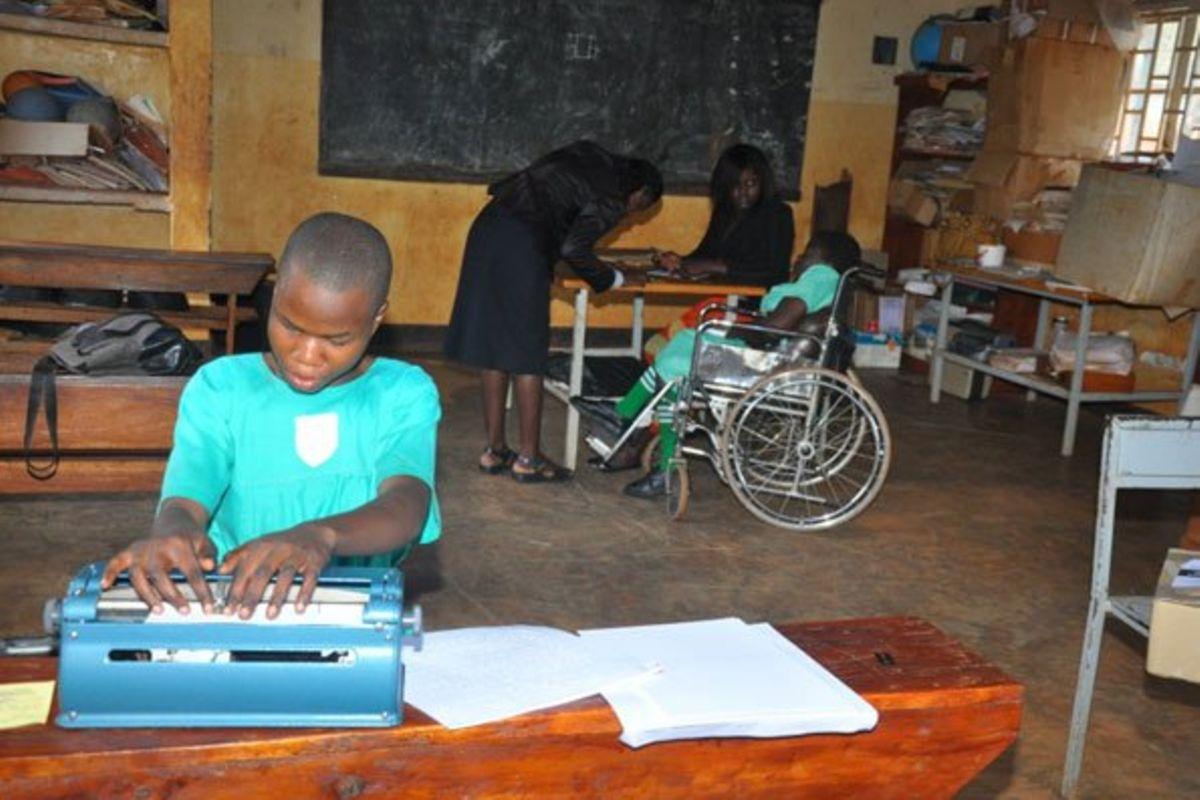
Africa-Press – Uganda. A section of Ugandan children are being left out of the education system, and it seems to be generally accepted. Out of 2.5 million Uganda children living with disabilities, only 250,000 have access to education, this is according to the executive director of the Masaka Association of People with Disabilities, Mr Richard Musisi.
The World Bank says around 16 percent of Ugandan children have a disability, meaning most children with disabilities are not able to attend school.
In a story this week, this newspaper reported that civil society organisations were making an appeal to government to increase funding so that more special needs education officers could be recruited.
Out of the nine districts in Masaka Sub-region, for example, only Kalungu District has an officer in-charge of special needs education. This should have, under normal circumstances been a crisis. But it should not come as a surprise since special needs education gets only 0.1 percent of the education sector budget.
It is every child’s right, including the two million missing school because they are in some way living with a disability, to get an education.
According to Unesco, special needs education can be defined as education designed to facilitate learning by individuals who require additional support in order to participate and meet learning objectives in an education programme.
Granted, government has tried to see to it that children with special needs get an education, but a lot still has to be done.
First, government should train and recruitment more of these special needs teachers. These students are disadvantaged either physically, behaviourally, intellectually, emotionally or socially, so they need specially trained personnel and equipment.
Second, the learning environment for these children has to be improved. Most of the learning institutions around the country have infrastructure that is not user-friendly for them. Under the circumstances, it is understandable why many would choose to stay at home rather than be at school.
More investment also has to be done in procuring learning materials for the special needs students if they are to gain from our education system.
Finally, all this can be achieved through increased funding for special needs education. With that, more staff can be recruited, facilities built and materials bought. But that starts with government making it a priority to provide education for those 2.5 million learners.
Our commitment to you
We pledge:
To be accurate and fair in all we do.
To be respectful to all in our pursuit of the truth.
To refuse to accept any compensation beyond that provided by Monitor Publications Ltd. for what we do in our news gathering and decision-making.
Further, we ask that we be informed whenever you feel that we have fallen short in our attempt to keep these commitments.
For More News And Analysis About Uganda Follow Africa-Press