Africa-Press – Uganda. I like and admire Norbert Mao. Yeah, everyone does, no? The man has more wit than Chameleone has anger problems and he oozes this kind of infectious wellness that can convince a fly to accuse faeces of being dirty.
But I also sometimes feel like tying Mao on the steaks and setting it on fire. Like now in Kyankwanzi, where even the wind appears to know protocol. It blows, yes—but it first checks who is speaking.
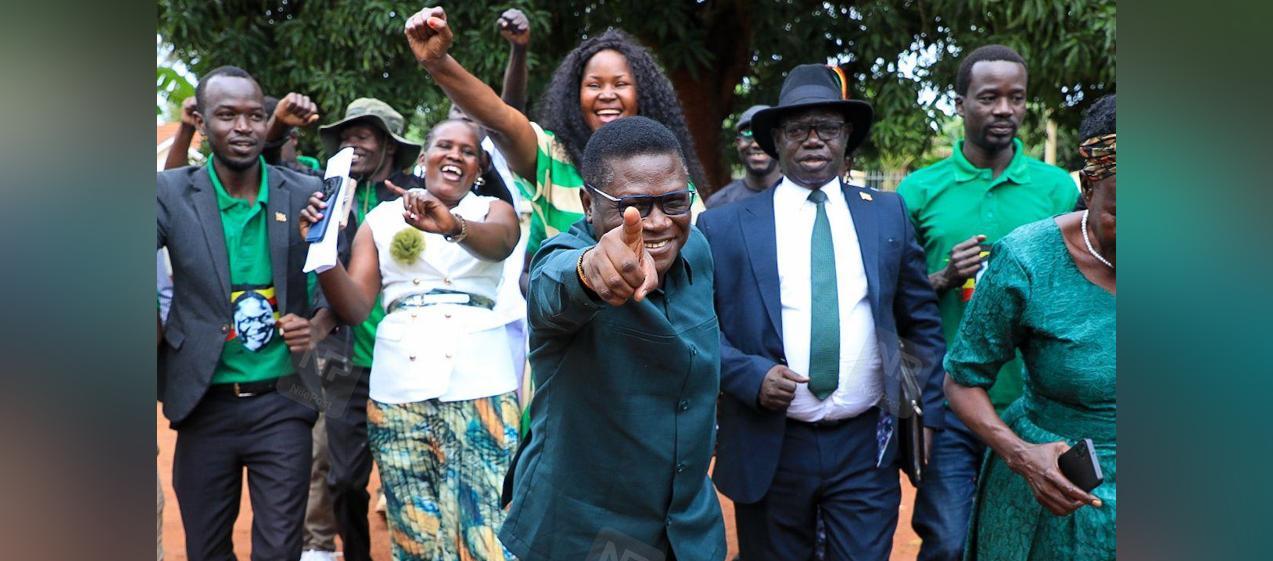
Yet when Mao arrived with his familiar blend of legal elegance, political charm, and that unmistakable confidence of a man who has survived more political weather than most umbrellas, the homestead noticed. It always does. Kyankwanzi does not ignore personalities—it studies them like examination papers.
By the way, this you see his clip of emerging from the home and speaking about why he was going to Kyankwanzi? Yeah, the only good thing about it was the vapour wafting from his coffee mug but the orator in Mao was so missing you could feel all the guilt.
I swear this Christopher Okello Onyum chap of Ggaba elementary school murder would have defended with less guilt.
Mao, to be fair, is not new to political rooms. He has spent years in them—arguing, negotiating, smiling politely at decisions that were already made before he entered. But recently, he has begun speaking like someone who believes the chairs in the room occasionally rotate for fairness, not for arrangement.
And for him, too.
And that, in politics, is where comedy quietly begins.
There is a certain way a visitor behaves in a compound. You greet the dog before you greet the door. You do not suddenly start advising the homeowner on how to rearrange the sitting room unless you are either extremely confident—or dangerously comfortable.
Some observers say Mao has been walking that fine line recently, the one that separates statesmanship from what elders call “testing the depth of water while still wearing shoes.” Because in politics, shoes are not just footwear—they are strategy. You remove them only when you are sure of the ground. Or when you have already decided to blame the river.
Now, in the Speakership conversation hovering somewhere above Parliament like a slow-moving cloud that refuses to rain or disappear, Mao has found himself mentioned in tones ranging from admiration to “this man is trying things.”
Wait, it is the bedroom. Entering the bedroom when a visitor is supposed to know their verandah.
Inside such circles, even silence has a reading. A pause becomes a paragraph. A smile becomes a subheading. And Mao’s current positioning has produced plenty of editorial material.
His critics—both loud and whispered—suggest that he is speaking like someone negotiating two conversations at once: one in public, where principles wear suits; and another in private, where principles sometimes loosen their ties and check exchange rates.
Of course, politics is a serious game. But it is also the only place where people can say “I am not interested in positions” while adjusting themselves closer to the chair.
And then there is Anita Among, sitting comfortably in the grammar of incumbency, presiding over a House that knows its own weight. Challenging such a position is not impossible—but it requires more than vocabulary or a CV that says “I hugged Kony like this during a mediation”.
It requires understanding that in Parliament, even the air around the Speaker’s seat has opinions.
Somewhere in the background, allies like Mukasa Mbidde reportedly cough politely—the kind of cough that is not medical but diplomatic. The kind that means, “My friend, we are now approaching the part of the journey where even the road begins to disagree with you.”
Because in politics, friends rarely stop you directly. They just start speaking in riddles.
Mao, however, remains Mao—eloquent, composed, occasionally sounding like a man cross-examining fate itself. But politics does not award marks for articulation. It awards them for timing. And sometimes, for knowing when not to finish a sentence.
Kyankwanzi watches all this with the patience of a man who has seen many strong swimmers arrive confidently at the riverbank. Some enter gracefully. Some splash dramatically. Others simply test the water, nod wisely, and quietly sit back down.
Because the river, unlike politics, does not argue. It only responds. And it responds dangerously to those who think they are tall enough to test its depth with both feet.
And in this particular river, even confidence is advised to ask for directions before removing its shoes.
Ladid Mao, you’re back in Parliament and right now, the game you are playing is like picking up a fight with a crocodile when your legs are still knee-deep in the swamp. Well, Anita Among might not be a crocodile but there are those around her who keep itching to grow the crocodile teeth.
Omera, we know politicians use tricks to raise their chips and bargain better for positions. Some even walk into the arena so they are bought off. But there are those who lose everything after climbing too close to the sun.
Let’s sit down and mat oput! It’s the bitter herb, Omera!
For More News And Analysis About Uganda Follow Africa-Press