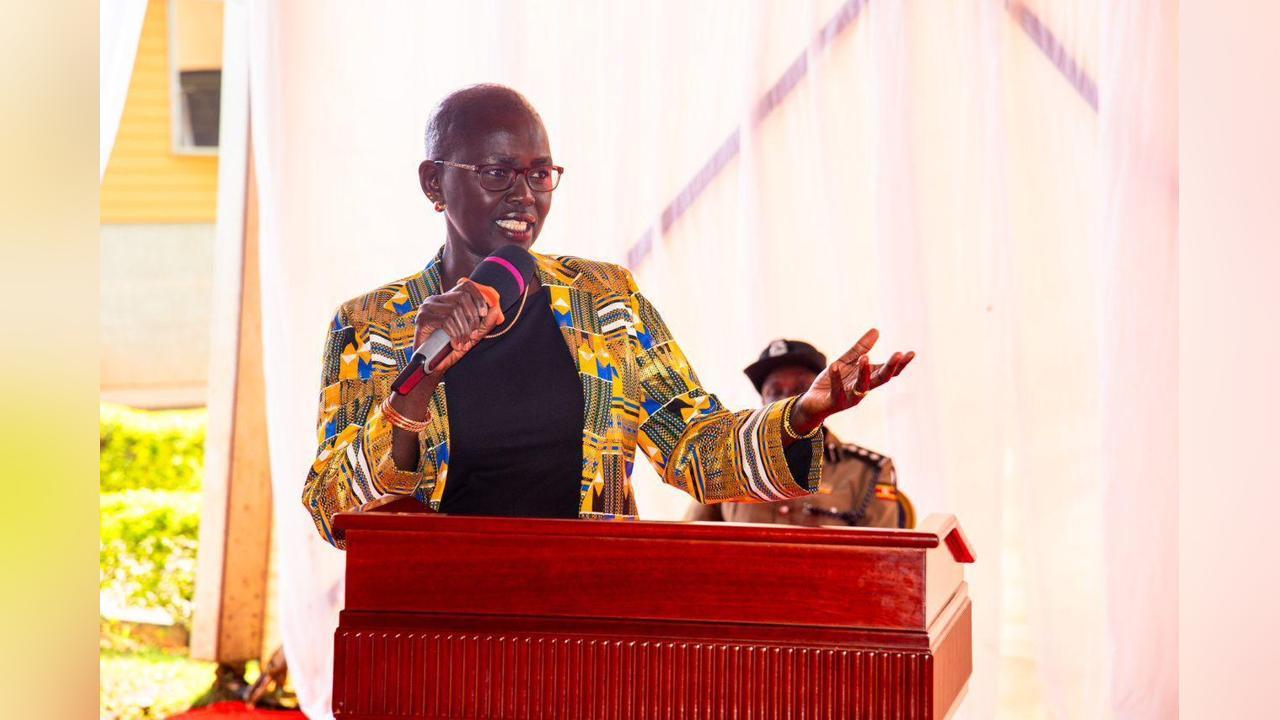
Africa-Press – Uganda. The Principal Judge, Lady Justice Jane Frances Abodo, has called for improved efficiency, adaptability, and staff wellness across the Judiciary as she conducted a familiarisation and listening tour of courts under the Mpigi High Court Circuit.
The tour brought together judicial officers, court staff, and key justice sector stakeholders, providing a platform to assess service delivery, understand operational challenges, and identify practical solutions to enhance the administration of justice.
Describing the engagement as a “listening tour,” Justice Abodo emphasised the importance of judicial officers maintaining a clear understanding of their workload, noting that effective case management begins with proper tracking and organisation of cases.
Justice Abodo highlighted the Judiciary’s ongoing transition towards Alternative Justice Systems, particularly African-based approaches that promote mediation, reconciliation, and restorative justice. According to the Principal Judge, mechanisms such as plea bargaining and mediation are essential in reducing case backlog and ensuring timely access to justice.
Justice Abodo also underscored the Judiciary’s shift to a paperless system through the Electronic Court Case Management Information System (ECCMIS), which enables filing and case management from any location. She noted that the adoption of technologies such as video conferencing will minimise the need for physical production of witnesses, thereby saving time and resources.
Amid these reforms, Justice Abodo urged judicial officers and staff to remain resilient and adaptable, stressing that challenges should not impede progress. She further emphasised the importance of staff wellness, encouraging officers to prioritise their physical and mental health, maintain work-life balance, and support one another.
Using a relatable analogy, Justice Abodo likened the Judiciary to a hardware and software system, explaining that while infrastructure is important, it is ultimately the people who determine how effectively the system functions.
“While infrastructure is important, it is the people who ultimately determine how effectively the system functions,” he said.
At Gomba Chief Magistrates Court, Justice Abodo commended staff for their commitment to service despite significant infrastructural challenges. She emphasised the need to secure at least two acres of land to support proper court development, noting that court infrastructure is vital for the entire justice chain, including the Police, the Office of the Director of Public Prosecutions, and the Uganda Prisons Service.
Justice Abodo also addressed the challenge of distance, particularly affecting Gomba West, and proposed the introduction of mobile courts to extend services closer to communities.
Justice Abodo noted that such initiatives would require adequate transport facilitation. Additionally, she encouraged the use of Alternative Dispute Resolution (ADR) and the expedited handling of juvenile cases through proper classification.
Magistrate Kenneth Gimugu Kabiri reported a caseload of 437 cases, including a backlog of three, and cited challenges such as lack of modern premises, limited space, and delays in securing rented facilities despite valuation having been completed over a year ago.
Resident State Attorney Arthur Masaba noted that between 60 and 70 percent of cases originate from Gomba West, approximately 75 kilometres away, which affects access to justice as litigants often travel long distances only for their cases to be adjourned.
Brian Wamala raised concerns about prison congestion, revealing that the facility houses 116 inmates with only 22 staff. He, however, acknowledged that plea bargaining has contributed to reducing case backlog and commended ongoing efforts in that area.
Advocate Joshua Mwesigwa Senteza called for onboarding onto ECCMIS to enhance efficiency in case management.
Justice Abodo concluded her visit by inspecting proposed premises for the Chief Magistrate’s Court, which she described as spacious and suitable for improving court operations and service delivery.
For More News And Analysis About Uganda Follow Africa-Press