Africa-Press – Uganda. In many African societies, the rules of being a guest are clear, even if unwritten. A visitor is expected to be measured, respectful, and aware that they are in someone else’s space. Good behaviour earns future invitations; bad manners quietly close doors.
Children are taught this early. A child who visits another home and begins jumping on furniture, grabbing toys, and dominating the space is quickly labelled ill-mannered. Adults are judged even more harshly. Social intelligence demands restraint.
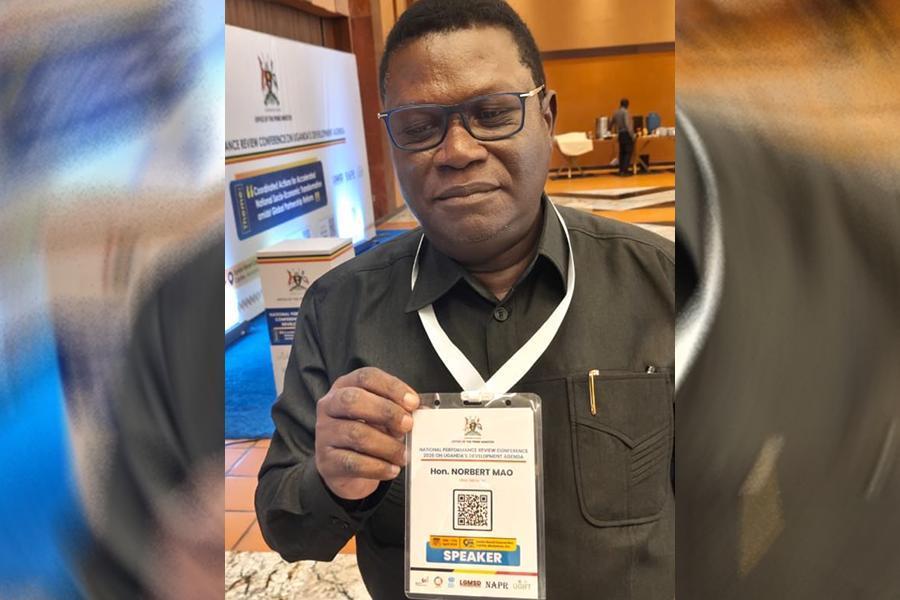
It is this cultural lens that makes the recent conduct of Norbert Mao at a rival political gathering difficult to ignore.
Mao, the President General of the Democratic Party, attended an event organised by another political party. That, in itself, is not unusual. Cross-party engagement can signal maturity in politics. But what followed is where the discomfort begins.
Instead of maintaining the posture of a guest, Mao appeared to insert himself into the centre of the event—commenting, reacting, and engaging in ways that shifted attention toward himself. When challenged, he pushed back, turning what should have been a moment of quiet participation into a public contest.
The issue here is not presence; it is proportion.
Political etiquette, much like social etiquette, requires an understanding of boundaries. Being invited into another party’s space does not translate into ownership of that space. Nor does it grant licence to dominate its narrative.
There is also a strategic dimension to this. For a party leader, optics matter. When the head of one party becomes more visible at another party’s event than within their own structures, it raises uncomfortable questions about focus, positioning, and internal strength.
In political terms, this is where engagement risks becoming opportunism.
A leader must constantly weigh visibility against dignity. Not every platform must be occupied. Not every moment must be seized. Sometimes restraint communicates more authority than presence.
The analogy of a guest who overstays, overreaches, and overindulges may sound harsh, but it captures a deeper concern: the erosion of boundaries in political conduct.
Uganda’s political space benefits from dialogue across divides. But that dialogue must be anchored in mutual respect and an understanding of roles. Without that, even well-intentioned engagement can quickly be interpreted as intrusion.
In the end, the principle is simple and widely understood: a guest who forgets they are a guest risks being remembered not for their presence, but for their manners.
For More News And Analysis About Uganda Follow Africa-Press