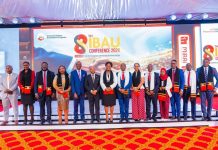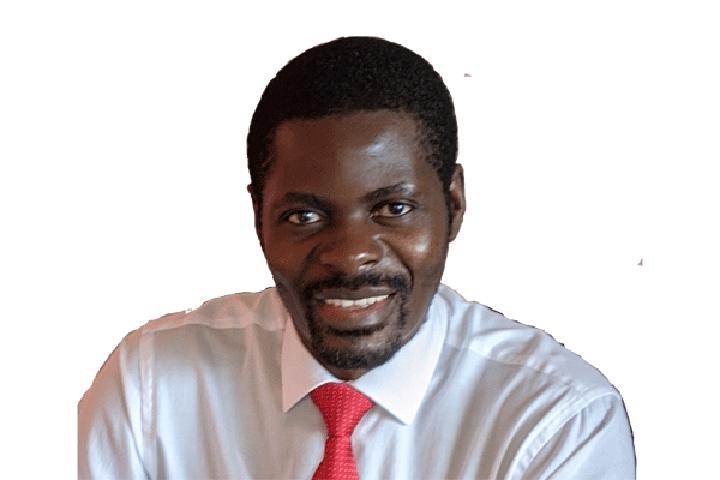
Africa-Press – Uganda. Earlier this week, a renowned academic announced on Facebook, with some measure of gusto and bravado, that he had presented a paper on corruption to incoming Members of Parliament of our ruling party, currently on retreat at the National Leadership Institute (NALI), Kyankwanzi. The discussant of his presentation was the man himself, the Ssabalwanyi, Mr Museveni. This is as absurd as they get.First, the very occasion at which the presentation was made is a classic manifestation of official corruption. NALI, like State House, is a public institution but one that has been turned into a partisan entity. What is more, at that very party retreat, the symbols, tools, resources and stores of the national armed forces are deployed for overtly partisan activities, in total violation of the basic code of public service and the law governing the military. That someone can make a presentation on how to tackle corruption at an event that is itself corrupted suggests that either that person is disingenuous or naïve or both. Worse, that the discussant of the presentation is the chief beneficiary of official corruption in Uganda bespeaks of the mockery and travesty of the cause of fighting a problem that is so endemic and far-reaching.
Second, and in the broader scheme of things, the current regime of rule in Uganda sits on a patently corruption foundation. Our rulers’ grip on power is in large measure due to corrupt practices, both tacit and blatant. The problem is not merely one of low-level and petty bribery or extortion by lower-ranked government officials. Rather, the crux is the large scale and corrosive abuse of state resources, theft and diversion of public funds towards personal pockets and for activities that serve the status quo. This happens at the topmost echelons of state power.
Presidential donations during the election campaign season, the use of classified budgets for political mobilisation, giving hefty amounts to Members of Parliament during controversial legislative processes, the litany of scandals that over the years have involved prominent members of the President’s extended family, the list is endless. Does Mr Museveni need an academic person to make a presentation to him and MPs about how the latter can fight corruption? Parliament is supposed to be the primary oversight and public accountability institution of the state and government, charged with ensuring that all public funds and resources are properly appropriated, prudently utilised and that there is value for money. However, Parliament can do precious little in an environment where the system of rule as a whole is built on corruption and the executive actively corrupts all institutions including Parliament itself! In the heat of the 2001 elections, Winnie Byanyima, then Member of P arliament for Mbarara Municipality, informed the nation that whenever they as MPs went after corrupt government officials, the latter easily found refuge in State House.
Even worse, over the years, State House has taken on the reputation of a clearing house for shady deals and scandalous contracts where middlemen rush to their agents in State House who in turn get access to the ruler-in-chief whose word is law as regards to awarding of big-money infrastructure projects.
Away from money-related corruption, even more insidious is a pervasive practice of jobs and positions in government that are seldom determined on merit and competence, instead it comes down to who knows who in State House and in the high corridors of state power. Here, the President himself has severally been squarely involved in writing letters ordering that one is given a job without any due and open process of competing for the job. This has bred runaway nepotism and cronyism that have become so endemic as to fuel indignation and sectarian sentiments among many Ugandans.
It is, therefore, illusory for one to expect that Parliament can fight corruption when the high priests and godfathers of corruption are precisely the real holders of state power on whom MPs rely for their own financial incentives and political survival. Unless one is deliberately facetious or is outright intellectually dishonest, it is a stretch to expect the very authors and beneficiaries of a system of graft to take the moral high ground against it. It is simply not in their interest to do so.